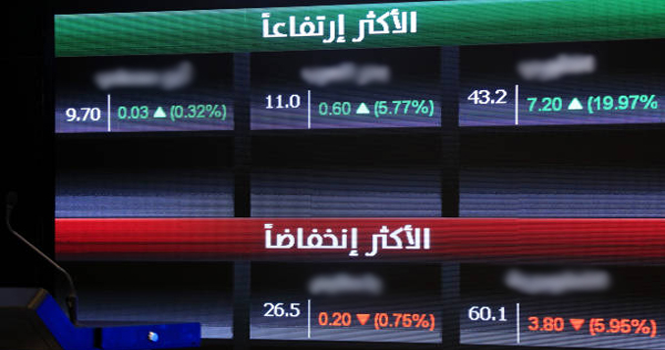
Four TASI-listed companies fell to their lowest levels in 52 weeks on May 14, according to Argaam data. The move puts liquidity and institutional positioning in focus.
Four stocks on the Saudi Exchange (TASI) dropped to their lowest levels in 52 weeks on May 14, according to data compiled by Argaam. The move extends a pattern of individual names testing long-term support, a development that shifts attention from index-level direction to stock-specific liquidity and institutional positioning.
A 52-week low is more than a price level. It represents a full year of buyers underwater, a condition that often triggers mechanical selling from stop-loss orders and margin calls. When a stock breaks below that floor, the next visible support is frequently absent, leaving the order book to absorb any further liquidation without a clear anchor.
For the four names that hit the mark on May 14, the immediate question is whether the decline reflects company-specific deterioration or a broader rotation out of sectors that have lost momentum. The Saudi market has been navigating oil price swings, shifting global rate expectations, and a domestic calendar that includes dividend adjustments and earnings cycles. Stocks that fall to 52-week lows during a period when the headline index is not in freefall often carry an additional burden: they are being sold while peers hold, suggesting a divergence that institutional desks will scrutinize.
Traders who treat a 52-week low as an automatic entry signal risk catching a value trap. The better read starts with the balance sheet. Debt levels, refinancing risk, and the pace of cash burn matter more than the price chart when a stock is making new lows. Sector context matters equally. A real estate name hitting a low while the broader property segment is stable tells a different story than a petrochemical stock falling alongside a crack-spread contraction.
Stocks at 52-week lows often see thinning liquidity. Market makers widen spreads, and institutional investors who are still holding may choose to wait for a bounce rather than sell into a vacuum. That dynamic can produce sharp, low-volume rallies that fade quickly, or it can lead to a slow bleed that persists until a catalyst resets the narrative.
The four stocks that hit the mark on May 14 now face a liquidity test. If the lows hold on rising volume, it suggests accumulation by buyers who see value. If the lows break again on any uptick in selling pressure, the next leg lower can be fast because the bid stack is thin. This is the practical difference between a 52-week low that becomes a base and one that becomes a trap door.
For traders building a watchlist, the actionable step is to track volume patterns over the next three to five sessions. A high-volume reversal day that closes well off the low can be an early signal that sellers are exhausted. A low-volume drift below the low, however, often indicates that no large buyer has stepped in, and the path of least resistance remains down.
This event follows a separate report that three TASI stocks hit all-time lows earlier in the month, a reminder that individual stress can accumulate even when the broad index appears orderly. The overlap between 52-week lows and all-time lows is not random; it points to names where the fundamental story has deteriorated enough to erase years of price history.
The next concrete decision point for the four stocks will likely come from scheduled disclosures. Earnings releases, dividend announcements, or regulatory filings can either validate the selling or provide a reason for a sharp reversal. Until that information arrives, the price action around the 52-week lows will be the only real-time signal of whether the market is pricing in a turnaround or bracing for more downside.
Prepared with AlphaScala research tooling and grounded in primary market data: live prices, fundamentals, SEC filings, hedge-fund holdings, and insider activity. Each story is checked against AlphaScala publishing rules before release. Educational coverage, not personalized advice.