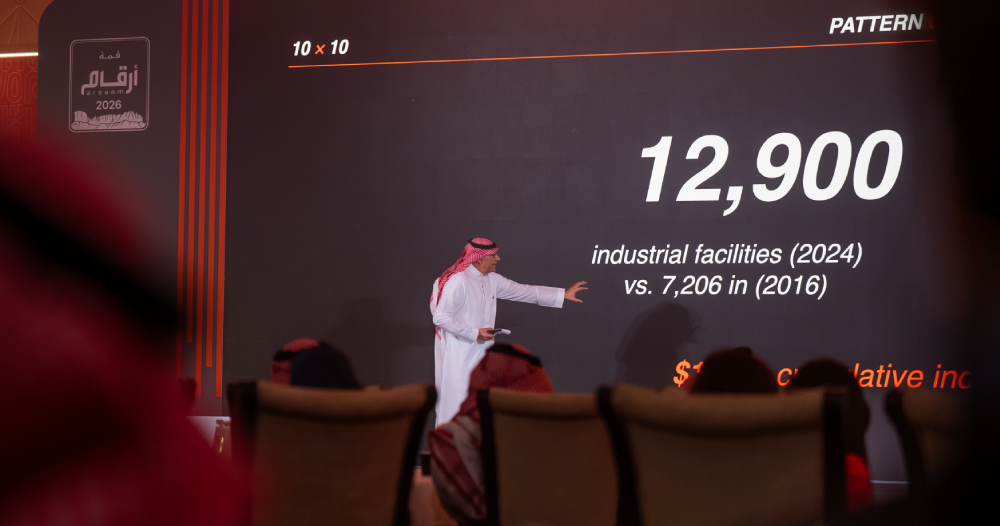
Argaam Summit 2026 concludes with a 10×10 framework that measures economic impact, a shift likely to reshape Saudi equity screening and sector allocations.
The second edition of the Argaam Summit 2026 wrapped up last Tuesday with a focused message: the next phase of market analysis will be judged by economic impact, not headline financials alone. Argaam CEO Islam Zween delivered the closing keynote, unveiling the Argaam Intelligence 10×10 report–an analytical framework designed to evaluate companies through a set of measurable impact metrics. For Saudi-listed equities, the framework introduces a new screening layer that could redirect institutional capital toward names with verifiable contributions to non‑oil GDP, employment, and local supply chains.
The annual summit convenes CEOs of leading companies, market specialists, and investors to debate themes shaping the Saudi market. This year’s closing session made explicit what many institutional investors have been informally discussing: the era of funding projects on promises is giving way to an era that demands proof of economic multipliers. The summit’s theme–“Next phase centers on economic impact”–directly aligns with the Vision 2030 transition from mega-project announcements to demonstrated, employment-rich, local-content-heavy growth. For listed companies, the signal is clear. Future re-ratings will increasingly depend on their ability to show how revenue translates into domestic economic activity, not just on top-line expansion or foreign contract wins.
Zween’s presentation of the Argaam Intelligence 10×10 report provides a structured approach to that evaluation. While the full methodology was not disclosed during the summit, the name suggests a matrix of ten sectors assessed against ten impact indicators–likely a blend of job creation, local procurement, technology transfer, and export diversification. Such a framework can function as a systematic filter for fund managers building thematic or ESG-compliant portfolios on the Tadawul. Even without formal index inclusion, the report’s existence raises the bar for equity narratives. Companies that rely on generic growth stories without attaching hard numbers to Saudi workforce ratios or local supplier share could find themselves slipping below the radar of the growing pool of impact-conscious institutional capital in the Gulf.
If the 10×10 framework gains traction, the sector allocation effects are likely to be uneven. Sectors with direct links to giga-projects–construction, building materials, logistics, and industrial services–will face rigorous examination of their Saudi workforce ratios and local supplier share. Financial services and consumer discretionary names could benefit if they can demonstrate lending to small and medium-sized enterprises or domestic retail volume growth. The sharper risk sits with companies that have rallied on headline growth but whose economic linkages remain opaque. A screening gap between financial performance and impact scores could trigger profit-taking when local institutional mandates begin to reference the Argaam framework. The summit’s closing emphasis on economic impact is not an isolated view; it echoes a broader regional shift among sovereign wealth funds and government-related investors toward measurable outcomes rather than market-cap benchmarks.
The immediate follow-up is whether Saudi fund managers adopt the Argaam Intelligence 10×10 report as an input for portfolio construction or client reporting. Any mention of the framework in quarterly fund commentaries or index provider methodology reviews would confirm its influence. For investors tracking the Saudi equity market, the summit’s closing message provides an early indication that stock selection criteria are evolving–and that the next leg of sector rotation may be driven by impact scores rather than earnings momentum alone. For a broader view of market analysis approaches, see our stock market analysis.
Prepared with AlphaScala research tooling and grounded in primary market data: live prices, fundamentals, SEC filings, hedge-fund holdings, and insider activity. Each story is checked against AlphaScala publishing rules before release. Educational coverage, not personalized advice.