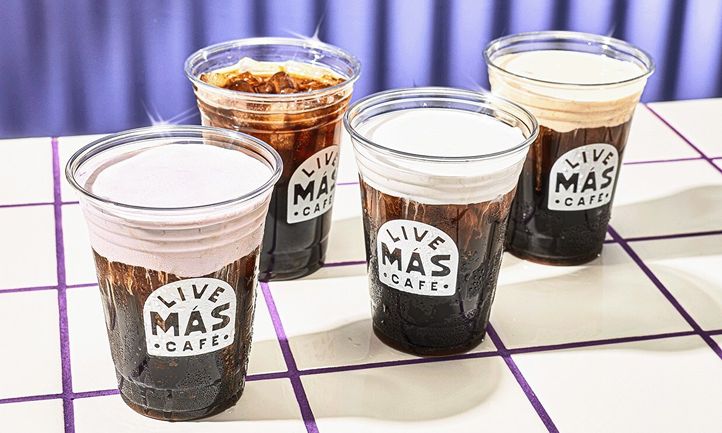
On May 21, 2026, Taco Bell will introduce its first permanent Cold Brew lineup at Live Más Café locations in Houston, Dallas, Las Vegas and Southern California. The menu adds three cold foam options – Purple Velvet Cream, Caramel Dulce Cream and Vanilla Cream – to a smooth Cold Brew base. The launch marks Taco Bell’s entry into the premium coffee segment and supports parent Yum! Brands’ (YUM) stated goal of reaching $5 billion in beverage sales by 2030.
The company’s Global Chief Food Innovation Officer Liz Matthews said:
The Cold Brew Ratio That Changes Demand
Cold brew concentrate uses roughly three to four times more coffee grounds per ounce than hot drip coffee. A standard cold brew ratio is 1:4 or 1:5 coffee to water. Drip coffee uses approximately 1:16. Each cold brew serving sold at Taco Bell pulls more arabica beans out of the global supply pool than a comparable cup of hot coffee.
Incremental Volume Math
Taco Bell operates more than 7,000 U.S. locations. If the cold brew lineup rolls out nationally within 12 to 18 months, the incremental arabica demand could reach the millions of pounds per year. That number remains small relative to total global arabica production of about 100 million bags annually. It is material, however, for a single quick-service chain. The timing matters because arabica futures have been volatile, driven by crop concerns in Brazil and tightening inventories in ICE-monitored warehouses.
For traders watching coffee commodities, the Taco Bell launch adds a demand-side variable that was not in the model one year ago. It introduces a structural bid for cold brew–grade arabica, particularly beans from Central America and Colombia that are favored for smooth, low-acid cold brew profiles.
The $5 Billion Beverage Ambition for YUM
Taco Bell’s stated goal of reaching $5 billion in beverage sales by 2030 implies tripling its current beverage revenue from an estimated $1.5 billion to $2 billion range. Coffee is the largest untapped category. The brand currently sells Baja Blast, Freezes and other soft drinks. It had no meaningful coffee presence before this launch.
Margin Mechanics
Beverages carry higher gross margins than food – often 70% to 80% for coffee drinks after the cost of beans, milk and cups. Expanding the coffee lineup can lift YUM’s overall restaurant margin, which currently sits around 20% at the company level. The upfront capital expenditure for espresso machines, cold brew towers and training is not trivial. Taco Bell is absorbing that cost through its Live Más Café test kitchen model before committing to a national rollout.
Competitive Pressure on Peers
The cold brew segment is dominated by Starbucks and Dunkin' in the QSR space. Taco Bell’s flavor-forward approach – including a purple-hued horchata cold foam – attempts to differentiate on novelty rather than price. This could pressure rivals to accelerate their own seasonal cold foam offerings, compressing margins across the sector. For Dunkin' Brands and McDonald's McCafé, the new entrant adds supply-side pressure on cold foam ingredients and coffee bean procurement.
Risks That Could Undermine the Setup
Two risks are material for traders evaluating this catalyst. The first is coffee commodity cost. Arabica futures remain above $2.50 per pound as of mid-May 2026. A frost event in Brazil or a shipping disruption in Vietnam could push arabica above $3.00. Taco Bell would then face a choice: raise menu prices and risk slowing adoption, or absorb the cost and accept thinner margins on a launch intended to be high-margin. The company’s fixed-price supply contracts may provide a buffer for the first 12 months. The exposure remains real for a product that depends on low input costs for profitability.
The second risk is consumer adoption. Taco Bell is not a breakfast destination for most consumers. The Live Más Café locations are limited to four metro areas. Converting taco customers into coffee customers requires a change in daypart behavior. The bandana giveaway on May 30, 2026 is a trial-acquisition tactic. If limited-time promotions do not drive repeat visits, the national rollout timeline could slip.
Confirming and Weakening Signals
Confirming signals:
- Taco Bell announces a national cold brew rollout before Q1 2027.
- Same-store beverage sales in Live Más Café markets grow 10% or more in the first six months.
- YUM’s Q3 2026 earnings call mentions coffee as a driver of breakfast daypart traffic.
- Arabica forward curves show increased demand from the foodservice channel.
Weakening signals:
- Low trial velocity during the May 30 bandana promotion.
- A sustained rally in arabica futures above $3.00 for three months or more.
- Starbucks or Dunkin' launch a price war on cold foam drinks, compressing margins for all players.
Next Decision Point
The May 21 launch date is the first observable catalyst. Data from the Live Más Café test kitchens will remain proprietary for at least one quarter. Foot traffic and social media chatter, however, can provide leading indicators. The next hard catalyst is YUM’s Q2 2026 earnings release, likely in July 2026, where the company may disclose early beverage sales trends. For coffee commodity traders, the launch adds a modest but bullish demand variable that runs against the current narrative of weak global consumption growth. Monitoring ICE arabica inventory data and Brazil export flows will help assess whether Taco Bell’s demand shows up in physical premiums.
Taco Bell’s cold brew debut is a small step for a single chain. It carries implications for both coffee commodity demand and quick-service coffee competition. Traders should watch the test market data and the May 30 bandana promotion as early signals of consumer traction. The story begins on May 21, 2026.