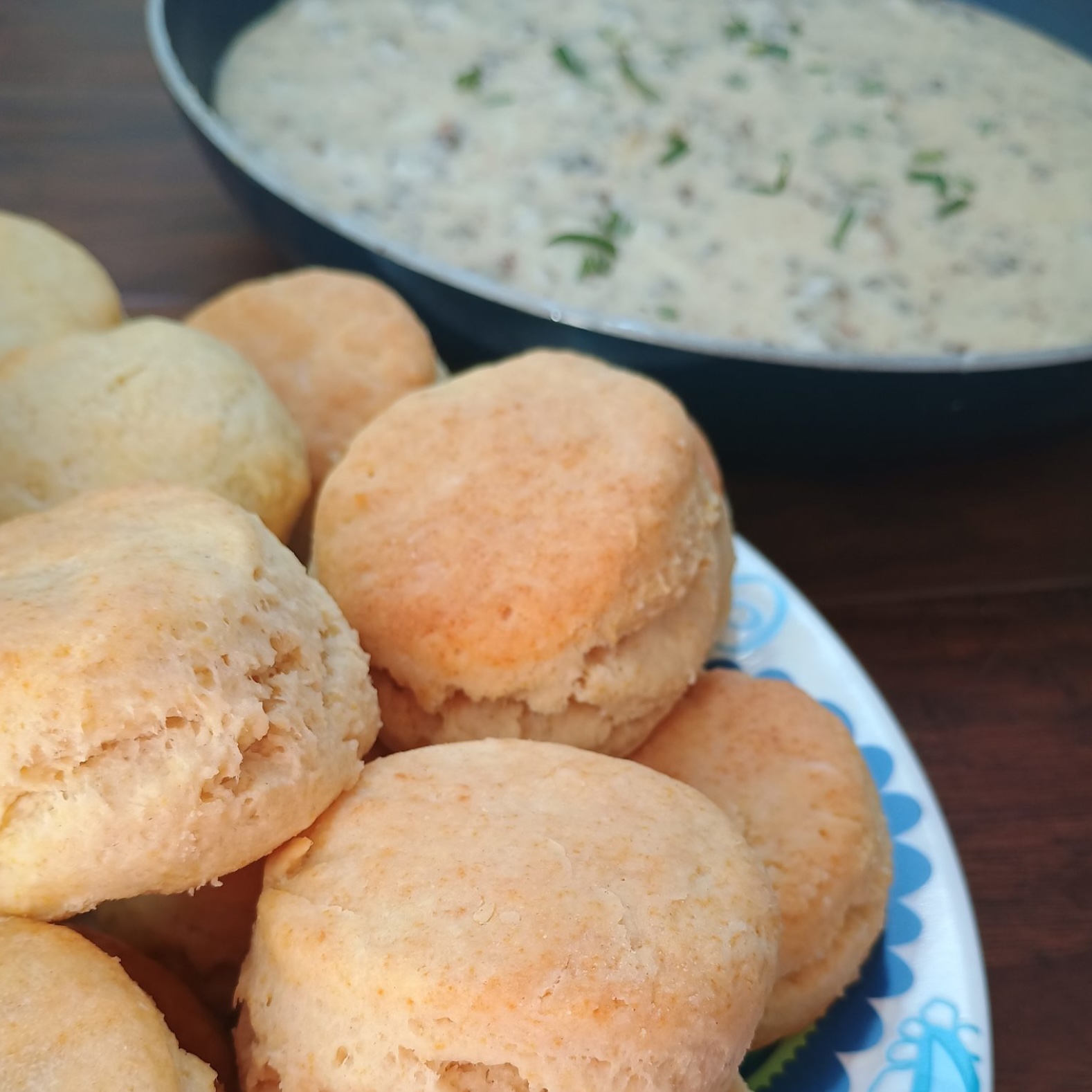
A blog post from the $10 Dinner Ideas series features a biscuits and sausage gravy recipe that costs $5.76 for six servings. That works out to $0.96 per person, well below the cost of a fast-food breakfast sandwich. The post, written by team member Brigette, notes that the meal uses everyday ingredients and can be made with ground venison or regular sausage. The author adds: “We LOVE having breakfast for dinner!” and says her college kids request it when home on breaks.
For traders watching consumer discretionary and staples sectors, this single recipe is a concrete data point in a broader trend: households are actively seeking meals under $10 as inflation squeezes budgets. The post does not mention restaurant chains or grocery retailers. The pricing math creates a direct comparison. A $0.96 per serving home-cooked meal undercuts the cost of any drive-through option, even value menus. That gap matters when real wage growth lags food-away-from-home inflation.
A $5.76 Meal Reshapes the Breakfast Daypart
The recipe uses basic commodities: biscuits, sausage, milk, butter, and flour. The total ingredient cost for the biscuits alone is $0.75 for 24 biscuits. The full meal, including gravy, runs $5.76. The post suggests serving hash browns, scrambled eggs, or a cooked vegetable. It notes that “no one really eats the sides” – the family just wants more biscuits and gravy.
That lack of sides reinforces the cost advantage. A stripped-down fast-food breakfast sandwich typically costs $3 to $5 for one person. A family of four eating the recipe would spend $5.76 total, not per person. The savings become more pronounced when compared with restaurant prices that have risen 6-8% year-over-year (based on recent CPI readings, not from source). The post itself carries no commentary on inflation. The $10 Dinner Idea series implicitly targets budget-conscious households.
The Mechanism: Trading Down in a Post-Inflation Environment
When consumers shift from restaurant meals to home cooking, the dollar flow moves from quick-service restaurants (QSRs) to grocery retailers and food producers. The recipe uses shelf-stable and refrigerated staples. That means higher unit volume for companies like Kroger (KR) and Walmart (WMT). The post mentions canned biscuits as a shortcut. That points to potential demand for private-label or branded refrigerated dough.
For fast-food chains like McDonald’s (MCD) and Yum! Brands (YUM), the risk is that repeated exposure to a $5.76 family meal trains households to cook more often. The post’s example of college students requesting the meal suggests that younger demographics, who are historically heavy QSR users, are also receptive to home cooking when the price is right.
Why This Recipe Matters for McDonald’s and Kroger
The post was published without a date. Its inclusion in a $10 Dinner Ideas series indicates that the concept is ongoing. The timing matters because real disposable personal income has recently turned negative in some months, according to Bureau of Economic Analysis data. When households feel the pinch, content like this recipe gains search traffic and sharing. The post explicitly asks readers to “share and save it on your favorite platform below.” That indicates organic viral potential.
From a positioning perspective, QSR traffic data for the coming quarters will be the confirming or weakening data point. If same-store sales at McDonald’s and Yum! Brands miss consensus, and grocery same-store sales at Kroger beat, the $5.76 dinner becomes a leading indicator of the trade-down.
Affected Assets: The Two Sides of the Trade
Grocery retailers and food producers:
- Kroger (KR) – benefits from higher at-home meal occasions.
- Walmart (WMT) – also gains, especially given its private-label offerings.
- Tyson Foods (TSN) – as a major sausage producer, could see volume uptick if the recipe pattern spreads.
Quick-service restaurants:
- McDonald’s (MCD) – the most exposed because breakfast is a core daypart. A biscuit-and-gravy alternative directly competes with McMuffins.
- Yum! Brands (YUM) – KFC and Taco Bell also rely on value-conscious diners.
- Restaurant Brands International (QSR) – Popeyes breakfast might see substitution.
One risk to watch: the recipe uses “ground venison seasoned with sausage seasoning” as an alternative. That suggests some consumers may already be seeking lower-cost protein sources. That could hit Tyson (TSN) if the substitution shifts further to game meat. The scale is minimal.
What Confirms or Weakens the Trade-Down Thesis
The $5.76 dinner is a single anecdote, not a macro data point. To treat it as a catalyst, traders need to see follow-on evidence.
- Confirms the trade-down: Q2 earnings calls from McDonald’s and Yum! show declining traffic in lower-income cohorts. Grocery chains report higher unit sales of breakfast staples like biscuits, milk, and sausage.
- Weakens the thesis: Fast-food same-store sales hold steady or grow in the value segment. Commodity prices for wheat or pork rise, narrowing the home-cooking cost advantage.
Practical rule: A single recipe does not move markets. Rising search volume for “$10 dinner ideas” signals a shift in consumer behavior. Watch Q2 and Q3 earnings for the disconnect between fast-food value traffic and grocery basket growth.
The $10 Dinner Ideas series is worth tracking because it captures real-world substitution in a format that resonates with cash-strapped families. The biscuits and sausage gravy recipe shows how a $0.96 per serving meal can reshape spending habits. For traders, the next concrete marker is the Kroger identical-store sales print and McDonald’s same-store traffic data for the breakfast daypart.
Related reading: Kohl's 43% Towel Discount Signals Inventory Clearance and stock market analysis.