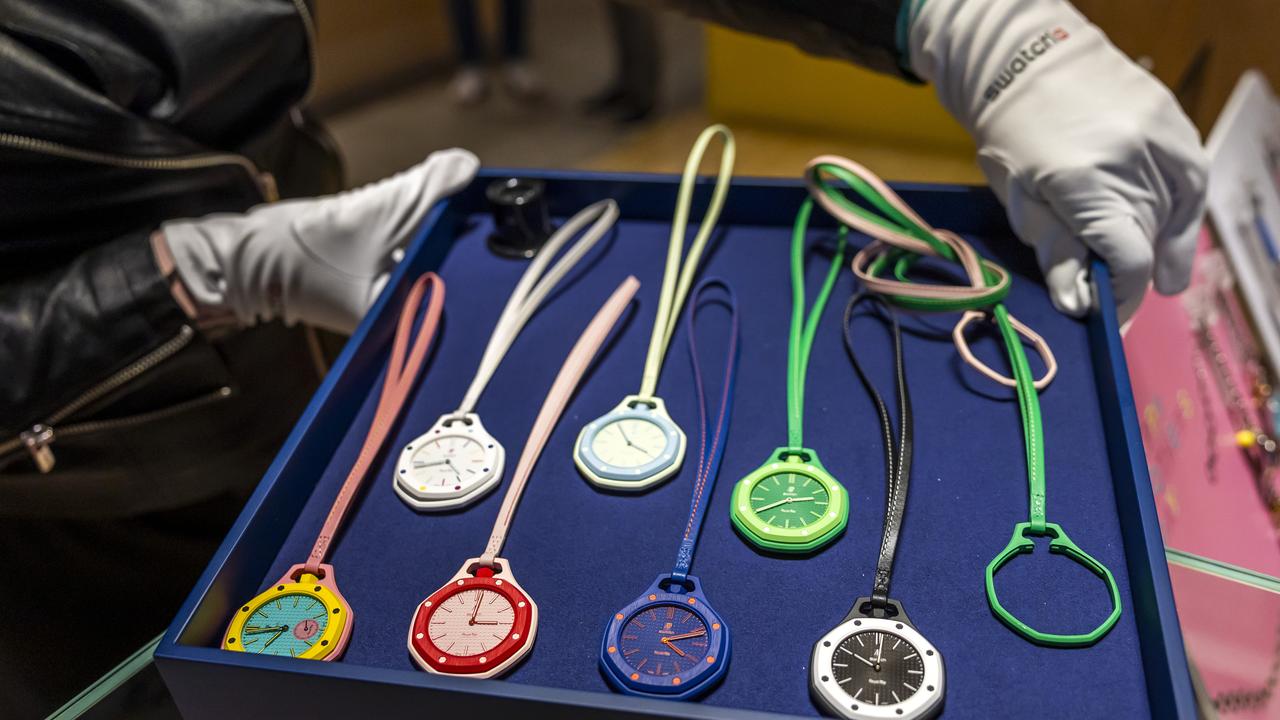
Police called to Swatch UK stores after Moonswatch frenzy. The shutdown reveals how limited-edition drops create secondary-market arbitrage and operational risk.
Swatch closed its stores across the United Kingdom after crowds large enough to require police attendance gathered for a combined Audemars Piguet-Swatch timepiece. The safety-driven shutdown is the immediate event. The more useful read concerns how limited-edition mechanics drive foot traffic, secondary-market premiums, and operational risk for the broader watch industry.
Swatch Group temporarily suspended UK retail operations after shoppers mobbed shopping centres for the Moonswatch – a bioceramic quartz chronograph that carries the Audemars Piguet brand name at a Swatch price point. Police were called to manage the crowds. Swatch cited safety concerns and shut stores. The move is temporary. The demand intensity reflects a deliberate scarcity event: limited quantities, no online sales, first-come-first-served.
The naive interpretation is that Swatch simply released a cheap co-branded watch and got lucky. The better interpretation is that Swatch engineered a marketing play designed to generate media buzz and reinforce brand relevance. The UK closures are a side effect of that strategy working too well. Swatch now faces the operational problem of containing hype without losing the promotional benefit.
The read-through is not about Swatch's overall revenue. The Moonswatch is a brand halo play, not a volume driver. What matters for the sector is the secondary-market arbitrage such releases create. Within hours of the UK launch, resale platforms listed the same watch at multiples of retail. That premium signals unmet demand. It validates the limited-edition model that luxury watchmakers have used for years.
For peers such as Richemont (owner of Cartier, IWC, Panerai) and LVMH (TAG Heuer, Hublot), the lesson is that a well-executed scarcity drop can generate outsized brand attention without diluting premium positioning – provided the collaboration is with a credible high-end partner. Audemars Piguet, a private company, gains younger-audience exposure without cheapening its core Royal Oak line because the Swatch version is a distinct, lower-spec product. The risk for Swatch is brand dilution if the hype fades and the secondary market collapses. The Moonswatch is a quartz movement in a bioceramic case, not a mechanical Royal Oak. If resale prices fall toward retail, the initial frenzy could turn into inventory overhang.
This episode also highlights a broader dynamic: scarcity marketing in luxury goods is becoming more aggressive, and the operational risks – crowd safety, police involvement, reputational blowback – are rising. Swatch's handling of this episode will set a precedent for how the industry balances hype with control. The sector's larger players will watch closely. An orderly reopening that preserves scarcity would reinforce the model. A chaotic restock or a flood of product would weaken it.
The immediate catalyst is Swatch's reopening timeline for UK stores. If the company restocks quickly and manages crowd control through a queuing system, the story fades. If it extends closures or shifts to an online lottery, that signals a change in distribution strategy. For the sector, watch for secondary-market price trends on the Moonswatch over the next 30 days. A sustained premium above the rumored retail price would encourage more cross-brand collaborations. A rapid drop toward retail would suggest the hype was one-time. Either outcome will inform how Richemont, LVMH, and independent watchmakers approach their own limited-edition calendars.
The UK store closures are a symptom of a broader dynamic in luxury goods marketing. Swatch's next move will determine whether the frenzy becomes a template or a cautionary tale. The stock market analysis for watch-related names will depend largely on whether scarcity strategies continue to generate buzz without generating liability.
Prepared with AlphaScala research tooling and grounded in primary market data: live prices, fundamentals, SEC filings, hedge-fund holdings, and insider activity. Each story is checked against AlphaScala publishing rules before release. Educational coverage, not personalized advice.