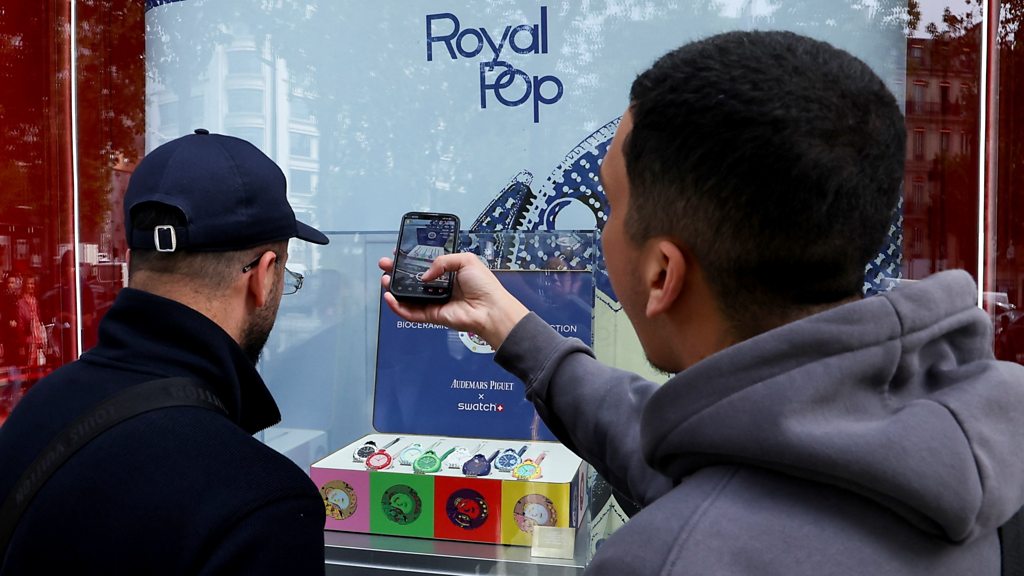
Swatch pocket watch frenzy forced store closures and police response. Resale prices above £1,000 test whether the brand can convert hype into sustained demand for Swatch Group stock.
The launch of a limited-edition Swatch pocket watch forced stores worldwide to close and required police and security to manage crowds. Resale prices on secondary markets quickly climbed above £1,000, far exceeding any plausible retail markup. The question for investors is whether this frenzy signals a genuine brand revival at Swatch Group or a one-off marketing spike that will not lift the broader business.
Limited-edition drops are a standard tool in the watch industry. Swatch has used them before. What changes the calculation here is the physical intensity of the response. Store closures imply that demand overwhelmed supply at the point-of-sale supply, which in turn creates secondary-market pricing power. When a watch resells for more than £1,000, the brand captures the buzz even if the company books only the retail price on its own units.
The mechanism works through scarcity and perception. A crowd large enough to require police intervention generates organic news cycles. That free marketing can lift consumer interest across Swatch's broader product lineup, not just the pocket watch. Rival brands in the accessible luxury segment will take note. If Swatch can replicate this formula, it could pressure competitors on both brand mindshare and sales.
Swatch Group (traded on the SIX Swiss Exchange under UHR) operates in a discretionary consumer space where brand perception drives valuation multiples. The stock has faced pressure from shifting consumer spending and competition from smartwatches. A viral product launch signals that the company still commands emotional demand, which is the kind of intangible that can support a premium valuation.
Investors should watch how management capitalizes on this momentum. Does the company announce follow-up limited editions? Do same-store sales in regions where the frenzy occurred show a lift in the next quarterly report? Those will be the concrete data points that separate a genuine catalyst from a media flash.
The frenzy creates a clear watchlist moment. A single product does not fix structural challenges in the watch industry. It does reset the narrative around Swatch Group's ability to generate heat. The next earnings release will reveal whether the pocket watch launch pulled forward demand or added incremental revenue. If resale prices remain elevated for weeks, it suggests collector demand that outlasts the initial hype. If they fade within 30 days, the event was a short-term spike.
For traders, the setup depends on how the stock price reacts on the next session. A gap up without additional news would indicate the market is pricing in a brand-equity improvement. A muted response would imply the frenzy was seen as non-recurring. Either way, the pocket watch launch has created a natural test of Swatch Group's current investor sentiment.
For broader context on how consumer discretionary stocks respond to viral product events, see our stock market analysis.
Prepared with AlphaScala research tooling and grounded in primary market data: live prices, fundamentals, SEC filings, hedge-fund holdings, and insider activity. Each story is checked against AlphaScala publishing rules before release. Educational coverage, not personalized advice.