Stocks● Neutral
Supreme Court lets Alabama map stand, GOP gains edge
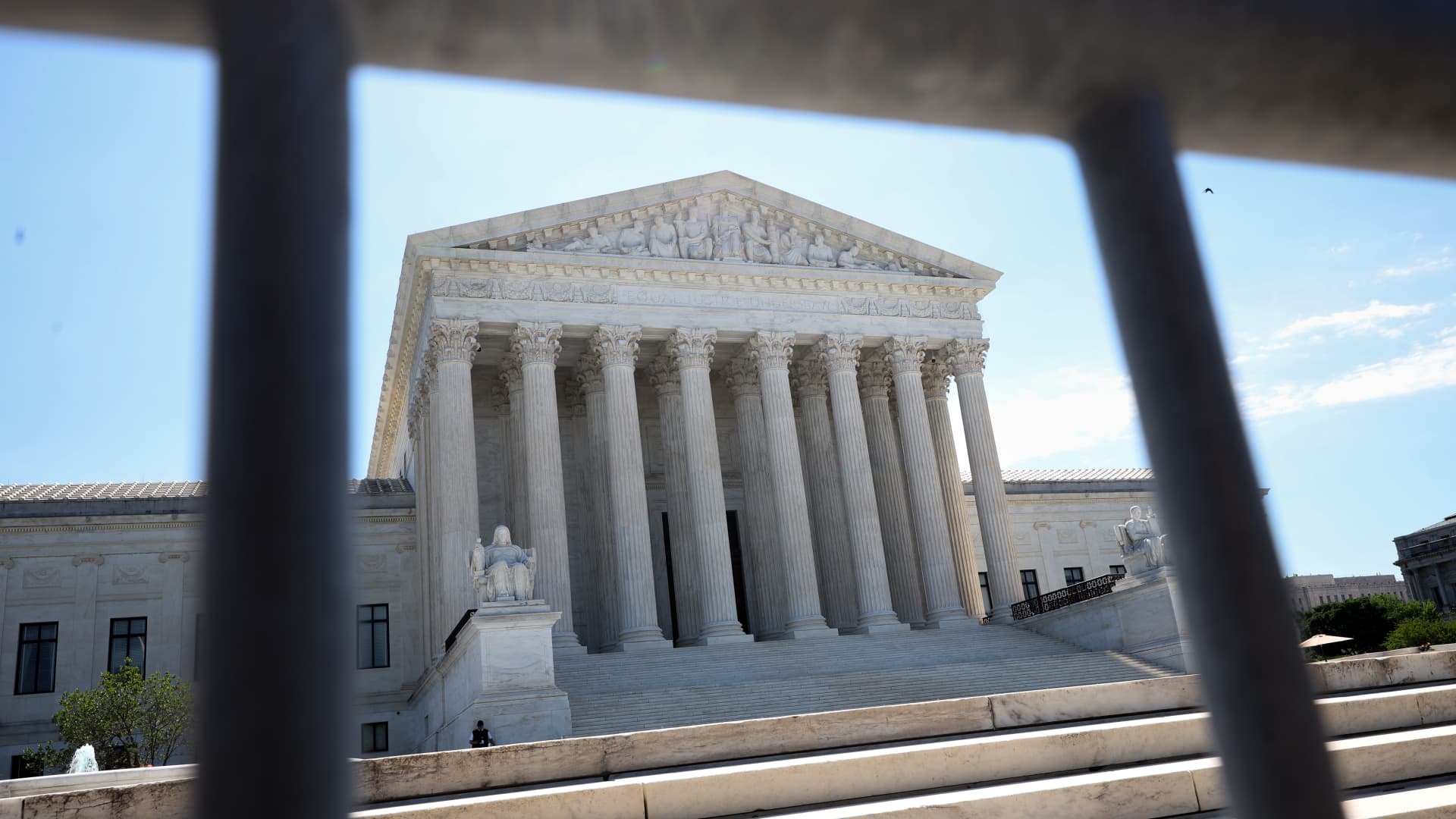
Supreme Court allows Alabama congressional map that could hand Republicans an extra House seat. Tighter majority raises fiscal standoff risk and shifts sector exposure.
Continue with
The Supreme Court on Tuesday night allowed Alabama to use a congressional map that a lower federal court had ruled discriminatory to Black voters. The unsigned 6-3 ruling from the conservative majority effectively gives Republicans an additional House seat in the November midterms. Justice Sonia Sotomayor filed a dissent joined by Justices Elena Kagan and Ketanji Brown Jackson.
The decision overturns a May 26 order from a three-judge panel in the U.S. District Court in Birmingham, which found the map "intentionally discriminated based on race." That panel had been forced to revisit its earlier ruling in light of the Supreme Court's recent decision in Louisiana v. Callais, which held that Louisiana's own congressional maps were a racial gerrymander.
For markets, the immediate read is that House control just got tighter. Republicans already hold a razor-thin majority. Adding one seat reduces the margin for error on must-pass legislation: government funding bills, the debt ceiling, and any fiscal package that reaches the floor. Any defection becomes more consequential. The floor on political uncertainty rises, and that often shows up first in volatility indexes and Treasury term premiums.
House Control and Fiscal Policy Risk
The naive take is that a larger GOP majority makes gridlock more likely and therefore reduces policy risk. The better market read runs the other way. A tighter majority means leadership has less room to negotiate with the White House or the Senate on appropriations. The risk of a shutdown or a last-minute debt-ceiling standoff increases because the coalition to pass a clean bill is smaller. Defense contractors, healthcare insurers, and infrastructure-linked names all face different exposure depending on whether the fiscal path is a continuing resolution, a full-year appropriations package, or a partisan showdown. Expect lobbying spending and campaign contributions to accelerate as both sides try to lock in advantage.