Back to Markets
Stocks● Neutral

Supreme Court Challenges Religious Exclusionary Practices in Sabarimala Hearings
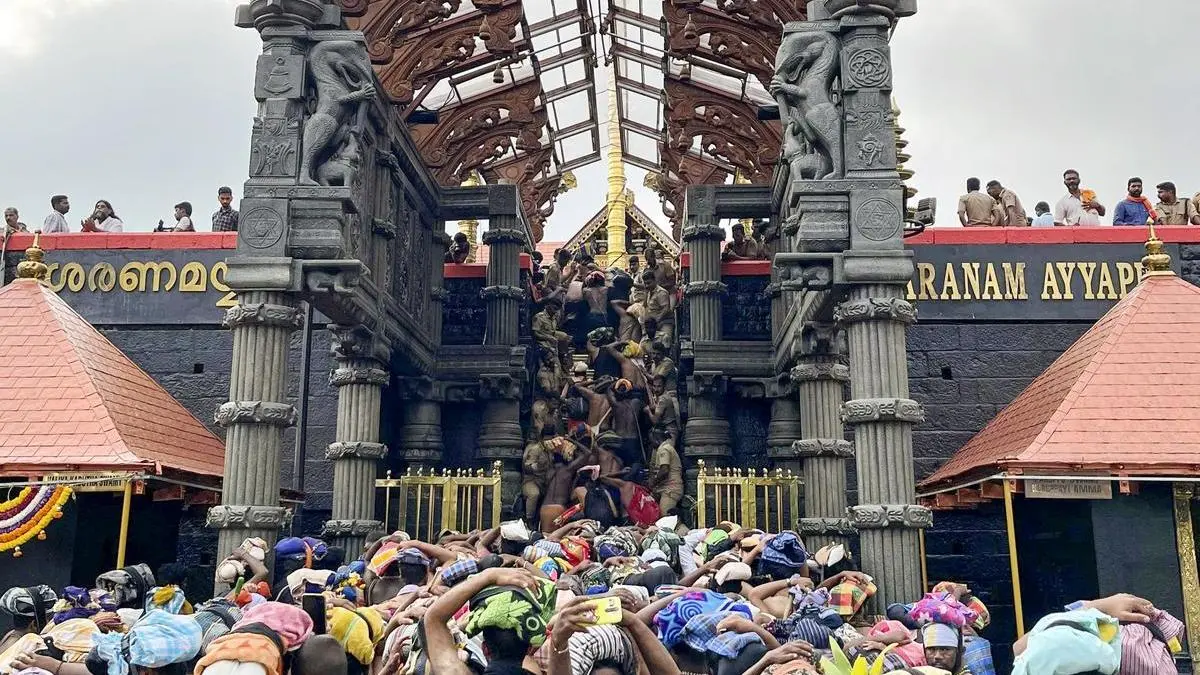
Supreme Court Challenges Religious Exclusionary Practices in Sabarimala Hearings
AONTALL

The Supreme Court of India is challenging the constitutionality of religious exclusionary practices, specifically questioning whether believers have a fundamental right to access deities despite traditional temple restrictions.

AlphaScala Research Snapshot
Live stock context for companies directly referenced in this story
Alpha Score
55
Moderate

Alpha Score of 55 reflects moderate overall profile with moderate momentum, moderate value, moderate quality. Based on 3 of 4 signals — score is capped at 90 until remaining data ingests.

Alpha Score
45
Weak

Alpha Score of 45 reflects weak overall profile with strong momentum, poor value, poor quality, weak sentiment.

Communication Services
Alpha Score
58
Moderate

Alpha Score of 58 reflects moderate overall profile with weak momentum, strong value, moderate quality, weak sentiment.

Alpha Score
72
Moderate

Alpha Score of 72 reflects strong overall profile with strong momentum, moderate value, strong quality, moderate sentiment.

This panel uses AlphaScala-native stock data, separate from the source wire linked above.

The Supreme Court of India has initiated a rigorous inquiry into the intersection of constitutional rights and religious exclusionary practices. During recent hearings regarding the Sabarimala Ayyappa Temple, the bench questioned the chief priest on whether constitutional protections extend to believers who are denied physical access to a deity. This line of questioning signals a shift in how the judiciary evaluates the tension between institutional religious autonomy and individual rights of worship.

Constitutional Protections Versus Institutional Autonomy

The court is examining whether traditional religious customs that restrict access to deities can withstand scrutiny under the framework of fundamental rights. By asking if the Constitution provides a remedy for a devotee barred from touching a deity, the bench is testing the limits of religious immunity. This inquiry suggests that the judiciary is moving toward a standard where internal temple management practices must be reconciled with broader constitutional mandates of equality and non-discrimination.

This legal development carries significant weight for institutions that rely on historical practices to define their operational boundaries. If the court establishes that constitutional protections override specific exclusionary customs, it could force a re-evaluation of governance structures within religious organizations. The focus remains on whether the right to manage religious affairs is absolute or subject to the constitutional guarantee of individual access to religious practice.

Broader Implications for Religious Governance

The ongoing hearings reflect a broader judicial trend of reviewing the autonomy of religious institutions. Legal precedents often balance the right to manage religious affairs against the rights of the individual, but this specific challenge highlights a potential narrowing of the scope for exclusionary practices. The court is effectively asking whether the state has a duty to ensure that religious spaces remain accessible to all believers, regardless of traditional restrictions.

AlphaScala data currently tracks various sectors for volatility and regulatory risk, noting that shifts in legal frameworks often precede structural changes in institutional management. For those monitoring the intersection of law and social policy, this case serves as a primary indicator of how the judiciary intends to handle the modernization of traditional religious governance. Investors and stakeholders in sectors influenced by social and legal shifts should monitor these proceedings for potential impacts on institutional stability.

The Path Toward Judicial Clarification

The next concrete marker in this narrative will be the formal response from the temple authorities regarding the constitutional standing of their exclusionary policies. The court's eventual ruling will likely set a definitive precedent for how religious institutions manage their internal affairs in the face of constitutional challenges. This decision will be essential for understanding the future of religious governance and the extent to which the state can intervene in matters of faith to protect individual access. As the hearings continue, the focus will remain on the specific legal arguments provided by the temple leadership to justify the denial of access to believers. The outcome will likely influence future litigation concerning the rights of individuals within religious organizations across the country.

How this story was producedLast reviewed Apr 21, 2026

AI-drafted from named sources and checked against AlphaScala publishing rules before release. Direct quotes must match source text, low-information tables are removed, and thinner or higher-risk stories can be held for manual review.

Editorial Policy·Report a correction·Risk Disclaimer