Commodities● Neutral
Strait of Hormuz Traffic Halts After Second US Strike Wave
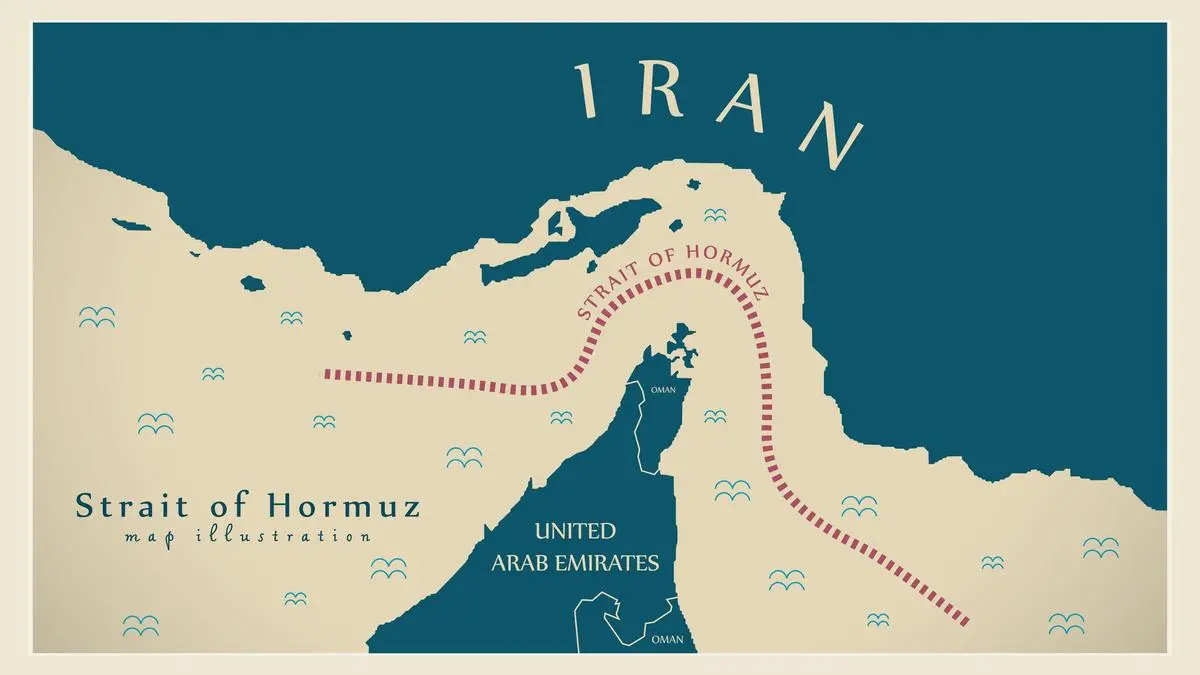
No commercial vessels crossed the Strait of Hormuz Thursday morning after US strikes. Six ships crossed Wednesday. TotalEnergies CEO warns of prolonged blockade. Next catalyst: AIS reappearance window.
Continue with
No commercial vessels crossed the Strait of Hormuz on Thursday morning, ship-tracking data shows, after a second round of US strikes against Iranian military targets this week pushed operators to avoid the waterway. The halt follows a Wednesday that saw just six two-way crossings, including a Turkish Suezmax entering to load cargo in the Persian Gulf, according to data compiled by Bloomberg.
Iran claimed that several ships attempted unauthorized entry into the Persian Gulf overnight, some turning back and two being stopped. The assertion remains unverified. Heavy signal jamming and disabled navigation systems are obscuring actual transits. Tehran also said 26 ships crossed the strait in the past day, a figure that could include smaller coastal vessels not captured by commercial tracking.
President Donald Trump said no single nation would be allowed to control the strait, underscoring a central obstacle to any lasting agreement with Iran. The comments came after American forces intercepted Iranian drones aimed at a commercial vessel and destroyed a nearby launch unit. The US Treasury also announced sanctions against Iran’s Persian Gulf Strait Authority, accusing the agency of extorting ships to profit from regional instability.
Thursday's Transit Count: Zero Crossings and the Tracking Gap
The data shows a sharp drop from already subdued levels. Wednesday’s six two-way crossings included a Turkish Suezmax that entered after disabling its transponder, alongside two container ships entering the Gulf. A Chinese oil product tanker sailed out toward China, followed by an Iranian fuel carrier and a Greek-linked bulker.
Thursday morning recorded zero commercial transits in either direction. The absence is the most extreme since the previous round of US strikes triggered a similar pause. Operators are weighing the risk of drone interception, extortion demands, and potential collateral damage from military operations.
The AIS Blind Spot
Widespread interference with Automatic Identification System (AIS) signals continues to cloud the picture. Independent verification of ship traffic is difficult. Transit counts may later be revised upward when vessels reappear further from high-risk waters.
The US naval presence may also distort observations. Iran-linked vessels entering or leaving the Gulf could be switching off AIS signals to avoid detection, making real-time flow tracking harder. Even before the US barred movement to and from Iranian ports, it was common for Iran-linked vessels to “go dark” when approaching Hormuz. Signals were often not restored until well into the Strait of Malacca – roughly 13 days’ sailing from Iran’s Kharg Island.
Because vessels can move without transmitting their location until they are well away from Hormuz, automated positioning signals are compiled over a large area covering the Gulf of Oman, the Arabian Sea and the Red Sea to detect those that may have departed or entered the Persian Gulf. When potential transits are identified, signal histories are examined to determine whether the movement appears genuine or is the result of spoofing – where electronic interference falsifies a ship’s apparent position.
Some transits may not be detected if vessels’ transponders have not been switched back on. Iran-linked oil tankers often steam from the Persian Gulf without broadcasting signals until they reach the Strait of Malacca about 10 days after passing Fujairah in the UAE. Other ships may be adopting similar tactics and will not show up on tracking screens for many days.
TotalEnergies CEO Warns of Prolonged Blockade Risk
TotalEnergies SE CEO Patrick Pouyanne warned that a prolonged blockade threatens the global economy, adding that he does not expect free navigation to return soon, newspaper Le Figaro reported. The oil major recently freed three of its 11 ships stranded in the Persian Gulf. Pouyanne said he would pursue other redress mechanisms rather than pay Iranian tolls.
TotalEnergies carries an Alpha Score of 70/100 (Moderate, Energy sector). The score reflects the company’s exposure to geopolitical risk in the region balanced by diversified upstream assets. The stock page is at /stocks/tte.