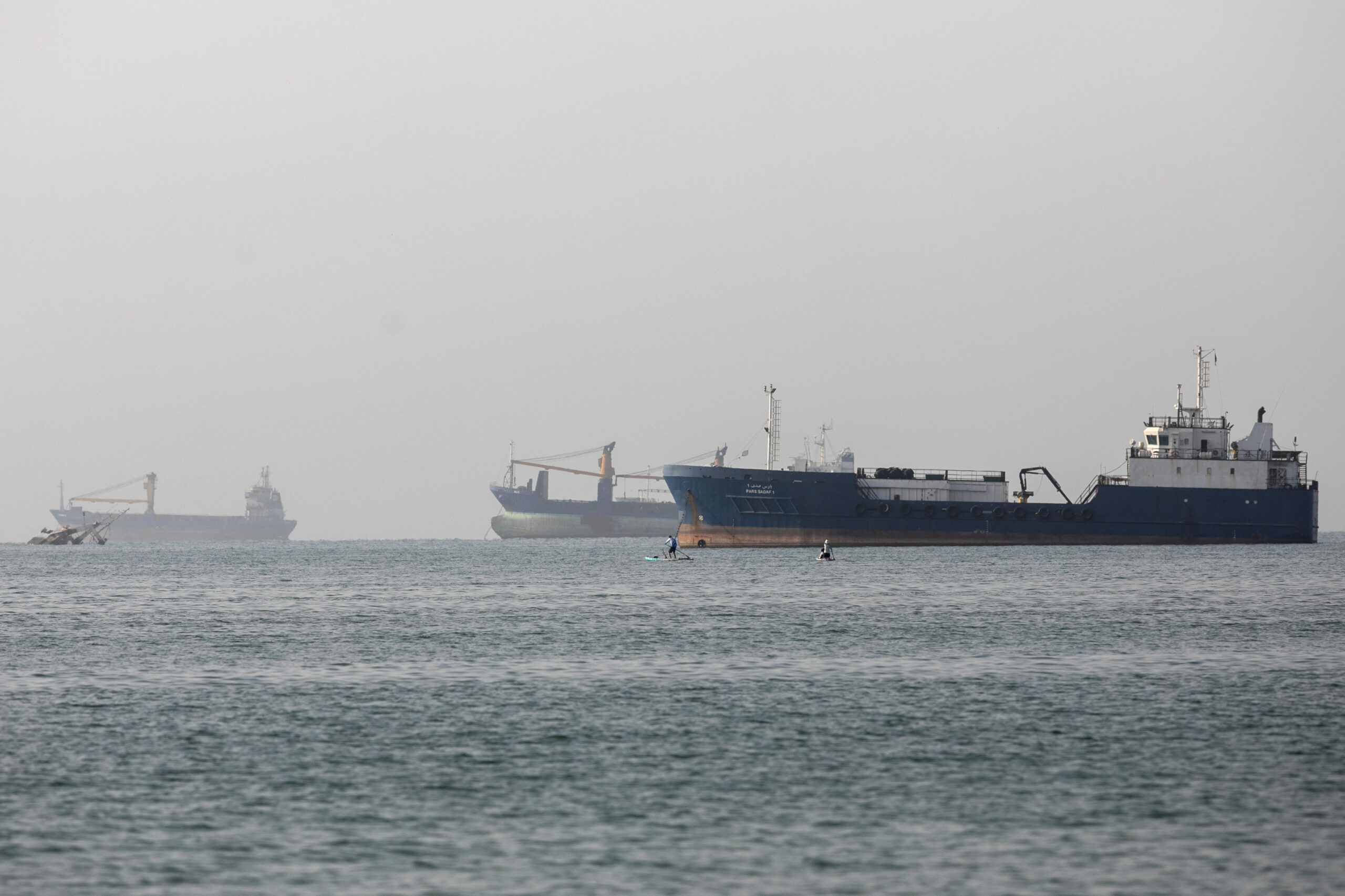
The Strait of Hormuz appeared deserted Thursday morning as commercial operators abandoned the waterway after a second round of US strikes against Iranian military targets this week. No commercial vessels were spotted transiting during the morning tracking window, according to ship-tracking data compiled by Bloomberg. The halt follows a sluggish Wednesday that saw just six two-way crossings, including a Turkish Suezmax entering the Persian Gulf to load cargo.
For traders, the practical consequence is immediate: the world’s most important oil chokepoint has become a no-go zone for tankers. That raises the risk of delayed crude deliveries, higher shipping premiums, and a spike in energy stocks that depend on stable Gulf flows. The key question is how long the paralysis lasts and what would confirm or break the narrative.
Strait of Hormuz Commercial Traffic Drops to Zero After Second US Strike
Thursday Morning Tracking Window Shows No Vessels
Thursday’s zero-transit observation is the most extreme since tensions erupted. The morning window captured no commercial ships crossing, a significant drop even from Wednesday’s already low six. The data highlights the split between legitimate commercial operators unwilling to risk military engagement and vessels linked to Iran or its proxies that continue to move under radar silence.
Wednesday’s Sluggish Six Crossings Set the Stage
Wednesday’s six crossings included a Turkish Suezmax that entered after disabling its transponder, alongside two container ships entering the Gulf, one Chinese oil product tanker sailing out toward China, an Iranian fuel carrier, and a Greek-linked bulker. Iran claimed on Thursday that several ships attempted unauthorized entry into the Persian Gulf the previous night, with some turning back and two being stopped. Tehran also said 26 ships crossed the strait in the past day – a number that likely includes small coastal vessels not captured by open-source tracking.
The assertion remains unverified, as heavy signal jamming and disabled navigation systems obscure actual transits. Transit counts may later be revised upward when vessels reappear further from high-risk waters.
Iran Disputes Transit Counts, Verified Total Stands Well Below the Claim
Iran Claims 26 Ships. Verified Count Stands at Six.
The gap between Iran’s 26-ship claim and Bloomberg’s six-detected count underscores the difficulty of independent verification. Widespread interference with Automatic Identification System (AIS) signals continues to cloud the picture. The US naval presence may also distort observations: Iran-linked vessels entering or leaving the Gulf routinely switch off AIS to avoid detection, a tactic that predates the current escalation.
Even before the US barred movement to and from Iranian ports, it was common for Iran-linked vessels to “go dark” when approaching Hormuz. Signals were often not restored until well into the Strait of Malacca – roughly 13 days’ sailing from Iran’s Kharg Island. Some transits may not have been detected if vessels’ transponders are still off. Iranian oil tankers frequently steam without broadcasting until reaching Malacca about 10 days after passing Fujairah in the UAE. Other ships may be adopting similar tactics and won’t show up on tracking screens for many days.
Spoofing and Going Dark Mask True Traffic Levels
Because vessels can move without transmitting until they are well away from Hormuz, automated positioning signals are compiled over a large area covering the Gulf of Oman, the Arabian Sea, and the Red Sea to detect those that may have departed or entered the Persian Gulf. When potential transits are identified, signal histories are examined to determine whether the movement appears genuine or is the result of spoofing – where electronic interference can falsify the apparent position of a ship.
For traders relying on real-time tracking, the practical rule is that any transit count is a lagging indicator. A vessel that went dark in the Gulf today could reappear off Fujairah in two days, or off Malacca in 10. The delay means oil inventories at Gulf export terminals and at Fujairah’s storage hub may move independently of reported traffic numbers.
TotalEnergies CEO Warns of Global Economic Threat
Three Ships Freed, 11 Still Stranded
TotalEnergies SE CEO Patrick Pouyanne warned that a prolonged blockade threatens the global economy, adding that he does not expect free navigation to return soon, newspaper Le Figaro reported, citing an interview with the executive. The oil major recently freed three of its 11 ships stranded in the Persian Gulf. Pouyanne said he would pursue other redress mechanisms rather than pay Iranian tolls.
TotalEnergies’ exposure is material. With 11 ships caught in the Gulf and only three released, the company faces a prolonged operational headache and potential contract penalties. The stock carries an Alpha Score of 70/100 (label: Moderate, sector: Energy), reflecting a balanced risk-reward profile that could tip lower if the blockade persists. The company’s decision to pursue non-payment redress rather than pay Iranian tolls signals a legal and political risk that other shipping operators and oil majors will watch closely.
Transit Data Comparison: Observed vs. Claimed
| Day | Observed Commercial Transits | Iran’s Official Claim | Key Notes |
|---|
| Thursday (morning) | 0 | Not specified for that period | No commercial vessels detected; AIS jamming active |
| Wednesday (full day) | 6 | 26 (including coastal vessels) | One Suezmax, two container, one product tanker, one Iranian fuel carrier, one Greek bulker |
| Week prior (typical) | ~20–25 | N/A | Pre-escalation baseline for routine commercial activity |
Assets at Risk: Crude Oil, Shipping Rates, and TTE
Crude Oil Volatility and Energy Stocks
The most direct read-through is higher crude oil volatility. A sustained disruption could lift Brent toward the $90 handle if combined with other supply constraints. Energy ETFs such as XLE and EEM would see a rotation into producers with Gulf exposure. TotalEnergies remains the single most exposed stock among European majors. The TTE stock page shows an Alpha Score of 70, reflecting a moderate risk setup that could shift to bearish if ships remain trapped.
Shipping insurance premiums for Gulf transits have already risen sharply. The London insurance market is likely to declare the region a “war risk” zone for hull and cargo policies, adding another cost layer that effectively acts as a tariff on Gulf crude exports.
- Crude oil (Brent, WTI) – immediate upside risk under a blockade scenario
- VLCC and Suezmax spot rates – likely spike on scarcity of willing tankers
- War risk insurance premiums – a proxy for actual transit willingness
- TotalEnergies (TTE) – 11 ships stranded, redress uncertainty
- Refinery margins – higher feed costs if alternative routes are forced
War Risk Insurance as a Proxy for Transit Willingness
A key indicator to watch is the telegraph of insurance companies. If major underwriters reclassify the Gulf as a war-risk-only zone, the effective blockade becomes formal. If they hold the line and ships start filtering back, the current lull may prove temporary.
What Would Confirm or Weaken the Blockade Thesis
Next Catalysts: US-Iran Diplomacy or Further Strikes
The current standoff is binary. A third round of US strikes or a confirmed Iranian attack on a commercial ship would confirm the blockade thesis and push oil and shipping rates higher. Conversely, any public signal of de-escalation – a phone call between Washington and Tehran, a resumption of indirect talks in Oman, or the release of all 11 TotalEnergies ships – would weaken it.
President Donald Trump said no single nation would be allowed to control the Strait of Hormuz, underscoring one of the central obstacles to securing a lasting agreement with Iran. His comments came after American forces intercepted Iranian drones aimed at a commercial vessel and destroyed a nearby launch unit. The US Treasury also announced sanctions against Iran’s Persian Gulf Strait Authority, accusing the agency of extorting ships to profit from the region’s instability.
Key Indicators to Watch
- AIS signal restoration – a steady increase in visible transits would signal normalisation
- Fujairah crude storage levels – a build suggests diversions; a draw suggests loading resumes
- War risk insurance rates – a spike confirms the risk; a cut would precede traffic return
- TotalEnergies ship movements – the release of the remaining eight vessels is a high-confidence signal
For traders building a watchlist, the crude oil profile and gold profile offer complementary hedges. Energy-linked assets may benefit from a risk premium, while safe-haven gold would attract capital if Hormuz stays empty. The best commodities brokers for accessing futures and options on both are worth reviewing before the next catalyst.
The Strait of Hormuz is not formally closed. In practice, commercial operators have voted with their GPS silence. Until a credible diplomatic path appears, assuming a prolonged disruption is the safer bet for risk management.
This tracker will be published during heightened tensions involving Iran, and aims to capture traffic for all classes of commercial shipping.