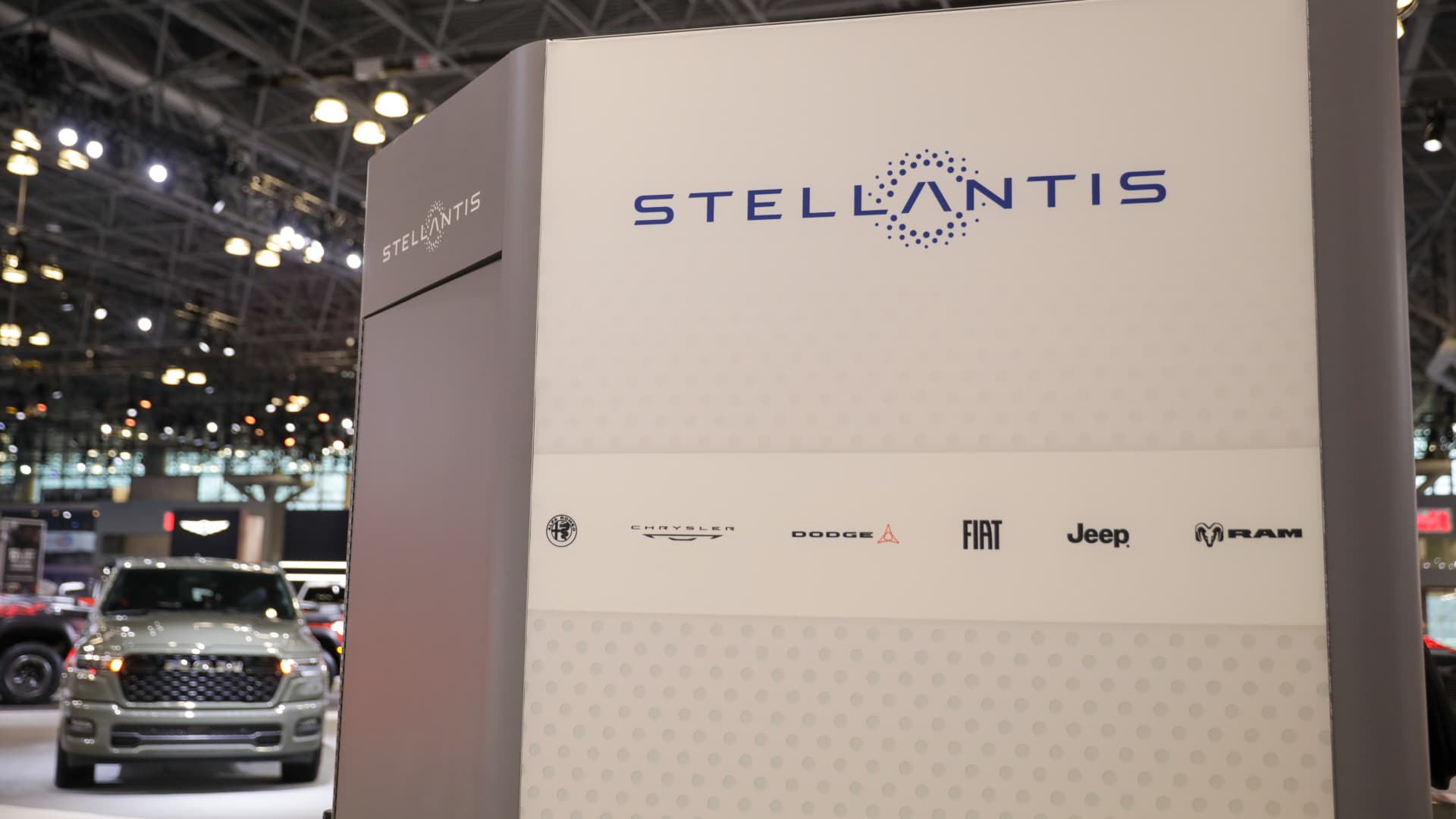
Stellantis unveiled a €60 billion ($69.7 billion) five-year investment plan Thursday that sets a hard target of positive free cash flow by 2028, after burning €22.3 billion last year. CEO Antonio Filosa used his first investor day to outline the FaSTLAne 2030 strategy, which commits €36 billion to launching more than 60 new vehicles and refreshing 50 other models across its portfolio. Another €24 billion goes to global vehicle platforms and new technologies.
The plan does not cut any of Stellantis’ 14 automotive brands, a decision that sets it apart from rivals who have pruned lineups to fund electrification. DS and Lancia will fold operations into Citroen and Fiat respectively. That organizational move preserves brand equity while reducing duplication, a cost-saving mechanism that amounts to part of the €6 billion annual savings target by 2028.
Filosa’s Cash Flow Target: The One Number to Track
The centerpiece of the strategy is the free cash flow turnaround. Stellantis lost €22.3 billion last year, including a €22 billion restructuring charge from pulling back on all-electric commitments. The cash flow target is the clearest metric for investors to track: it separates a recovery story from a restructuring story. If Filosa can hit that mark while sustaining the capex program, the stock’s valuation floor rises. If cash burn continues, the €60 billion commitment tightens the balance sheet.
Cost savings of €6 billion annually imply aggressive procurement, manufacturing consolidation, and platform sharing across the brand groups. Fiat, Jeep, Ram Trucks, and Peugeot are designated “global brands” with scale advantages. Regional brands like Chrysler, Dodge, Citroen, Opel, and Alfa Romeo operate under narrower market scopes. Maserati remains the luxury outlier, a brand that has struggled for consistent profitability.
Brand Preservation vs. Capital Efficiency: A Sector Test
Most legacy auto OEMs face a similar tension. Electrification requires massive upfront capital. Legacy internal combustion engine (ICE) businesses still generate the bulk of profits. Stellantis’ decision to keep all 14 brands signals that management sees brand value as an asset worth defending, not a cost center to trim. For the broader automotive sector, this raises a question: can a multi-brand conglomerate execute simultaneous launches across 60 new vehicles without diluting margins or engineering capacity? Peers like Ford and General Motors have pared model lines to focus capital. Stellantis is taking the opposite bet.
The read-through extends to supply chains. With 60 new model launches plus 50 refreshes over five years, parts suppliers and platform providers face lumpy order patterns. The dispersion of spend across EVs, hybrids, and ICE adds complexity. Suppliers with flexible capacity and exposure to Stellantis’ global platforms may benefit; those tied to a single powertrain type face execution risk.
AlphaScala Score: STLA at Mixed
AlphaScala’s proprietary model assigns STLA an Alpha Score of 46 out of 100, a Mixed label in the Consumer Cyclical sector. The score reflects the uncertainty between the multi-year cost savings plan and the near-term capital burn. A positive cash flow target four years out is a credible anchor. The path depends on consumer adoption of the new models and the pace of restructuring savings.
The Next Earnings Report as Proof Point
The detail that matters most is the quarterly free cash flow trajectory. Stellantis lost €22.3 billion last year. To reach positive cash flow by 2028, Stellantis must show sequential improvement in operating cash flow within the next two fiscal years. The next earnings report will be the first test of whether Filosa’s cost savings are taking hold. Investors should watch for any brand consolidation announcements beyond the DS and Lancia moves, the plan leaves room for deeper cuts if the cash flow target slips.
For the broader market, Stellantis’ strategy adds another data point to the debate over how legacy automakers fund the EV transition without destroying shareholder returns. If the €60 billion plan works, it validates the multi-brand approach. If it does not, the restructuring charges could become recurrent.