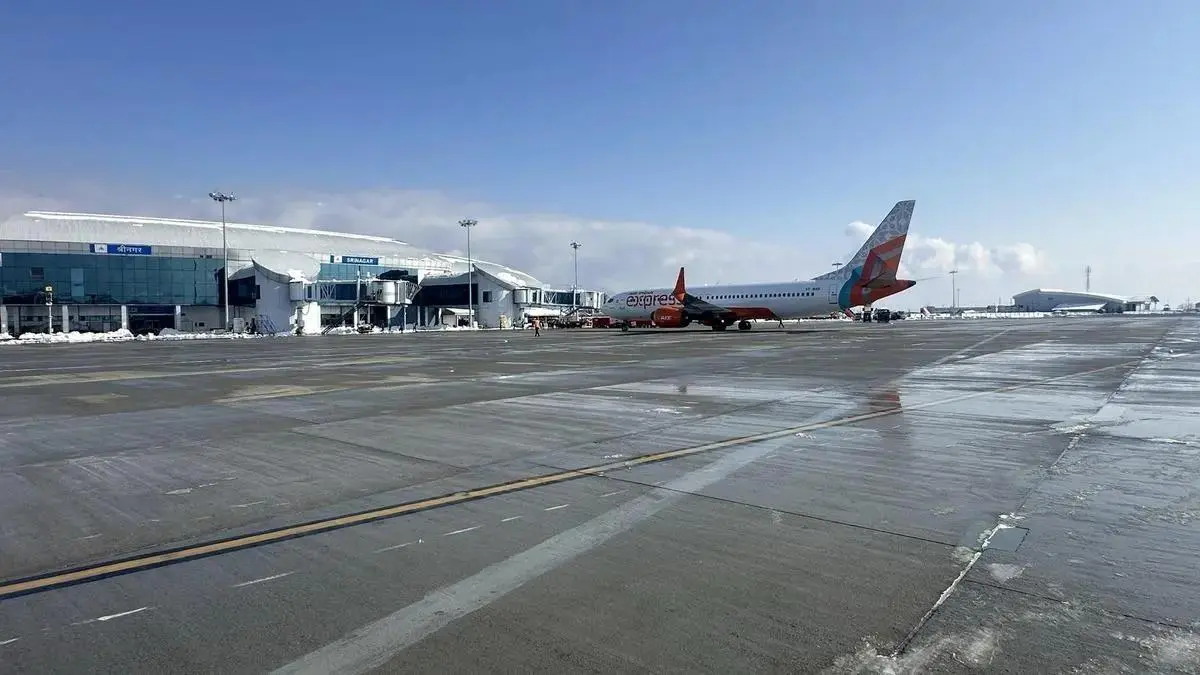
A proposal to partially shut Srinagar Airport for three months and fully close its runway for over two weeks in October 2026 has triggered pushback from Kashmir's business and tourism sectors. The plan, if implemented, would hit the region's peak travel season and disrupt the flow of tourists, medical evacuees, and perishable cargo.
The advisory, issued by the airport and linked to maintenance works by the Indian Air Force, proposes that the runway remain unavailable every Monday and Tuesday from July 1 to September 30, 2026. A complete closure of runway operations is proposed from October 1 to October 16, 2026.
Why the October Window Is the Critical Catalyst
The October closure is the sharper risk for the local economy. October is one of the strongest months for Kashmir's tourism industry. The Kashmir Economic Alliance (KEA) , an umbrella body for trade and business organisations in the Valley, flagged that thousands of tourists from West Bengal visit during the Durga Puja holidays in that period.
The seasonal revenue concentration
For decades, October has drawn a substantial influx of tourists who spend across hotels, houseboats, transporters, handicrafts, restaurants, and small businesses. A 16-day runway closure during that window would cut off the primary arrival channel. Srinagar Airport is the only commercial airport in the Valley. There is no rail or highway alternative that can absorb a sudden surge in passenger volume during a holiday period.
The medical emergency dependency
Beyond tourism, air connectivity is the lifeline for patients requiring specialised treatment outside Jammu and Kashmir. Qazi Touseef, spokesperson of the KEA, said that in cases where patients need urgent treatment outside the state, air travel often becomes the only viable option. A disruption in flight operations during the closure period could create serious hardships for patients and their families.
The Sector Read-Through: Who Is Exposed and How
The proposed closure does not affect a single company's stock. It affects a regional economic ecosystem. The read-through is for anyone tracking Indian domestic tourism, regional airline exposure, or perishable cargo logistics.
Tourism and hospitality
- Hoteliers and houseboat operators in Srinagar, Gulmarg, Pahalgam, and Sonamarg face a direct revenue hit if tourist arrivals drop during October. The Durga Puja holiday traffic from West Bengal is a concentrated demand spike. A 16-day closure would miss most of that window.
- Tour operators who pre-book packages, flights, and accommodation for groups would face cancellation costs and reputational damage with clients.
- Transporters who run taxi and bus services from the airport to tourist destinations would see utilisation drop sharply.
Air cargo and perishable goods
Kashmir relies on air cargo for high-value and perishable goods, including horticultural produce (apples, saffron, walnuts), handicrafts (carpets, pashmina), pharmaceuticals, and other essential consignments. The KEA warned that any interruption in cargo movement would have far-reaching economic consequences. October is also a harvest period for several horticultural products.
Regional airlines
Airlines operating on the Srinagar route – including IndiGo, SpiceJet, Vistara, Air India, and Go First – would face schedule disruptions. The partial closure (Mondays and Tuesdays from July to September) would force them to reallocate aircraft to other routes on those days. The full closure in October would eliminate all Srinagar flights for 16 days. Airlines would need to manage passenger rebookings, refunds, and potential compensation claims.
The Mechanism: Why a Runway Closure Creates a Hard Constraint
A runway closure is not the same as a demand-side shock. It is a supply-side capacity constraint that cannot be bypassed.
The capacity math
Srinagar Airport has a single runway. When that runway is closed, no aircraft can land or take off. There is no secondary runway at the airport. The nearest alternative commercial airports are Jammu Airport (about 250 km by road) and Leh Airport (about 400 km by road). Neither can absorb Srinagar's traffic. Jammu's runway is shorter and its terminal capacity is smaller. Leh's high-altitude runway has operational restrictions.
The road alternative
The Srinagar-Jammu National Highway (NH-44) is the only road link. It is a two-lane highway through mountainous terrain, prone to landslides, traffic jams, and weather closures. During October, the weather is generally stable, the road cannot handle a sudden surge of tourists who would normally fly. A bus or taxi journey from Jammu to Srinagar takes 8-12 hours. For medical patients, that is often not viable.
The cargo constraint
Perishable goods like apples and saffron have a limited shelf life. Air cargo moves them to markets in Delhi, Mumbai, and Bengaluru within hours. Road transport takes days, increasing spoilage risk and reducing the price premium that air-freighted goods command.
What Would Confirm or Weaken the Thesis
The proposal is currently an advisory. It has not been finalised. The outcome depends on the response from the Ministry of Civil Aviation, the Indian Air Force, and the Jammu and Kashmir administration.
Confirming factors (bearish for the local economy)
- The Indian Air Force confirms the maintenance schedule and does not adjust the dates.
- The Ministry of Civil Aviation does not intervene to stagger the closure or provide alternative arrangements.
- Airlines announce cancellation of Srinagar flights for the October period, indicating they cannot reroute.
- The Jammu and Kashmir administration does not provide a compensation or relief package for affected businesses.
Weakening factors (bullish for the local economy)
- The closure is shortened to fewer days or shifted to a non-peak month (e.g., November or February).
- The Airports Authority of India arranges for temporary night landing facilities or extended operating hours before and after the closure to absorb demand.
- Airlines announce additional flights on the Jammu-Srinagar sector or charter services to bypass the closure.
- The Ministry of Civil Aviation directs the IAF to stagger the maintenance over a longer period to minimise economic disruption.
The Next Decision Point for Traders and Investors
For now, this is a regional economic story, not a listed-company catalyst. Traders tracking Indian aviation, tourism, or perishable-agriculture stocks should watch for the following:
For airline stocks
- IndiGo and SpiceJet have the largest Srinagar route networks. If the closure is confirmed, watch for their schedule adjustment announcements. A reduction in Srinagar capacity would free up aircraft for other routes, potentially offsetting the revenue loss.
- SpiceJet has been returning aircraft to service and adding capacity. A Srinagar disruption would be a minor headwind, not a thesis-changer.
For tourism-exposed stocks
- Indian Hotels Company (Taj) and Lemon Tree Hotels have properties in Srinagar. The impact would be small relative to their pan-India portfolios, the October closure would show up in Q3 FY27 occupancy data.
- Thomas Cook (India) and MakeMyTrip would see reduced booking volumes for Kashmir packages in October. The impact would be visible in their Q3 FY27 transaction data.
For perishable cargo
- Delhivery and Blue Dart have air cargo operations that move horticultural produce from Kashmir. A 16-day closure would force them to use road transport or halt shipments, increasing spoilage and customer complaints.
The proposed closure of Srinagar Airport for three months, with a complete shutdown in October, is a material risk to Kashmir's tourism-dependent economy. The October window is the highest-concern period because it coincides with a known demand spike from Durga Puja holiday travellers. The lack of an alternative air gateway means the capacity constraint is absolute during the closure days. The next catalyst is a final decision from the Indian Air Force and the Ministry of Civil Aviation on whether the maintenance schedule will proceed as proposed or be adjusted. Until then, the risk is unconfirmed for anyone with exposure to the region's tourism, transport, or perishable-cargo sectors.