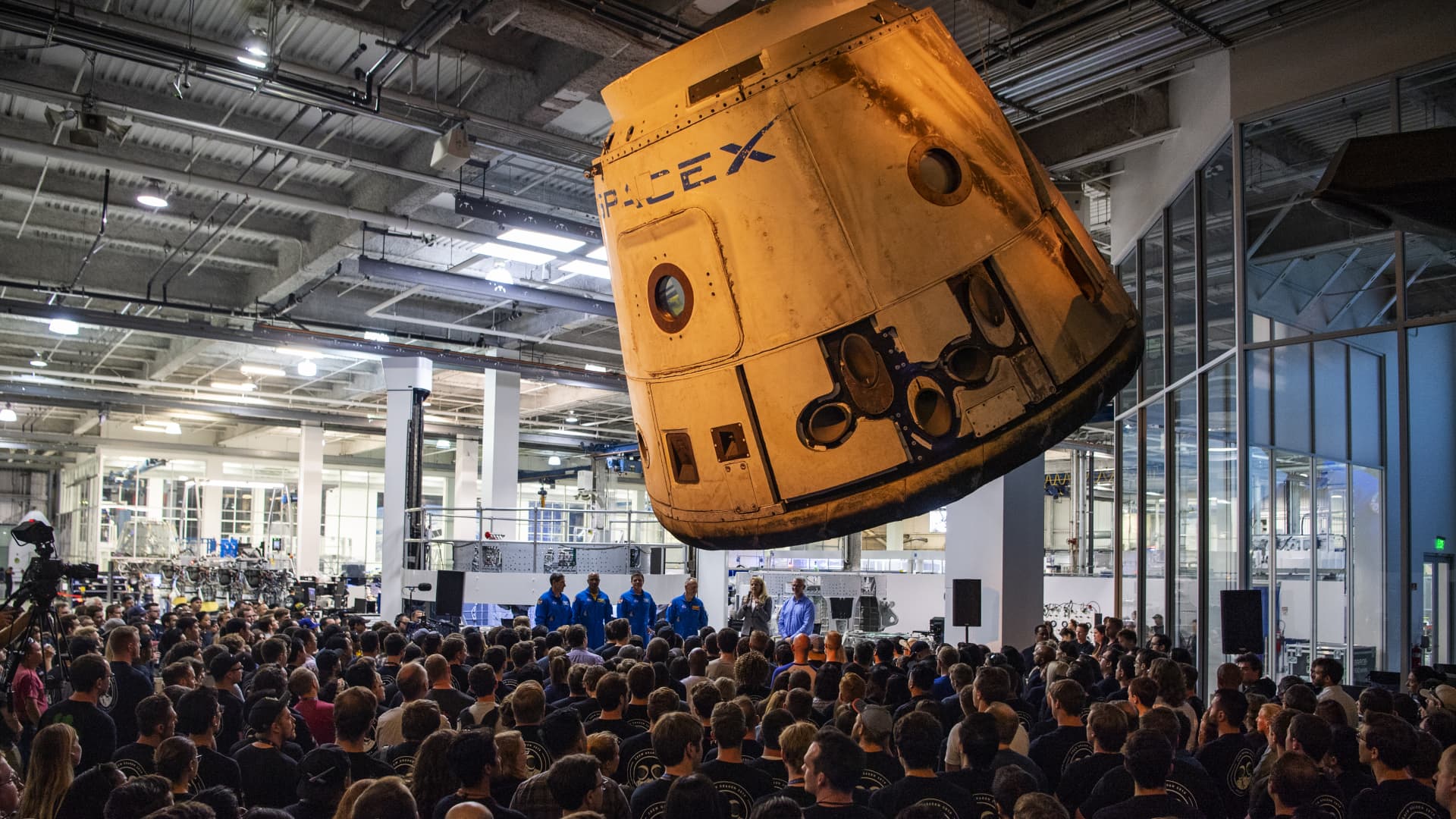
SpaceX bulls are proving a devout lot, not unlike the Tesla traders that came before them. Daily options flows still lean heavily bullish almost a month into trading and one day ahead of the stock's accelerated inclusion into the Nasdaq 100.
The index powers the roughly $500-billion QQQ fund, of which Elon Musk's new giant will get a roughly 1% weighting. About half a million SpaceX options traded by midday Monday, a bit below the average since inception but still enough to rank fifth-most popular for options trading. More than 300,000 calls traded, compared to less than 130,000 puts. Almost five times as many calls were bought as puts, according to ThinkOrSwim data. Tesla, Musk's other trillion-dollar company, is consistently among the most active options names.
Nasdaq's inclusion will in theory make the tech-heavy index marginally more volatile overnight given SpaceX's wild swings. The Nasdaq's rules limit the weight of low-float stocks. The impact is likely minimal. How SpaceX releases shares around its lockup timeline and how passive buyers handle the inclusion will determine if SpaceX stays as wild as it was at launch.
SpaceX trades with an implied volatility of 92, almost 3.5 times that of QQQ, which itself is currently the most volatile versus the S&P 500 in nearly 20 years. Over the long term, SpaceX volatility should come down: long-term-minded investors buy and hold index funds. The counterpoint: those index holders may use SpaceX options to hedge, which would keep put demand elevated. High volatility also draws call sellers looking for income, adding volume. Combine that with the pattern of high volatility in many bull market winners, and there's a case the premium stays rich even if the stock rallies.
Shares slipped below $160 on Monday following a bounce Thursday, after an 8% sell-off last Wednesday. All of the top 10 options contracts by volume Monday were calls. The most popular was the 450-strike call expiring July 17, a 15-cent trade that needs a 180% rally by the end of next week to break even. Bigger traders favored the 180-strike call expiring the same week.
The inclusion falls in a week packed with macro data, including FOMC minutes and CPI, as we noted in last week's preview. Index funds tracking the Nasdaq 100 will need to buy SpaceX shares to match the new weighting. Options dealers who sold the heavy call volume may hedge by buying shares too, adding to demand. After the lockup period, additional shares could come to market, potentially testing the stock and option premiums.
QQQ carries an AlphaScala Score of 44/100, labeled Mixed, meaning the ETF is not in a clear directional trend. For traders watching SpaceX's inclusion, the next catalyst is the lockup expiration and the pace of forced buying from passive funds. The data so far says the call crowd has not blinked.