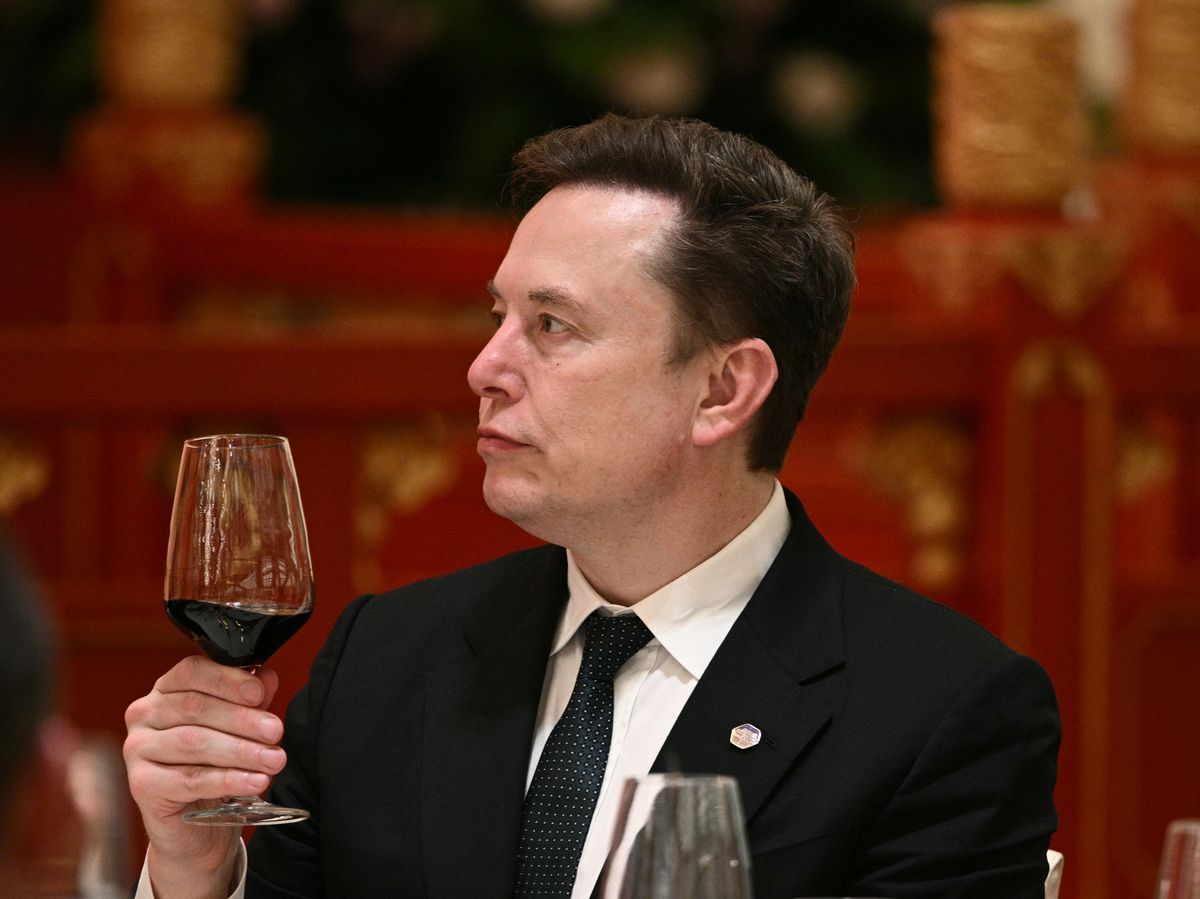
Elon Musk can still enchant investors with his vision of the future. Any questions about SpaceX's record-breaking initial public offering – be it about the valuation, the company's trajectory or technical execution – were brushed aside as the retail marketing for the deal got under way. Smitten with the world's richest man and lauding his character, many participants at an investor event hosted by Jamie Dimon at JPMorgan Chase's headquarters chose to focus on the big picture.
"It was an epic event," said Sidd Pagidipati, founder and chairman of Ayon Capital. "This company I think will be the biggest, largest, most iconic company in human civilization." Though Pagidipati said he'd limit exposure to one per cent to start, he is an unwavering believer in SpaceX. "As long as Elon stays alive, I'm not skeptical," he said.
Bankers across Wall Street have been meeting with potential buyers to pitch the terms of the listing by the rocket, satellite and artificial intelligence company as it targets a historic debut. The Starbase, Texas-based company kicked off the marketing process for its US$75 billion initial public offering, set to be the biggest of all time, at a fixed price of US$135 per share.
Some research analysts are telling would-be buyers that their models show 100 times revenue growth for SpaceX's AI division by the end of the decade, to help justify the targeted valuation of US$1.8 trillion. For the investors emerging from the JPMorgan event, those numbers sounded entirely justified.
It's "not an outrageous valuation for the company," said Dylan Hixon, president of Arden Road Investments, who's gained exposure to the company over the years through venture funds and Special Purpose Banks. He estimates SpaceX comprises around 20 per cent of their entire portfolio, and says they will continue to invest after the IPO. "This is a generational company."
Several investors Bloomberg spoke to said they had not read the prospectus, which details ambitions like building a colony on Mars and a US$28.5 trillion total addressable market. Musk's chat with Dimon, in which the billionaire detailed his vision for big ideas like space travel, vacations on the Moon and a Mars colony, swept the enthusiastic crowd along.
The Three Business Lines That Frame the Investment Case
SpaceX is not a single-company trade. It operates three distinct businesses within one structure, each with a different risk profile and growth trajectory.
Launch Services: The Cash Flow Engine
The Falcon 9 and Falcon Heavy rocket families generate the company's recurring revenue. They have become the workhorses for government and commercial satellite launches. This business is mature, predictable, and probably the segment easiest to value. It is not the growth engine that justifies a US$1.8 trillion valuation.
Starlink: The Satellite Internet Cash Cow
Starlink provides broadband internet through a constellation of low-Earth-orbit satellites. The subscriber base is growing, and the service has operational advantages over terrestrial alternatives in rural and underserved areas. This is the segment where revenue growth is visible and accelerating.
The AI Division: The Valuation Multiplier
Some research analysts are telling would-be buyers that their models show 100 times revenue growth for SpaceX's AI division by the end of the decade. The details of what this AI division does remain vague in the public prospectus material. The number is large enough to dominate the valuation math. For the investors at the JPMorgan event, the figure sounded entirely justified.
Why the Prospectus Did Not Matter to Investors
Several investors Bloomberg spoke to said they had not read the prospectus, which details ambitions like building a colony on Mars and a US$28.5 trillion total addressable market. Musk's chat with Dimon – where the billionaire detailed his vision for big ideas – swept the crowd along.
The simple read: Investors are buying the person, not the financial statements. Retail and institutional enthusiasm for Musk's track record, combined with the exclusivity of access to large IPO allocations, creates a self-reinforcing bid.
The better market read: This is a liquidity event for early backers, not a fundamental valuation exercise for new buyers. The mechanism works as follows:
- Early-stage venture funds and employees hold shares at a cost basis far below the IPO price
- The IPO creates a public market where they can take profits
- New buyers are not pricing the company on current earnings or free cash flow
- They are pricing an option on Musk's ability to execute on the vision
The risk to this setup is execution failure. SpaceX has achieved remarkable technical milestones. The path from a US$75 billion IPO to a durable public company includes challenges in manufacturing scale, regulatory approvals for Starlink, and competition in the satellite internet market.
What Would Confirm or Weaken the Setup
For traders and investors tracking the aftermarket performance, the signals are straightforward.
What would confirm the thesis:
- Starlink subscriber growth accelerates beyond current guidance
- Launch cadence increases without major failures
- Government contracts continue to flow at premium pricing
- AI division generates revenue before the next earnings report cycle
What would weaken the thesis:
- A technical failure on a high-profile mission that damages the brand
- Regulatory delays on Starlink spectrum licensing or satellite constellation expansion
- Founder risk – the direct quote from Ayon Capital's founder makes explicit what many investors imply: "As long as Elon stays alive, I'm not skeptical."
- Valuation compression across high-growth tech, making US$1.8 trillion harder to defend in a rising-rate environment
Valuation and the Trading Floor Reality
At the event, valuation was not a point of debate. On the trading floor, it will be the primary friction point. The 100 times revenue growth figure for the AI division is a model, not a guarantee. Research analysts are using it to justify the price. Whether that model holds up under public scrutiny after the lockup period expires is a question that cannot be answered until the stock trades.
For context, the AlphaScala score on JPMorgan Chase & Co. is 51/100 with a Mixed label, and the stock sits at $310.89 today, up 3.34%. That is a neutral read for a financial stock. It suggests institutional positioning around the IPO event is cautious, not euphoric – which aligns with the fact that the enthusiasm at the investor event came from the buy side, not the sell side.
The Long Game
The IPO is not the end of the attention. SpaceX will need to deliver quarterly results, file annual reports, and manage investor expectations on the long timeline required to colonize Mars. The prospectus details a business model with a long-term horizon. Short-term traders should treat the IPO pop as a liquidity event, not a fundamental entry point.
What happened at JPMorgan Chase's headquarters was a marketing success. The real test comes when the stock opens for trading and the market's collective judgment replaces the room's enthusiasm.