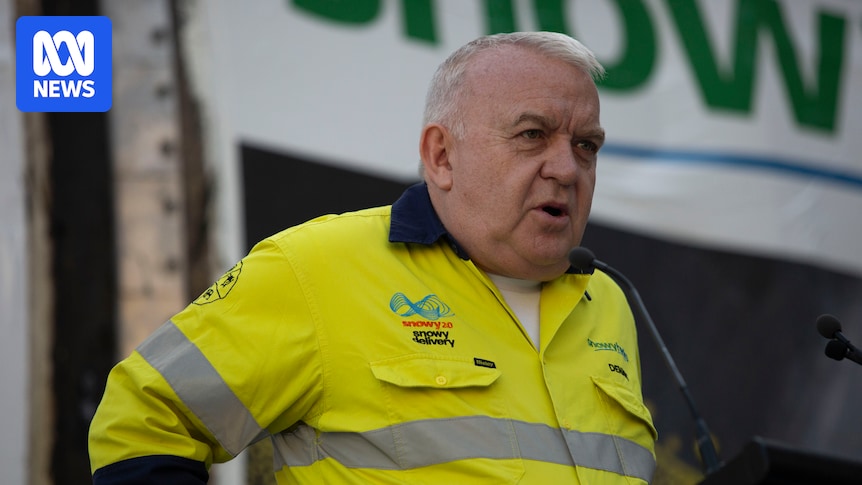
Snowy Hydro awarded five senior executives $1.24 million in bonuses last financial year, including $323,000 to chief executive Dennis Barnes, while the company's flagship renewables project Snowy 2.0 suffered further cost blowouts beyond a $12 billion budget. The bonuses were paid in September 2024. One month later, Snowy Hydro confirmed the project's costs were still rising. An independent line-by-line cost reassessment is now under way.
Bonuses Tied to Customer Satisfaction, Not Project Delivery
Barnes received $323,000 in variable pay on top of his $1.69 million salary. That amount was just shy of the $338,786 maximum that the board could award. Four other senior executives shared a further $919,000 in bonuses.
Snowy Hydro's board linked the bonuses to performance on customer satisfaction, safety, and work culture targets. The company explicitly missed targets related to Snowy 2.0 delivery and its broader financial operations. A third of the executive bonus pool was supposed to be contingent on project performance. That portion was not enough to block the payout.
Shadow Energy Minister Dan Tehan said the bonuses did not pass the pub test.
Finance Minister Katy Gallagher said Snowy Hydro's executive remuneration was set independently by the Remuneration Tribunal. The government had no direct role in the decision.
A Snowy Hydro spokesperson pointed out that the company's remit extends beyond Snowy 2.0. "Snowy Hydro is a large integrated energy company operating in generation, wholesale and retail markets," the spokesperson said. "Snowy is Australia's third largest generator, fourth largest retailer and has an important mandate to enable the renewable transition."
Performance Metrics and the Missing Link to Snowy 2.0
A third of the bonus pool depended on project performance. Yet the board still awarded nearly the maximum to Barnes. This suggests the board gave greater weight to customer satisfaction and culture metrics. For a capital project that has blown out from $2 billion to $12 billion, the bonus structure provides weak direct incentive for executives to control costs.
Snowy 2.0: From $2 Billion Pitch to $12 Billion and Counting
Snowy 2.0 was announced by then-prime minister Malcolm Turnbull in 2017 with an expected cost of $2 billion and a 2021 completion date. By the time Barnes took the helm in 2023, the budget had blown out to $12 billion, with power generation now not expected before December 2028.
In October 2024, Snowy Hydro confirmed that even the $12 billion figure was no longer sufficient. The company has not yet disclosed the new total. The amount remains under review.
Barnes himself conceded the company "didn't get this cost forecast right", pointing to missed productivity targets and supply chain pressures. To avoid further delays of "many, many months", Snowy Hydro acquired a fourth tunnel-boring machine at a cost of $75 million.
The principal contractor, Future Generation Joint Venture, is now working on a "line-by-line" cost reassessment that will be independently verified by construction cost experts. The outcome of that reassessment is the single most important near-term catalyst for the project's financial trajectory.
Line-by-Line Cost Reassessment as Next Catalyst
Tehan has demanded that the independent cost review, or at least an interim version, be made public before the Senate estimates hearing on Tuesday. "The lack of transparency with this government is a disgrace," Tehan said. He argued that releasing the report would allow senators to properly scrutinise Snowy Hydro.
Gallagher defended the government's handling. She said Snowy 2.0 had "gained pace with the monthly average delivery rate having doubled", despite challenging geology. "Snowy 2.0 remains a critical piece of the nation's energy infrastructure," she said.
The independent verification could push estimated costs to $15 billion or higher. A figure in that range would shift the project's economics significantly. It could require additional government equity injections or loan guarantees.
The $399.7 Million Profit Masking Project Drag
While Snowy 2.0 struggles, the wider company reported a profit of $399.7 million last financial year. Most of that profit was paid out as a dividend to the sole shareholder, the federal government. The retail arm and existing generation assets drove the result.
This profitability masks the financial drag of Snowy 2.0. The project's capital costs are being carried on the company's balance sheet. Further blowouts will reduce free cash flow available for dividends or other investments.
| Metric | Original Budget | Current Budget | Potential Revision |
|---|
| Snowy 2.0 cost | $2 billion (2017) | $12 billion (2023) | Undisclosed higher amount |
| Completion target | 2021 | December 2028 | Further delays possible |
| Average monthly tunnel rate | N/A | Doubled (per Gallagher) | N/A |
Political Heat Before Senate Estimates on Tuesday
Tehan has called the bonuses a governance failure. "Changes in contracts have exacerbated these cost overruns and now he has enabled these bonuses to get paid when the project continues to blow out." He believes the government should conduct its own review.
Gallagher pointed out that the government inherited "serious problems" with Snowy 2.0 from the former government. She said the project had been reset and was now gaining pace.
Key insight: The bonus structure's weak link to Snowy 2.0 delivery means executives face limited personal financial consequence for cost blowouts. If the independent review reveals a cost above $12 billion, the political pressure will intensify. The Senate hearing on Tuesday will be the first public test of how Snowy Hydro's board justifies the disconnect.
Sector Read-Through: Contractors and Energy Market
Contractors such as Future Generation Joint Venture and tunneling equipment suppliers could face contract renegotiations or delayed payments if the budget review triggers a redesign. For bond investors, further cost blowouts raise the risk that the federal government will need to provide additional equity or guarantees. That would increase sovereign contingent liabilities in the energy sector.
The project is intended to provide long-duration storage and grid stability as variable renewables grow. If costs rise beyond a threshold or timelines slip again, the government may have to consider smaller-scale alternatives or extended reliance on gas peaking plants. That would alter the national energy mix and could affect electricity futures and renewable energy certificates.
A report or interim report published before Senate estimates would give the market concrete numbers to work with. Without one, the uncertainty around costs will persist. The bonus controversy will remain a political liability for the government. Either way, Tuesday's hearings mark the next inflection point for Snowy Hydro's credibility with both the public and the capital markets.
The core question for investors and policymakers is whether a public entity can effectively manage a megaproject when executive compensation is not tied to specific delivery milestones. The $1.24 million in bonuses last year suggests the answer is still unclear.