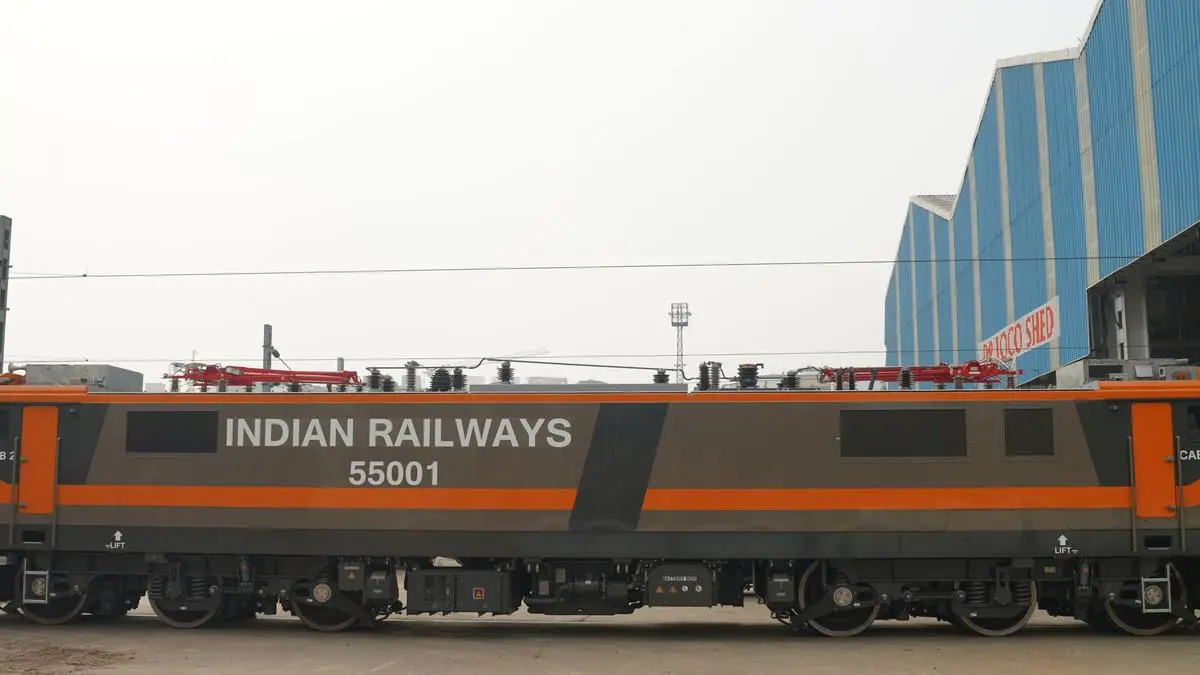
Siemens Mobility has officially commenced commercial operations for its 9,000 hp electric freight locomotives, marking the delivery of the first unit in a massive 1,200-locomotive order for Indian Railways. This milestone, part of a €3-billion lifecycle partnership, represents the largest locomotive order in the history of both Siemens Mobility and Siemens India. The deployment is accompanied by the inauguration of the first dedicated maintenance depot in Visakhapatnam, signaling the start of a 35-year service commitment that will span four strategic hubs across the country.
Technical Specifications and Operational Capacity
The D9 locomotives introduce a significant shift in Indian freight logistics, being the first rolling stock in the network to be tested to the European standard EN 14363. With a power output of 9,000 hp, these six-axle units are currently the most powerful electric freight locomotives operating on the Indian rail network. They are engineered to handle substantial haulage requirements, capable of pulling loads up to 5,800 tonnes at speeds reaching 120 km/h. The axle load is rated at 22.5 tonnes, a configuration optimized for the specific gradients and infrastructure demands of the Indian rail system.
Beyond raw power, the operational model relies on a long-term service architecture. Siemens Mobility is not merely a supplier but a lifecycle partner, responsible for design, commissioning, and three decades of full-service maintenance. This includes the management of spare parts, materials, and comprehensive documentation. The maintenance network will eventually comprise four primary depots located in Visakhapatnam, Raipur, Kharagpur, and Pune, ensuring geographic coverage for the entire fleet.
Digital Integration and Performance Monitoring
A critical component of this contract is the integration of Railigent X, the digital services suite from Siemens Mobility. This platform shifts the maintenance paradigm from reactive to predictive. By utilizing condition monitoring and data-driven performance optimization, the company aims to maximize fleet availability over the 35-year lifecycle. For the operator, this means reduced downtime and more predictable logistics cycles, which is essential for Indian Railways' goal of shifting a higher percentage of national freight from road to rail.
This project serves as a case study in how industrial giants are pivoting toward service-heavy, long-term revenue models in emerging markets. While the initial capital expenditure for the 1,200 locomotives is substantial, the true value for the manufacturer lies in the multi-decade maintenance tail. This structure creates a recurring revenue stream that is decoupled from the volatility of initial equipment sales. Investors tracking industrial infrastructure should note that the success of this model depends on the efficiency of the four maintenance depots and the reliability of the Railigent X digital backbone in real-world conditions.
Strategic Context and Market Positioning
For those evaluating the broader industrial landscape, this deployment highlights the shift toward high-efficiency, low-emission transport solutions. By boosting logistics efficiency, the project aligns with national mandates to reduce CO2 emissions. The ability to manufacture and maintain these units locally in India is a core requirement of the contract, effectively insulating the project from certain global supply chain disruptions while fostering local technical expertise.
As the fleet grows toward the 1,200-unit target, the primary risk to monitor is the integration of these high-performance machines into existing, legacy infrastructure. The transition to European standards for rolling stock requires consistent track maintenance and signaling upgrades to fully utilize the 120 km/h speed capacity. While the current focus is on the successful handover of the first unit, the long-term profitability of the contract will be determined by the operational uptime achieved through the predictive maintenance schedule. For more insights on industrial scale and infrastructure, readers can review our stock market analysis for broader sector trends.
This project is a clear example of how large-scale infrastructure contracts are evolving to include digital service layers. It is a departure from traditional "sell-and-forget" manufacturing, moving instead toward a model where the manufacturer's profit is tied directly to the uptime and performance of the asset. As the Visakhapatnam depot begins operations, the performance metrics from the initial D9 units will provide the first real-world test of this lifecycle partnership model.