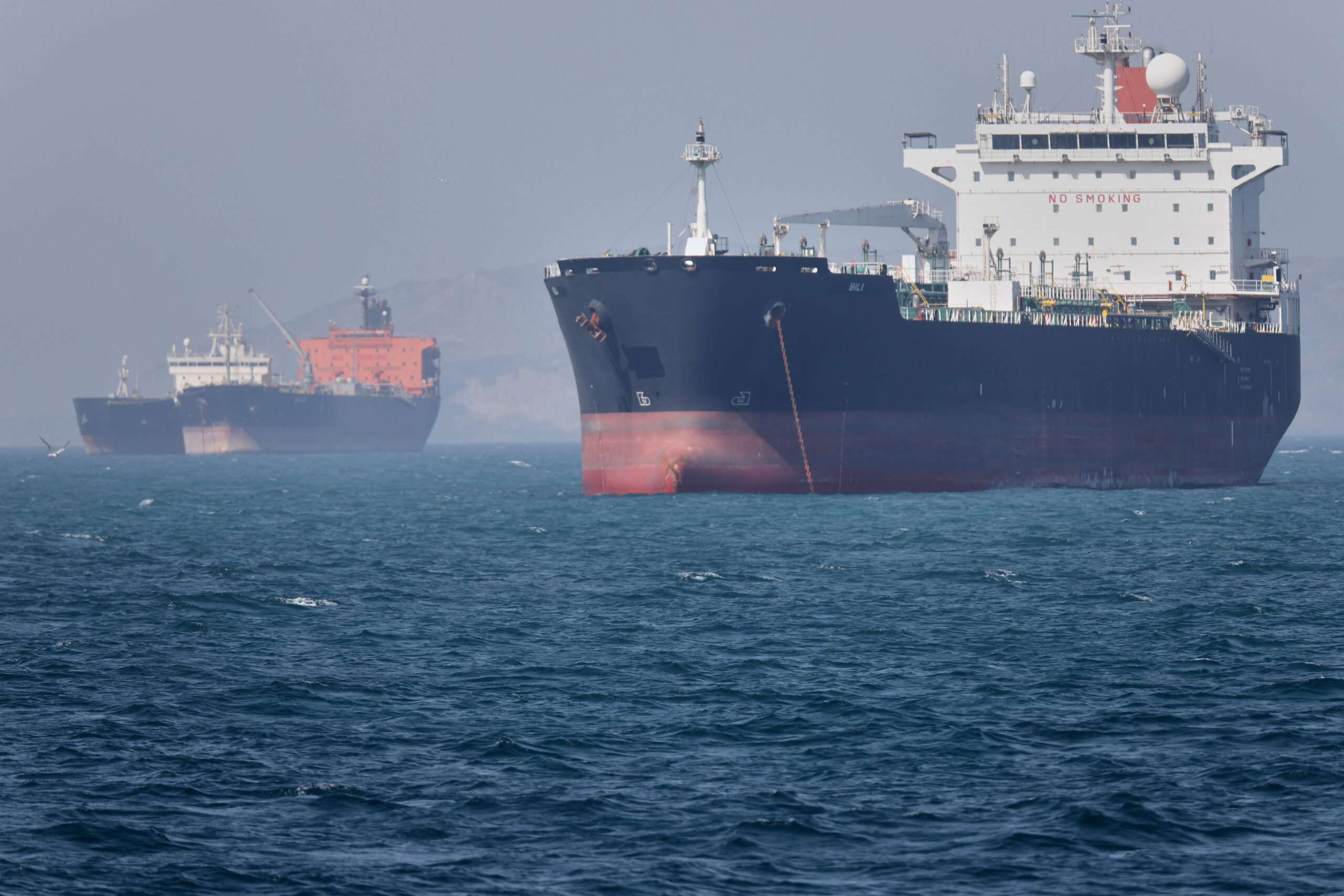
Shipping executives meeting in Athens at the Posidonia exhibition said a potential ceasefire between the U.S. and Iran is insufficient to restore normal traffic through the Strait of Hormuz. Until clear operational rules emerge, vessel operators will not treat the waterway as safe.
The Ceasefire Problem for Ship Operators
The naive read of a 60-day ceasefire is that shipping resumes. The better market read is that operators face binary risk a vague political deal does not resolve. Pankaj Khanna, president of Heidmar Maritime Holdings Corp, stated the problem directly: "What we need is obviously a framework, a rules regulation, whatever tells us exactly how we can go in and get out. So even if a peace deal was signed, that needs to be clarified and that we don't know as yet."
Khanna said Heidmar had a vessel stuck inside the Gulf for three months. He described the toll on seafarers: "Obviously the seafarers on board are missing out, not only on seeing their families but also on births, on deaths, on marriages."
The IMO's Trigger for Action
Arsenio Dominguez, secretary general of the International Maritime Organisation (IMO) , tied the return to navigation to a specific guarantee. "There have been … recent announcements that there's a possibility of a 60-day ceasefire. If that includes, of course, the Strait of Hormuz, and I can get guarantees from the countries that it is safe to start using the waterway, that's where the evacuation framework immediately will come and kick in."
Dominguez emphasized the priority: "That's what we're looking for, because the first objective is always to seafarers, to engage, so they can actually leave the conflict zone."
Insurance vs. Execution Risk
Yiannis Procopiou, CEO of Centrofin Management, drew a line between insurability and operational safety. "While insurance might be available, this does not mean that the strait is really a place where you want to be transiting, at least until we have clear rules of engagement as the shipping industry, as to how we deal with the two nations that are involved here, the U.S. and Iran."
Procopiou called the situation "a very high risk proposition." The distinction matters for traders tracking tanker rates, war risk premiums, and energy equity exposure. Insurance availability removes one layer of friction. It does not solve the execution risk of transiting a waterway where both relevant nations have not clarified their rules.
The Cost of Waiting vs. the Cost of a Bad Deal
Evangelos Marinakis, founder and chairman of Capital Maritime & Trading Corp, framed the patience calculus. "We all agree that the war should stop, should finish yesterday even … the consumer pays the price all around the world."
Marinakis then added the operational counterweight: "On the other hand ..from what we have seen so far, we can afford to wait for two weeks more, one month more … if the final agreement was good for all of us… an agreement that would make us feel safe and confident for the future."
He expressed optimism that "waiting for a couple of weeks or a month, a solution will be found."
Sector Read-Through: Tankers, Insurers, Energy Supply Chains
The read-through for the shipping sector is not uniform. Three groups are exposed in different ways:
- Tanker operators with trapped tonnage face direct revenue loss and crew welfare costs. Heidmar's stuck vessel is a concrete example. Rates for Suezmax and VLCC vessels will stay elevated until certainty returns.
- Insurers face a binary pricing event. War risk premiums will collapse only when the IMO and flag states declare the strait safe, not when a ceasefire is announced. Until then, premiums remain a drag on voyage economics.
- Energy traders and refiners dependent on Gulf crude face a supply-chain bottleneck that a vague peace does not immediately resolve. The risk of delays or re-routing keeps crude differentials wide.
Greece's Position
George Procopiou, founder of Dynacom Tankers Management, Dynagas and Sea Traders, stated the principle: "Freedom of navigation is essential and nobody can impose tolls or any other burden." He added: "Greece has the tradition of breaking blockades since antiquity."
Vasilis Kikilias, Greece's shipping minister, acknowledged the difficulty of predicting an end to the conflict. "Can somebody predict (an end to the conflict)? Unfortunately, no… Things get messy in terms of conflicts very, very easily, and they get untangled very, very difficultly."
Kikilias said: "We are hoping, of course, that there will be a solution. We cannot accept that there will be no free (passage) for ships all over the globe." He regretted that the shipping industry and seafarers cannot be left out of the equation.
Confirmation Signals and Risks
Two signals would confirm the path to normalisation:
- The IMO receives and publishes guarantees from both the U.S. and Iran that the strait is safe. Dominguez explicitly named this as the trigger for the evacuation framework.
- A 60-day ceasefire is announced and includes specific language on freedom of navigation through Hormuz. Any vague or conditional language will keep operators on the sidelines.
What would weaken the thesis:
- A peace deal signed without an operational framework for vessel transit. Khanna's warning applies: the industry needs rules for how to go in and get out.
- Continued ambiguity from either the U.S. or Iran on whether naval forces will enforce new rules of engagement. This keeps execution risk prohibitive.
The Proprietary View
Imperial Oil Ltd (IMO) carries an Alpha Score of 49/100 with a Mixed label in the Energy sector. The stock page is available at /stocks/imo. The score reflects neutral positioning that offers no clear edge from the Hormuz disruption alone. For broader market analysis, see the stock market analysis page.
Shipping executives have drawn a clear line: a ceasefire is not a green light. Until the IMO gets guarantees and the industry gets rules, the strait remains a high-risk proposition regardless of what the political headlines say.
Reporting by Renee Maltezou and Jonathan Saul; editing by Jason Neely