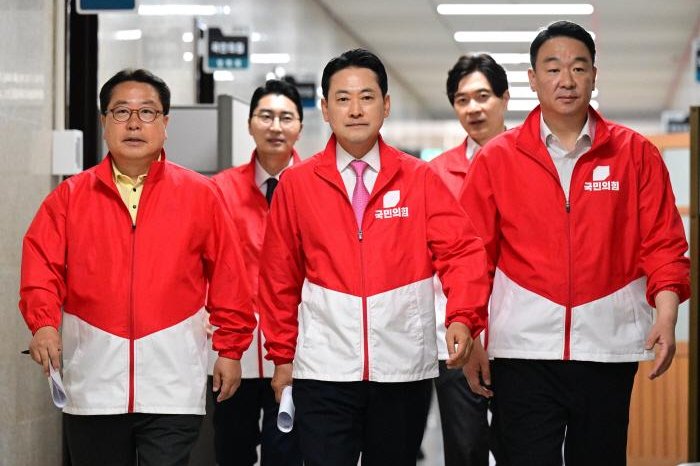
Voting at eight polling stations in Seoul was temporarily halted on June 3 after ballots ran out, triggering emergency protests from the opposition People Power Party. The incident introduces a new layer of political risk for South Korean markets, where election integrity is now a public question.
The simple read is that ballot shortages are an administrative glitch in a high-turnout local election. The better market read is that election integrity questions in a tight race increase the cost of carrying Korean assets through the resolution period. Contested results could delay policy momentum on fiscal spending and regulatory reform. Foreign portfolio flows historically pause during domestic political shocks, and this event adds a fresh variable.
Ballot Shortage at Eight Seoul Polling Stations
The People Power Party secretary-general Chung Hee-yong held an emergency news conference and criticized the National Election Commission directly, calling the shortage "a serious violation of voters' political rights." Floor leader Song Eon-seog issued a separate statement urging Seoul citizens not to give up voting and demanding ballot transfers even after the scheduled 6 p.m. close.
"This is a shocking incident that should not and must not happen at a polling site in South Korea in 2026," Chung said. "It goes beyond simple lack of election preparation and reflects a deplorable failure to fulfill the duty of election management."
The affected polling stations include four in Songpa Ward (Munjeong 2-dong No. 2, Jamsil 2-dong No. 6, Jamsil 7-dong No. 2, Jamsil 4-dong No. 5), two in Garak 2-dong (Nos. 3 and 7), one in Cheongdam-dong No. 4, and one in Guui 3-dong No. 6 in Gwangjin Ward. The election commission attributed the shortage to a sudden increase in voter turnout, a claim the PPP dismissed as insufficient.
PPP Leadership Responds
Song Eon-seog also issued an emergency statement: "We are receiving absurd reports that citizens in Seoul cannot vote because ballots are unavailable. Seoul citizens, you must not give up voting under any circumstances. Even if it is difficult, please wait calmly and make sure to vote." Song said the situation infringed on citizens' right to participate in elections and demanded the commission transfer ballots quickly.
Bae Hyun-jin, chairwoman of the People Power Party's Seoul chapter, held her own news conference. "A shortage of ballots in an election is not a simple mistake. It proves that the basic election management system, the foundation of democracy, has completely collapsed," Bae said. She criticized the election commission for treating the incident as minor.
"The commission responded as if it were nothing serious," Bae said. "We will continue to demand measures to prevent a recurrence and disciplinary action against those responsible for the election management failure that violated the sovereign act of Seoul citizens."
Exposure: Korean Asset Pricing and Political Risk
Ballot shortages at any election erode public trust in the process. The optics are worse when they occur in the capital city during a high-turnout local election. For investors, the immediate concern is whether the incident will trigger legal challenges that delay final results or cast doubt on the outcome.
South Korea's KOSPI and the won have historically shown sensitivity to domestic political shocks, especially when they involve election administration failures. A contested result could slow policy momentum, particularly on fiscal spending or regulatory reforms promised during campaigning. Foreign portfolio flows tend to pause during periods of elevated political uncertainty, and the ballot shortage adds a new variable to an already close race.
Affected Assets
- KOSPI and KOSDAQ: Event-driven volatility likely, with sensitivity to any news of further disruptions or legal filings.
- Korean won (KRW): Short-term pressure if foreign investors reduce exposure on political uncertainty. The won traded near recent ranges before the news; a widening of the election integrity discount could push it weaker.
- Korean sovereign bonds: Risk-off flows could support Korea Treasury Bond prices if the incident sparks a broader confidence crisis, though the effect is likely contained unless more stations are affected.
- ETFs tracking South Korea (e.g., EWY): Net outflows possible over the next few sessions as the story develops. The ETF already carries a geopolitical risk premium; this event adds a domestic layer.
Timeline: From Voting Day to Potential Legal Fallout
The election is ongoing, with polls scheduled to close at 6 p.m. The PPP has demanded that the election commission guarantee voting rights for citizens who waited, even after the official closing time. The party said it would immediately push for a fact-finding investigation after voting ends and hold those responsible accountable.
Next Catalysts to Track
- Election commission's formal response – whether it acknowledges systemic failure or maintains the "sudden turnout increase" explanation.
- Reports of additional polling stations running out of ballots. The PPP identified eight stations so far; more would amplify the narrative.
- Voter turnout data released after the vote. Lower-than-expected turnout in affected districts could become a point of contention.
- Legal motions filed by the PPP contesting results in specific wards. South Korean election law allows challenges based on procedural irregularities.
Risk Confirmation and Reduction Signals
Risk confirmation signals:
- Another wave of ballot shortages at additional stations, especially in swing wards.
- Election commission admits to a pre-election planning failure, not just a turnout surprise.
- PPP files formal objections or boycotts results, delaying certification.
- Street protests or physical confrontations at polling stations.
Risk reduction signals:
- Ballots are redistributed quickly and all citizens who waited are able to vote.
- Election commission takes disciplinary action against local officials responsible for the shortage.
- Voter turnout in Seoul remains high despite the disruption, suggesting the incident did not disenfranchise a meaningful share of voters.
- Both major parties accept the final result without protracted legal challenges.
Practical rule: Ballot shortages at capital polling stations during a high-turnout election are rarely contained to one-day news cycles. The commission's response in the next 24 hours will determine whether this remains a localized administrative failure or escalates into a broader legitimacy crisis that affects South Korea's political risk profile for the rest of the year.
The stock market analysis framework for South Korea now includes an election integrity discount. Traders should watch for additional polling station reports, the commission's official response, and any legal motions filed by the PPP. Each of these will signal whether the risk is contained or widening.