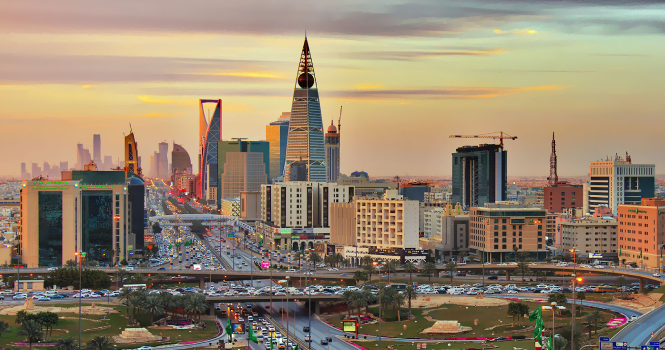
Saudi Arabia's residential real estate sector recorded its sharpest contraction in years during the first quarter of 2026, with transaction volumes in Riyadh falling 54.4% year-on-year to just over 8,600 deals. The decline, detailed in JLL‘s Q1 2026 Saudi market report, reflects the combined impact of regional geopolitical tensions, economic uncertainty, and recent regulatory changes. For investors tracking Middle Eastern real estate exposure, the collapse in turnover signals a structural shift away from speculation-driven price growth–and raises the risk of further downside in developer revenue, bank mortgage books, and property-linked securities.
Residential Transaction Collapse: The Defining Risk Event
The headline figure is stark: Riyadh, the Kingdom’s largest property market, saw residential transaction volumes plunge by more than half compared to the same quarter last year. Apartment prices in the capital dropped 10.8%, while villa prices managed a 2.6% increase, suggesting demand is concentrating in the detached-home segment. In Jeddah, the picture was less severe–apartments rose 4% and villas 3.8%–but that relative strength does not mask the broader slowdown.
JLL’s report notes that the market is “gradually transitioning away from speculation-driven price growth toward more sustainable, demand-led dynamics.” That transition, however, is creating near-term pain: regulatory changes (the report does not specify the exact measures) appear to have chilled transaction activity, and the supply pipeline remains heavy. Riyadh’s housing stock reached 2.19 million units in Q1, with an additional 20,700 units expected by year-end. Jeddah is set to add 15,100 units, and the Dammam Metropolitan Area another 7,900 units. If demand does not recover quickly, oversupply could pressure prices further.
Key insight: The 54% transaction drop is a leading indicator for developer cash flows, contractor orders, and bank mortgage origination. A sustained slowdown would hit earnings at firms like Dar Al Arkan, SABIC’s real estate unit, and lenders with heavy residential exposure.
Office and Retail: Diverging Performance Masks Supply Risk
While residential weakens, commercial segments show a mixed but broadly resilient picture. Riyadh’s prime office market remains the standout: vacancy rates across all categories sit at approximately 3.2%, and the King Abdullah Financial District (KAFD) continues to command the highest office rents in the country. Riyadh delivered 179,400 square meters of new office space in Q1, with a further 1.2 million square meters expected by year-end. That pipeline is substantial–nearly seven times the Q1 delivery–and could pressure rents if absorption slows.
- In Jeddah, Grade A office vacancy stood at 6%, with rents declining 3.8% as occupiers shifted to newer buildings. Grade B rents rose 2.5%, reflecting a trade-down dynamic.
- No office projects completed in Jeddah during Q1, but Dammam expects 129,640 square meters of new supply.
Retail performance was bifurcated by format. Super-regional malls in Riyadh saw vacancy rates stable at 2.1% and rents flat. Regional malls recorded a 3.5% rental increase. In Jeddah, super-regional malls delivered rental growth of 13%–a strong outlier. Riyadh’s retail stock expanded to 4.7 million sqm after adding 31,300 sqm in Q1, with a further 896,700 sqm slated for the rest of 2026. That supply wave represents a 19% increase from current stock, a material risk for secondary and community malls already seeing vacancy rates of 9.7% and 10.4%.
Hospitality: Geopolitical Headwinds Hit Riyadh Hard
Saudi Arabia’s hospitality sector showed a split between the capital and religious cities. Nationwide, occupancy reached 66.3%, the average daily rate (ADR) rose 3% to SAR 805.5, but RevPAR declined 1.3%–a sign that occupancy gains were not enough to offset soft demand in key markets.
Riyadh was the weak link: occupancy fell 13.5 percentage points to 52.2%, and RevPAR dropped 9.5%, despite a 4.6% increase in ADR. Regional geopolitical tensions clearly weighed on business travel and conferences. In contrast, Jeddah recorded a 3.8 percentage point occupancy gain to 66.1%, with RevPAR up 4.4%. Makkah and Madinah remained stable, with occupancy at 78.6% and 81.3% respectively, supported by Umrah pilgrims during Ramadan and Eid leisure travel.
Hospitality supply continues to expand: Riyadh’s inventory reached 49,400 rooms after adding 110 rooms in Q1, with about 1,000 more expected next year; Jeddah anticipates 1,500 additional rooms.
Industrial and Logistics: Full Capacity, Rising Rents
The strongest segment in Q1 was industrial and logistics real estate, which operated “close to full capacity,” according to JLL. Occupancy rates exceeded 90% in both Riyadh and Jeddah. Rents across Riyadh’s key submarkets rose 5.1% year-on-year, with the Taibah district leading at 9.6%. Jeddah Islamic Port–a critical Red Sea logistics hub–commanded the highest rents at SAR 470/sqm, up 5.3%. In the Dammam Metropolitan Area, rents surged 9.9% as the city strengthened its role as a stable logistics base amid regional uncertainty.
For investors, this segment offers the most defensive profile: structural demand from e‑commerce, supply chain diversification, and Vision 2030 industrialisation supports occupancy and pricing power. The risk is primarily execution–whether new supply can be delivered on time to meet demand without overheating.
Exposure, Timeline, and Risk Scenarios
Who is exposed?
- Developers with large residential pipelines in Riyadh face revenue and margin pressure if transaction volumes do not recover.
- Lenders with concentrated mortgage exposure could see rising non-performing loans if price declines accelerate.
- Contractors tied to residential projects may face order cancellations or payment delays.
- Conversely, industrial REITs and logistics operators benefit from the capacity-constrained environment.
Timeline to next catalyst
- Q2 2026 data (due mid-year) will show whether the transaction drop stabilizes or deepens. A further 20%+ decline would confirm a structural downturn.
- Regulatory clarity: If the government clarifies or withdraws the recent measures, activity could rebound quickly.
- Geopolitical easing: A reduction in regional tensions would lift business travel, office occupancy, and residential confidence.
What would reduce the risk?
- A recovery in residential transactions above 10,000 per quarter in Riyadh.
- Confirmed easing of speculation taxes or lending restrictions.
- Sustained above-2% GDP growth and non-oil sector momentum supporting employment.
What would worsen the risk?
- Further regulatory tightening or enforcement action.
- A new geopolitical shock that disrupts business travel and investor sentiment.
- Oversupply in residential and retail as pipeline deliveries collide with weak demand.
AlphaScala’s proprietary data assigns JLL (Jones Lang LaSalle Inc) an Alpha Score of 57/100 (Moderate). The score reflects the company’s diversified business model and strong Middle East presence, balanced against the near-term headwinds in its home-reporting market. For traders and allocators, JLL’s stock–traded on the NYSE under JLL–provides a liquid, pure-play proxy on global real estate market health, with Saudi exposure as a notable factor.
For a full breakdown of JLL’s financials, insider moves, and peer comparisons, visit the JLL stock page. Broader market context is available at stock market analysis.
The road ahead for Saudi real estate depends on how quickly the residential market absorbs the shock and whether the commercial and industrial segments can sustain momentum. For now, the risk event is real, the data is concrete, and the watchlist should be active.