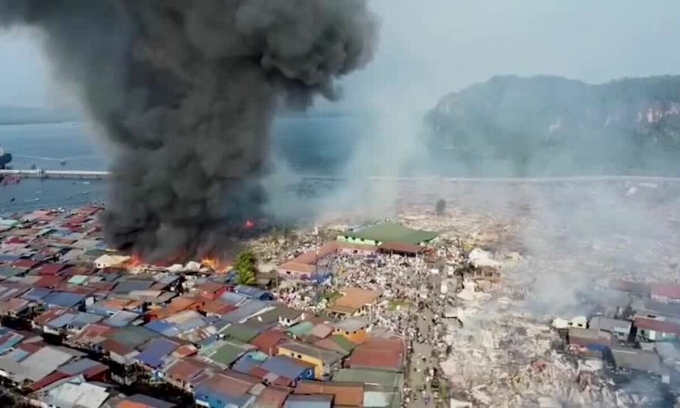
A catastrophic fire in Malaysia's Sabah state on Borneo island has destroyed approximately 1,000 homes, leaving thousands of residents displaced. The incident, which occurred in a coastal village, has prompted immediate emergency responses from local fire departments to contain the damage and manage the humanitarian crisis. While the primary impact is the loss of residential housing, the scale of the destruction raises questions regarding the stability of local infrastructure and the potential for regional supply chain disruptions in a state known for its commodity and resource-based economic activity.
Infrastructure and Regional Economic Exposure
The destruction of such a significant number of homes in a single event creates an immediate burden on local municipal resources and regional planning authorities. Sabah serves as a critical node for various industrial operations, and the displacement of a large workforce can lead to temporary labor shortages in surrounding sectors. Companies operating within the region often rely on localized labor pools for logistics, processing, and maintenance tasks. A sudden reduction in housing availability forces a shift in population density and complicates the daily operations of businesses that depend on proximity to these coastal hubs.
Investors monitoring the region should consider the following factors regarding the aftermath of the fire:
- The potential for localized inflationary pressure on construction materials as rebuilding efforts commence.
- The diversion of regional government funding from planned infrastructure projects to emergency relief and housing reconstruction.
- The impact on regional logistics networks if the fire damage extends to nearby transport or storage facilities.
Sector Read-Through and Market Linkages
The event highlights the vulnerability of concentrated coastal settlements to fire hazards, particularly in regions where dense, informal housing structures are prevalent. While the direct financial impact on major public companies may be limited, the broader regional stability is a factor for those tracking capacity milestones and regulatory shifts in emerging markets. Disruptions in Sabah can ripple through the broader Malaysian economy, affecting sectors that rely on consistent regional output and stable labor conditions.
AlphaScala data currently tracks various industrial and technology firms with regional exposure. For instance, ON Semiconductor Corporation holds an Alpha Score of 45/100, reflecting a mixed outlook, while AGILENT TECHNOLOGIES, INC. maintains a score of 55/100, categorized as moderate. These scores reflect broader market conditions rather than specific exposure to this event, but they serve as a baseline for assessing how regional volatility might influence broader sector performance.
The Path to Stabilization
The next concrete marker for this situation will be the release of official government assessments regarding the long-term displacement of the population and the timeline for reconstruction. Observers should look for updates from local authorities on the restoration of essential services and the potential for new zoning regulations in the affected area. These policy decisions will dictate the speed of economic recovery and the degree to which industrial operations in the vicinity remain insulated from the ongoing humanitarian fallout.