Commodities● Neutral
Russian Oil Terminal Burns After Ukraine Strike Near St. Petersburg
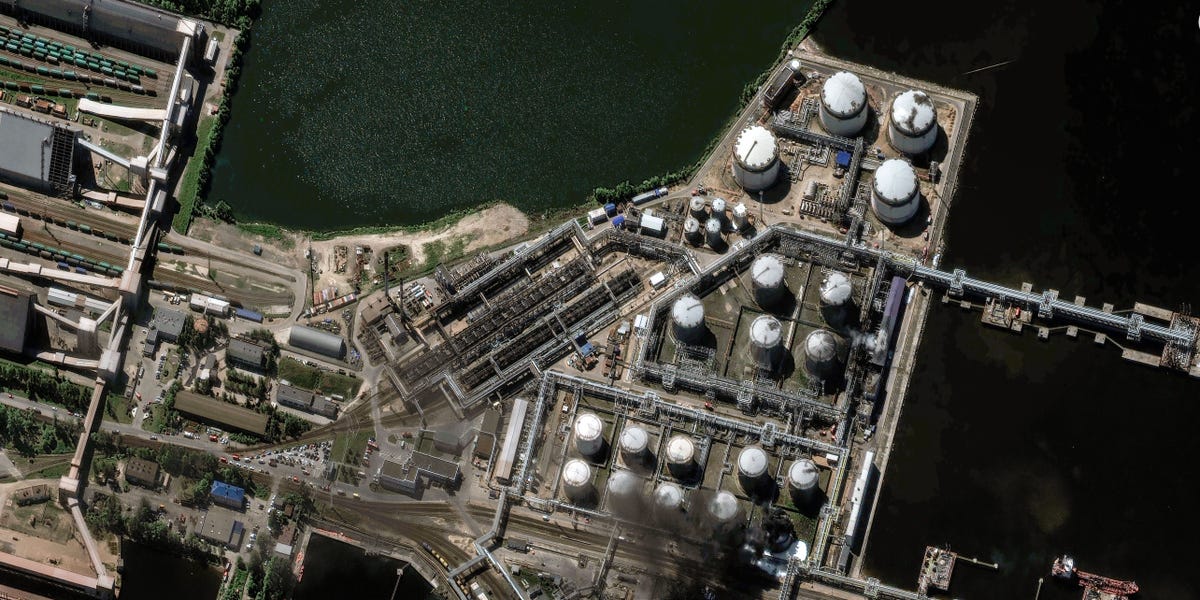
Satellite imagery shows a burning oil terminal and warship damage near St. Petersburg. The attack disrupts Russian Baltic energy exports and raises freight risk for crude and fuel oil.
Continue with
New satellite imagery shows a Russian oil terminal on fire and damage to a warship near St. Petersburg after Ukrainian strikes during Russia's annual economic forum. The attack hit a fuel depot and a naval facility in the Leningrad region, disrupting operations at a key energy infrastructure node.
Why St. Petersburg Infrastructure Matters for Energy Flows
St. Petersburg is not just Russia's second-largest city. It is a transit hub for crude and refined products moving from Baltic ports to global markets. The Leningrad region hosts oil terminals, storage depots, and pipeline connections feeding Baltic export routes. A direct strike on these assets creates immediate supply-chain risk for buyers of Russian crude and fuel oil.
Damage to a warship at a nearby naval base adds a naval-logistics dimension. The facility near St. Petersburg supports Baltic Fleet operations, which protect tanker routes out of Ust-Luga and Primorsk, two of Russia's largest crude export terminals. Any disruption to naval coverage raises insurance premiums and freight costs for vessels loading in the region.
Short-Term Supply Disruption vs. Structural Risk
The simple read here is headline-driven: a burning oil terminal equals a temporary reduction in Russian export capacity. The better market read looks at duration and substitution. If the terminal is offline for weeks, refiners in Europe, India, and China that take Urals crude must source alternative barrels from the Middle East or West Africa. That shift tightens the medium-sour crude market globally.