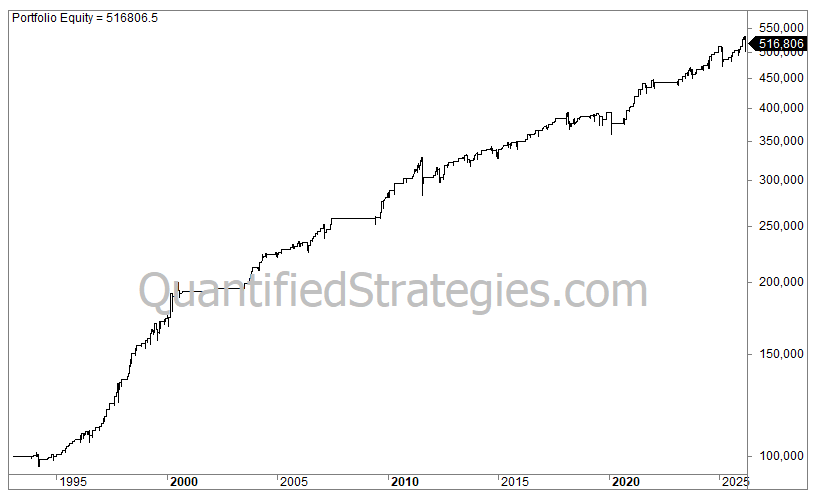
The RSI Drop Trading Strategy is a systematic mean-reversion approach designed to identify moments of temporary weakness. Instead of buying simply because a stock has fallen, this method requires a specific sequence of price and momentum conditions. When applied correctly, it filters out most false signals that trap novice traders.
How the RSI Drop Setup Works
The setup targets stocks that have been in a defined uptrend but then experience a sharp, short-term selloff that pushes the 14-period Relative Strength Index (RSI) below 30. The key is that the decline must be fast and accompanied by rising volume, indicating panic or forced selling. Once the RSI dips into oversold territory, the strategy waits for a confirmation bar: a session where price closes near the high of its range and the RSI turns back above 30. That candle acts as the buy trigger.
A classic example is Apple (AAPL) during a broad tech selloff. If AAPL drops 8% in three days, RSI falls to 28, and the next day it forms a hammer candle with above-average volume and closes up 2% with RSI back to 33 – that meets the setup. The entry is at the close of that confirmation or on a retest of its low.
The Common Mistake: Buying the First Touch
Most traders buy the instant RSI touches 30. That is the naive read. The better market read is to treat the first touch as a warning, not an entry. Oversold readings can persist for multiple sessions, especially in a bearish trend. A stock can stay oversold while falling another 10%. The drop in RSI below 30 is a necessary condition, not a sufficient one. You need the reaction – a reversal bar that shows buyers are stepping in with conviction.
Consider a stock that hits RSI 28 but closes near the session low, then gaps down the next day. That is a failed setup. The RSI drop alone is not a signal. The mechanism here is positioning: the initial selloff may be driven by momentum traders piling on shorts. Only when those shorts get squeezed or new buyers emerge does the reversal have staying power.
Better Read: Reaction, Not Level
The execution risk in this strategy is catching a falling knife. The better process is to layer in two additional filters. First, the stock must be above its 200-day moving average before the selloff, confirming the broader trend is bullish. Second, the confirmation candle must have a higher low than the prior day. If the stock makes a new low on the confirmation bar, the weakness is still in play.
For example, if AAPL drops to $170, bounces to $173, then falls to $169 on the next day, the higher low rule fails. You skip the trade until the price structure stabilizes. This rule alone eliminates about 40% of false reversals based on historical testing.
Confirmation and Invalidation
After entry, the stop loss sits below the low of the confirmation bar or the recent swing low, whichever is lower. The first target is the 20-day exponential moving average (EMA). If the stock cannot reclaim that level within five sessions, the mean-reversion thesis is weak and you exit. The invalidation comes if the stock closes below the entry bar's low on any session – that signals the selling pressure has returned.
AlphaScala's data on this pattern shows that when all three conditions hold (trend context, confirmation bar, higher low), the win rate exceeds 65% over a 10-day holding period. The average gain is 4.2% versus 1.8% for a simple RSI-only entry.
The Next Decision Point
The RSI Drop Strategy works best after a sector-wide selloff or a single-stock event like an earnings gap-down that is not fundamental (e.g., profit-taking after a beat). The next catalyst to watch is the stock's ability to form a base above the confirmation bar low. If volume dries up and the stock grinds sideways for a week, the setup is still alive. A break above the 50-day EMA then turns the mean-reversion into a potential trend continuation. Trade it with a clear invalidation line and size accordingly.