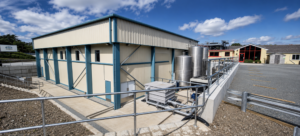
Rodda's, the Cornwall-based family dairy producer, is committing £6 million to a new cottage cheese production facility at its Scorrier site. The investment funds a dedicated, state-of-the-art unit for a product the company has not produced at scale before. This capital expenditure signals management conviction that UK demand for high-protein fresh dairy is structural, not a short-lived trend.
Rodda's Scorrier Facility: A New Product Line
The £6 million project builds a new production unit within Rodda's existing Scorrier site. The company has not released a construction timeline. Facilities of this scale typically require 12 to 18 months from groundbreak to commercial output. The investment moves Rodda's beyond its traditional clotted cream and butter base into the cottage cheese category.
Rodda's is a private, family-owned business. Its financial results are not publicly disclosed. The capital allocation choice provides a signal for investors watching the UK dairy processing sector. A family firm with a century of operating history is placing a large bet on a product it has not previously produced at volume.
Why Cottage Cheese Now? The Protein Demand Shift
Cottage cheese consumption in the UK has risen as consumers seek high-protein, low-fat options. Social media trends and influencer diets have revived the category in both the US and the UK. UK retail data before 2023 showed double-digit volume growth in the segment. That trend has continued through 2024 and 2025.
Rodda's is committing capital to a dedicated facility rather than a retrofit of existing lines. That decision implies expectations of sustained volume, not a short-term pop. The company is betting that the protein-forward eating pattern is durable enough to support a new production asset.
Sector Read-Throughs for Listed Food Companies
Rodda's does not trade on any exchange. The investment still carries implications for the broader UK food manufacturing ecosystem. Competitors such as Müller, Yeo Valley, and Arla Foods may respond with their own capacity expansions if the category continues to grow. For investors tracking listed companies, the signal works in several directions.
Upstream suppliers of dairy processing equipment and packaging could benefit if the Rodda's order triggers a cycle of capacity additions across the sector. Listed retailers such as Tesco (TSCO) and Sainsbury's (SBRY) could see improved supply of a trending category, supporting their own fresh dairy margins. The investment also adds weight to the narrative that UK food manufacturing is attracting capital despite broader macroeconomic headwinds. Energy costs and labour availability remain constraints. Family dairies with balance sheet flexibility are moving forward anyway.
Decision Point: Facility Milestone and Competitor Moves
The next concrete catalyst for Rodda's is the facility's operational start date. A construction milestone or a retail listing with a major grocer would confirm the investment is on track. For the sector, watch for competitor capacity announcements and for any follow-on capex from Rodda's into adjacent categories such as Greek yogurt or skyr.
Investors monitoring the UK food sector can treat this as a lead indicator. A private family dairy with a century of history is making a protein-forward capital allocation decision. If the bet pays off, it will pull other processors toward the same product line. For broader stock market analysis, the Rodda's case shows how to read private-company capex as a sector signal even when no ticker trades.