Riyadh Air Routes Pressure Gulf Carriers, Lift BA Backlog
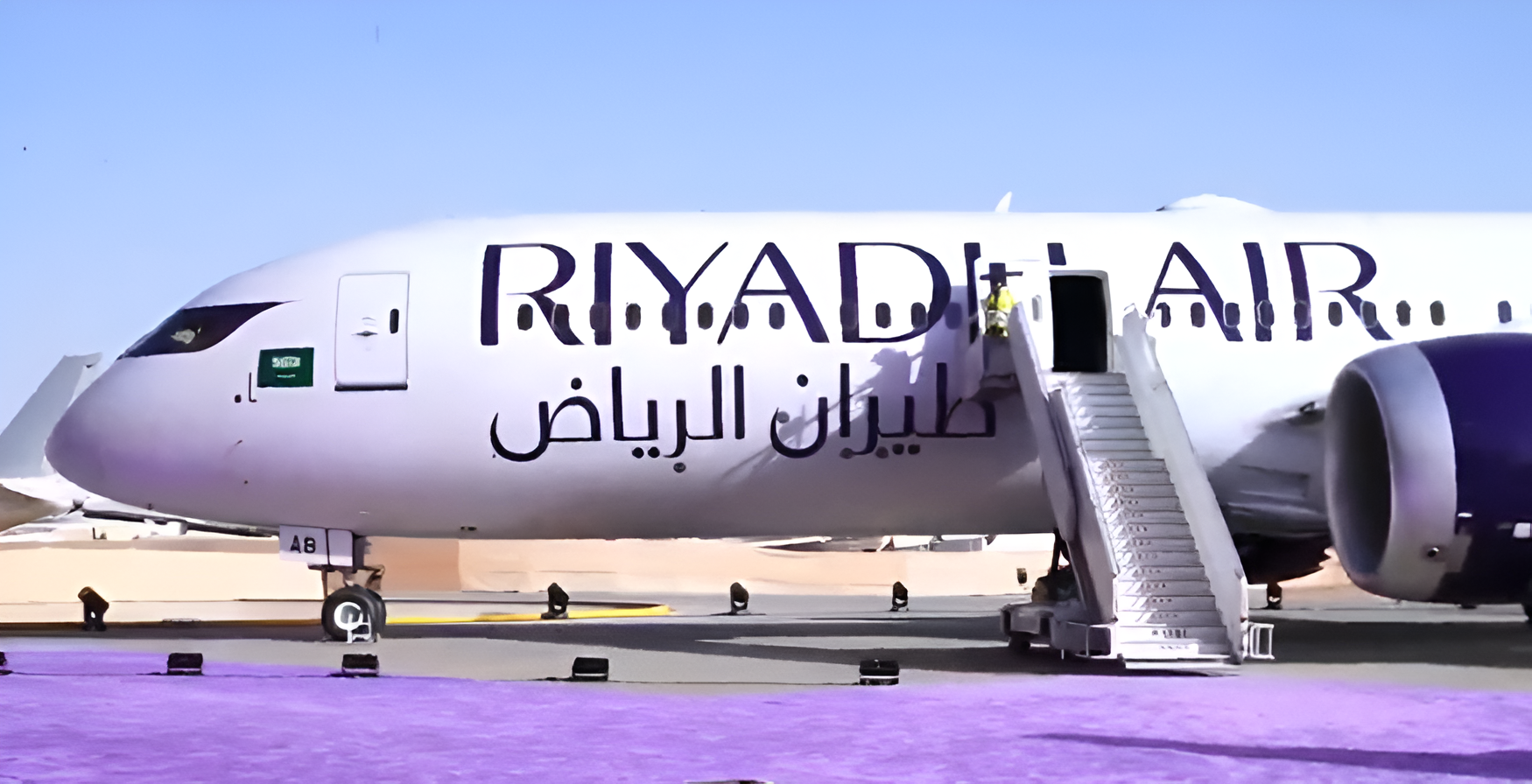
Riyadh Air's five new routes directly compete with Emirates and Qatar Airways. With three 787-9s delivered and 39 on order, Boeing gets a production fill. Watch Q3 delivery cadence.
Alpha Score of 30 reflects weak overall profile with poor value, moderate quality, moderate sentiment. Based on 3 of 4 signals – score is capped at 90 until remaining data ingests.
Event: Riyadh Air Opens Ticket Sales – Five Destinations
Saudi Arabia's new national carrier, Riyadh Air, began selling tickets for five destinations: Cairo, Dubai, Jeddah, Madrid, and Manchester. Additional routes will follow in the coming weeks. The announcement follows the June 5 arrival of the first two custom-manufactured Boeing 787-9 Dreamliners, with a third aircraft arriving on the same day as the route launch.
Chairman Yasir Al-Rumayyan, who also serves as Governor of the Public Investment Fund (PIF), said the expansion directly executes Saudi Vision 2030. The strategy targets economic diversification by building a transportation hub centered on Riyadh. The airline's fleet build-out and route network are the operational levers for that goal.
The Sector Read-Through: Competing with Dubai's Hub Model
The immediate competitive pressure falls on Emirates, Etihad, and Qatar Airways. Riyadh Air's Dubai and Jeddah routes overlap with the core networks of Emirates and flydubai. The Madrid and Manchester legs target the same long-haul European traffic that Gulf carriers have dominated for two decades.
The mechanism: Riyadh Air benefits from state-backed capital and a home market of 35 million people with rising disposable income. It does not need near-term profitability. That gives it pricing freedom to compress yields on overlapping routes. The read-through is most acute for Emirates, which has the highest exposure to Dubai-Riyadh and Dubai-Jeddah traffic among the Gulf trio.
What to track: Load factors and average fare data on the Dubai-Riyadh and Dubai-Jeddah sectors over the next two quarters. If Riyadh Air captures more than 15% of those routes, Emirates will likely respond with capacity cuts or fare matching, which would pressure its margin.
Boeing's 787-9 Pipeline and the Delivery Signal
Riyadh Air's fleet plan is a concrete demand signal for Boeing's 787-9 Dreamliner. The airline has taken delivery of three aircraft in June, with a total order of 39 787-9s on the books. That order book gives Boeing a visible production slot fill through at least 2027.
The mechanism: Boeing's 787 production line in North Charleston, South Carolina, runs at about five aircraft per month. Riyadh Air's order represents roughly eight months of output. The delivery schedule provides Boeing with predictable cash flow from a single customer, reducing the risk of a production gap if other airlines defer orders.
Risk to watch: Boeing's 787 delivery timeline has faced quality-control delays in prior years. Any slip in Riyadh Air's delivery schedule would push back the airline's capacity expansion and reduce the near-term competitive pressure on Gulf rivals. The next delivery milestone is the fourth aircraft, expected in the third quarter.
The PIF Strategy: Aviation as Infrastructure Multiplier
Riyadh Air is one piece of a broader Public Investment Fund strategy to build an aviation ecosystem. The fund also backs Saudia (the legacy carrier), flyadeal (low-cost), and the King Salman Airport expansion in Riyadh. The goal is to increase the airport's capacity to 120 million passengers annually by 2030.
The mechanism: Each new Riyadh Air route creates demand for ground handling, catering, maintenance, and hotel capacity in Riyadh. The PIF captures that value through its portfolio companies rather than letting it flow to foreign operators. The airline's route network is designed to funnel connecting traffic through Riyadh, competing directly with Dubai's hub model.
What this means: The PIF is not just building an airline. It is building a captive demand pool for its infrastructure investments. Riyadh Air's losses in the early years are acceptable if they drive utilization of the airport and related assets.
AlphaScala Data: Boeing Score and the Industrials Sector
Boeing (BA) carries an Alpha Score of 31/100, labeled Weak, in the Industrials sector. The score reflects execution risk on production and delivery timelines, which directly affects the Riyadh Air order book. A sustained delivery cadence would be a positive signal. The current rating suggests the market prices in continued operational friction.
For traders tracking the sector, the Riyadh Air expansion is a two-sided event. It pressures Gulf airline stocks but supports Boeing's delivery narrative. The next catalyst is the airline's first-quarter 2026 load factor data, which will show whether the route strategy is gaining traction against entrenched competitors.
The next concrete marker is Riyadh Air's fourth 787-9 delivery, expected in the third quarter. That will confirm whether Boeing's production line is hitting its promised cadence. On the competitive side, Emirates' next quarterly earnings call will be the first forum where management must address the new entrant's impact on Gulf route pricing. If Emirates guides for lower second-half yields on Middle East routes, the Riyadh Air effect is already material.
Drafted by a large language model from the source reporting linked above, then screened by automated publishing checks. It is not read by a journalist before publication. Some articles cite our Alpha Score. Verify prices and figures against the original source. Educational coverage, not personalized advice.