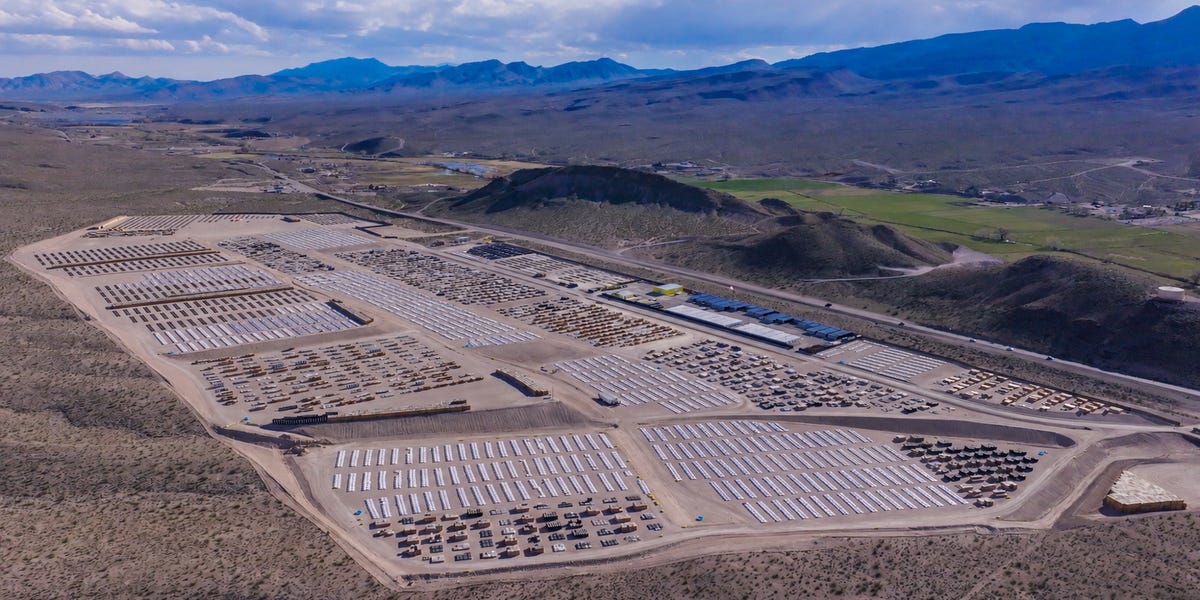
Redwood Materials, the battery recycling startup founded by former Tesla Chief Technology Officer JB Straubel, is pitching a solution to the looming power shortage for artificial intelligence data centers. The company now recycles more than 70% of all batteries in North America, but it has adapted its model to repurpose millions of aging electric-vehicle battery packs into grid-scale storage systems before they are broken down for materials.
The proposal targets a problem that is becoming urgent. AI data centers alone could consume 12% of U.S. electricity by 2028, Redwood said, citing industry projections. That forecast comes after years of relatively flat power demand across the country. Factories returning to America and the broader electrification push are adding further strain. Building new transmission lines and power plants takes years, so large battery storage systems have emerged as a bridge to balance supply and demand while utilities wait for infrastructure upgrades.
Redwood estimates that more than 6 million electric vehicles have been sold in the U.S. over the past decade. As those vehicles age, their battery packs lose enough capacity to power a car but can still store electricity for stationary use. The company said roughly 1 terawatt-hour, or 1,000 gigawatt-hours, of used EV battery capacity will become available in the U.S. by 2040. Beginning in the early 2030s, those second-life batteries could supply about half of the country's energy storage demand during that period, Redwood estimates. The company itself aims to provide about 400 gigawatt-hours of that supply.
The technical challenge is significant. Battery packs from more than 100 different electric vehicle models have different shapes, chemistries, and connectors. Redwood said it is developing technology to combine these packs into standardized energy storage systems. Batteries that cannot be safely reused would be recycled to recover lithium, copper, and rare earth minerals, keeping those materials inside U.S. supply chains.
If the approach works, it would turn a growing recycling challenge into an energy asset at a moment when reliable electricity is becoming one of the biggest constraints on America's AI ambitions. The concept also carries implications for the broader energy storage sector. Companies that build grid-scale batteries, such as Tesla, Fluence Energy, and others, could face a new source of lower-cost supply if second-life packs gain traction. But the technology is unproven at scale, and the timeline depends on millions of EV batteries reaching end-of-life in the coming decade.
Redwood's plan highlights a shift in how the electric-vehicle ecosystem views its batteries. Instead of a liability at the end of a car's life, the packs become a resource that can extend their economic value and support the grid. The company's estimates suggest that reused EV batteries could make a meaningful dent in the storage gap, though the actual deployment will depend on regulatory support, safety standards, and the economics of repurposing versus recycling.
For investors tracking the intersection of AI infrastructure and energy, the readthrough is straightforward: the power crunch is real, and any solution that reduces the cost or timeline of adding storage is worth watching. Redwood itself is private, but its technology could influence the competitive dynamics for publicly traded battery recyclers, storage developers, and data center operators that are scrambling to secure electricity.