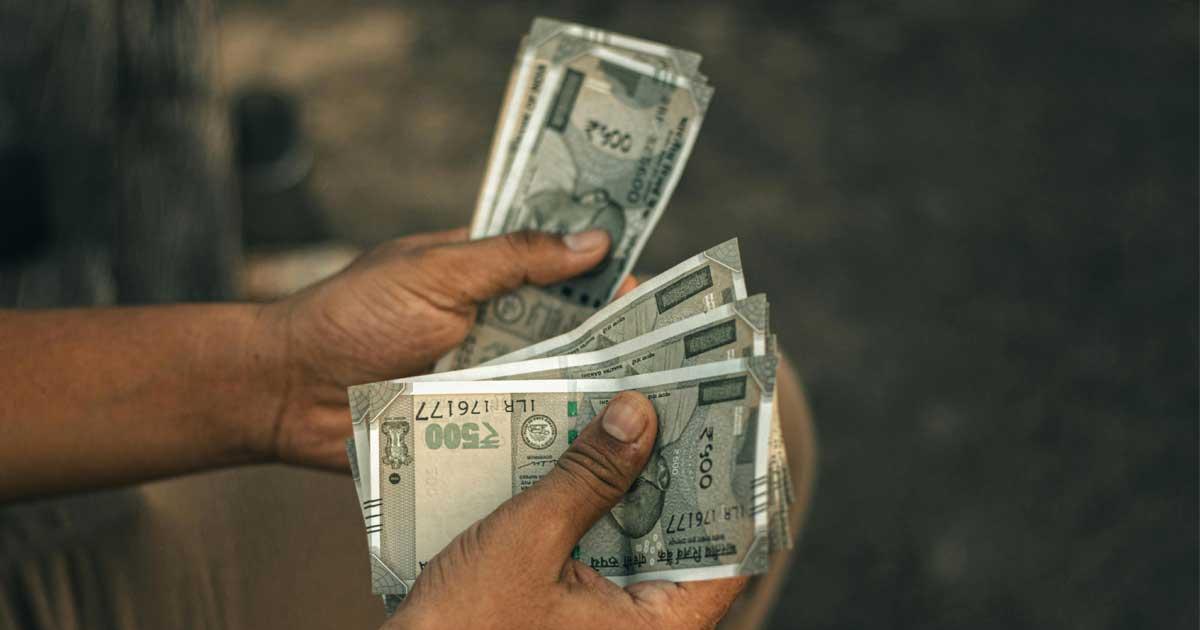
Reserve Bank of India Governor Sanjay Malhotra confirmed on Friday that the central bank is evaluating a proposal for polymer banknotes. The statement, made during the post-policy media interaction, validates recent media reports and puts a concrete risk event on the radar for the currency printing and cash management ecosystem.
The primary objective of introducing polymer notes is to increase note life, not to combat counterfeiting – a distinction the RBI and the government have maintained since a 2012 field trial. That trial, involving one billion pieces of Rs 10 notes across five cities, was shelved due to technological challenges. Malhotra described the current review as "still at a preliminary stage," with the RBI examining pros and cons before deciding whether to proceed.
Why the Polymer Note Evaluation Matters for Security Printers
The Mechanism: Durability vs. Printing Frequency
Polymer notes, made from a thin plastic substrate, typically last 2.5 to 4 times longer than cotton-paper notes. The paper currently used for Indian banknotes is 100% cotton. Longer note life means fewer replacement notes need to be printed each year, directly reducing the indent – the quantity of banknotes ordered from security printing presses.
The RBI's own data shows this dynamic already at work. Expenditure on security printing during FY26 was Rs 4,875.2 crore, down from Rs 6,372.8 crore in the previous year. The central bank attributed the 23.5% drop to "reduced indent of banknotes during 2025-2026." A shift to polymer would amplify this trend, compressing the volume of notes printed annually and, by extension, the revenue of security printing entities.
Who Is Exposed?
The primary counterparty to the RBI's printing indent is Bharatiya Reserve Bank Note Mudran Private Limited (BRBNMPL) and the Security Printing and Minting Corporation of India Limited (SPMCIL), both government-owned. While not publicly traded, their operational scale and cost structure are directly tied to note volume. A sustained reduction in indent – whether from polymer adoption or continued digital substitution – pressures their capacity utilisation and capital expenditure plans.
For listed companies in the broader cash ecosystem – logistics firms handling currency movement, ATM operators, and cash-in-transit providers – the risk is more nuanced. Polymer notes are lighter and more durable, potentially reducing transport weight and machine jams. The transition period, involving dual circulation of paper and polymer, creates operational complexity and temporary cost increases.
Key insight: The polymer note discussion is preliminary, the direction of travel – lower printing costs, longer note life – is a structural headwind for paper-based currency suppliers and a tailwind for cash logistics efficiency.
The 2012 Trial and Why It Failed
Technological Hurdles Resurface
India's previous attempt at polymer notes in 2012 was instructive. The then United Progressive Alliance government introduced one billion pieces of Rs 10 notes on polymer substrate in five cities. The stated objective was durability, not counterfeiting. The project was shelved due to technological challenges – specifically, the polymer substrate's performance in high-temperature, high-humidity conditions and its compatibility with existing sorting and vending machines.
Malhotra's reference to examining "pros and cons" suggests those same issues remain live. Polymer notes can shrink, curl, or become sticky in tropical climates. They also require different printing infrastructure and are harder to authenticate with simple tactile features. The RBI will need to weigh these operational risks against the durability benefit.
What Has Changed Since 2012?
Global adoption of polymer notes has expanded. Countries like Australia, Canada, the UK, and New Zealand have successfully transitioned. Substrate technology has improved, with better resistance to heat and moisture. The cost premium of polymer over paper has also narrowed as production scale increased. India's cash volume is enormous – 171.32 billion notes in circulation as of March 2026, up 10.5% year-on-year. A full conversion would be the largest polymer note project globally, with corresponding execution risk.
Cash Demand Still Strong – Printing Costs Are Falling
The Contradiction in the Data
The RBI's own survey on household payment behaviour shows a "continued strong preference for usage of cash." This is reflected in the robust growth of banknotes in circulation. The value of banknotes in circulation reached Rs 41.23 trillion by end-March 2026, up 11.9% year-on-year. The Rs 500 note alone accounts for 85.5% of the total value.
| Metric | FY26 Value | YoY Change |
|---|
| Banknotes in circulation (value) | Rs 41.23 trillion | +11.9% |
| Banknotes in circulation (volume) | 171.32 billion | +10.5% |
| Security printing expenditure | Rs 4,875.2 crore | -23.5% |
Despite rising cash usage, the RBI has managed to reduce printing expenditure by ordering fewer notes – likely because existing notes are lasting longer or because lower denomination notes are being replaced less frequently. The Rs 10 and Rs 20 notes each constitute only 0.7% of total value, suggesting the central bank is prioritising higher denominations that stay in circulation longer.
What This Means for the Polymer Calculus
If the RBI can already reduce printing costs while cash demand grows, the incremental benefit of polymer may be smaller than the headline durability gain suggests. The real question is whether the cost savings from longer note life outweigh the higher per-note cost of polymer and the infrastructure investment required. Malhotra's cautious language – "whether it will be worthwhile to do it" – indicates the RBI sees this as a marginal decision, not a clear win.
What Confirms the Polymer Shift? A Pilot Program
The Next Concrete Marker
The most likely next step is a limited pilot, similar to the 2012 trial with updated substrate technology. A pilot would confirm that the RBI is moving beyond preliminary evaluation. Key details to watch:
- Denomination: The 2012 trial used Rs 10 notes. A new pilot might target Rs 100 or Rs 200 notes, which have higher circulation and replacement costs.
- Geography: Cities with extreme climates (Delhi, Chennai) would test durability under stress.
- Timeline: Malhotra gave no date. A pilot within 12-18 months would signal serious intent.
What Weakens the Case? Technology and Environmental Hurdles
- Machine compatibility: ATMs and note sorters must be calibrated for polymer's different thickness and friction. Retrofit costs could run into hundreds of crores.
- Environmental concerns: Polymer notes are non-biodegradable. India's waste management infrastructure is not equipped for large-scale polymer note disposal. The RBI would face criticism from environmental groups.
- Counterfeiting: While not the primary objective, polymer notes are harder to counterfeit due to embedded security features. The RBI's current paper notes already have advanced features. The marginal gain may be small.
The Broader Read-Through for the Cash Ecosystem
Second-Order Effects
A polymer transition would affect more than just printers. Cash logistics companies would see reduced weight per note (polymer is lighter), potentially lowering transport costs. ATM operators would benefit from fewer jams and longer cassette intervals. The transition period would require dual inventory management – paper notes for older machines, polymer for new ones – creating short-term friction.
For the government, the fiscal impact is neutral in the near term. The RBI bears the cost of note printing, and any savings flow back to the government as higher dividend. A 23.5% reduction in security printing expenditure already contributed to the RBI's surplus transfer in FY26. Further savings from polymer would be incremental.
What Traders Should Track
No listed Indian company is directly tied to currency printing. The broader theme of cash digitisation and note efficiency is relevant for financial services and payment stocks. A polymer note rollout would not change the trajectory of digital payments, it would signal that the RBI expects cash to remain a dominant medium for years – a positive read-through for cash-dependent sectors.
The Risk Event in Context
Malhotra's confirmation is a risk event because it introduces a binary outcome: either the RBI proceeds with polymer, compressing printing volumes further, or it shelves the idea again, maintaining the status quo. The preliminary stage means no immediate action. The direction is clear. The RBI is actively looking to reduce the cost of cash management, and polymer is one lever.
For investors in the cash ecosystem, the key question is not whether polymer notes arrive next year – they will not. The question is whether the RBI's cost-cutting mindset leads to other measures, such as reducing the number of denominations or extending note life through better paper quality. The polymer evaluation is a signal of intent, not a near-term catalyst.
Practical rule: When a central bank publicly evaluates a substrate change, treat it as a 12-24 month risk factor for security printers and a neutral-to-positive for cash logistics. The real trigger is a pilot announcement, not a preliminary review.
The RBI's own data shows that cash demand remains robust. The volume of notes in circulation grew 10.5% in FY26, and the value grew 11.9%. Polymer notes would not reduce that demand. They would only change how the RBI meets it. The risk is to the printing cost structure, not to cash itself.
Malhotra's statement puts the polymer question on the table. The next concrete marker is a pilot program. Until then, the risk event remains a watch item – real but distant.