Stocks● Neutral
Quad Delhi Talks: Supply Chains and Maritime Security
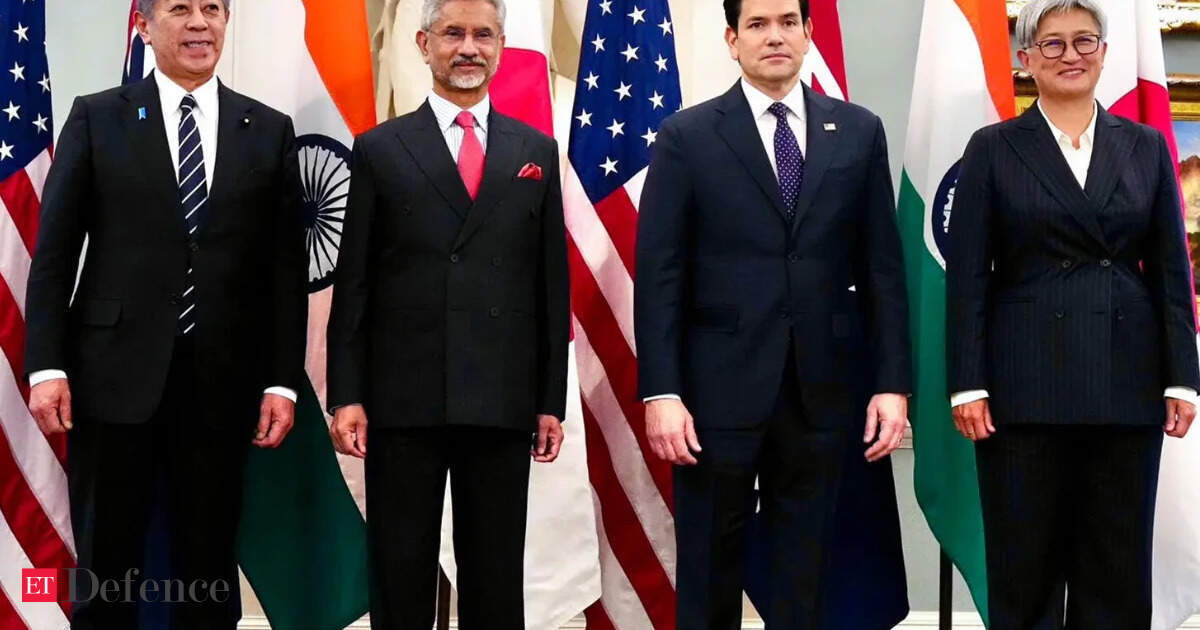
US Secretary of State Rubio joins Quad counterparts in New Delhi to discuss critical minerals, maritime security, and supply chain resilience. Implications for Indian equities and defense stocks.
Continue with
US Secretary of State Marco Rubio met with his Australian, Indian, and Japanese counterparts in New Delhi this week, marking the Quad grouping’s latest effort to regain strategic momentum in the Indo-Pacific. The meeting focused on maritime security, critical minerals, and supply chain resilience – three pillars that directly affect trade flows, defense spending, and industrial policy across the region.
For equity investors, the Quad’s renewed push matters because it signals a coordinated attempt to reduce dependence on single-source supply chains, particularly in semiconductors, rare earths, and energy storage. Any concrete deliverable from this meeting – joint investment frameworks, technology-sharing agreements, or maritime patrol coordination – would create a clearer policy backdrop for sectors tied to Indian defense, shipping, and mining.
Why the Quad’s Strategic Reset Matters Now
The Quad had lost some diplomatic velocity after the previous administration’s focus shifted elsewhere. This New Delhi meeting is an attempt to produce deliverable outcomes rather than joint statements. The inclusion of critical minerals on the agenda is the most market-relevant shift. Australia holds significant lithium and rare earth reserves. Japan controls advanced processing technology. India has a growing manufacturing base that needs secure input supplies. The US provides capital and end-market demand.
A naive read is that this meeting is just another diplomatic photo op. The better market read is that the Quad is moving toward project-based cooperation – for example, co-financing a rare earth processing plant in Australia or a semiconductor assembly line in India. If that happens, it directly benefits companies in the critical minerals supply chain and Indian electronics manufacturing.
Supply Chain Resilience: A Catalyst for Indian Equities
India stands to gain the most from Quad-driven supply chain diversification. The government has already pushed production-linked incentives for electronics, pharmaceuticals, and auto components. A Quad-backed framework would accelerate foreign direct investment into these sectors. Investors should watch for follow-up announcements on joint infrastructure projects or technology transfer agreements that could lift valuations in defense, renewable energy, and specialty chemicals.