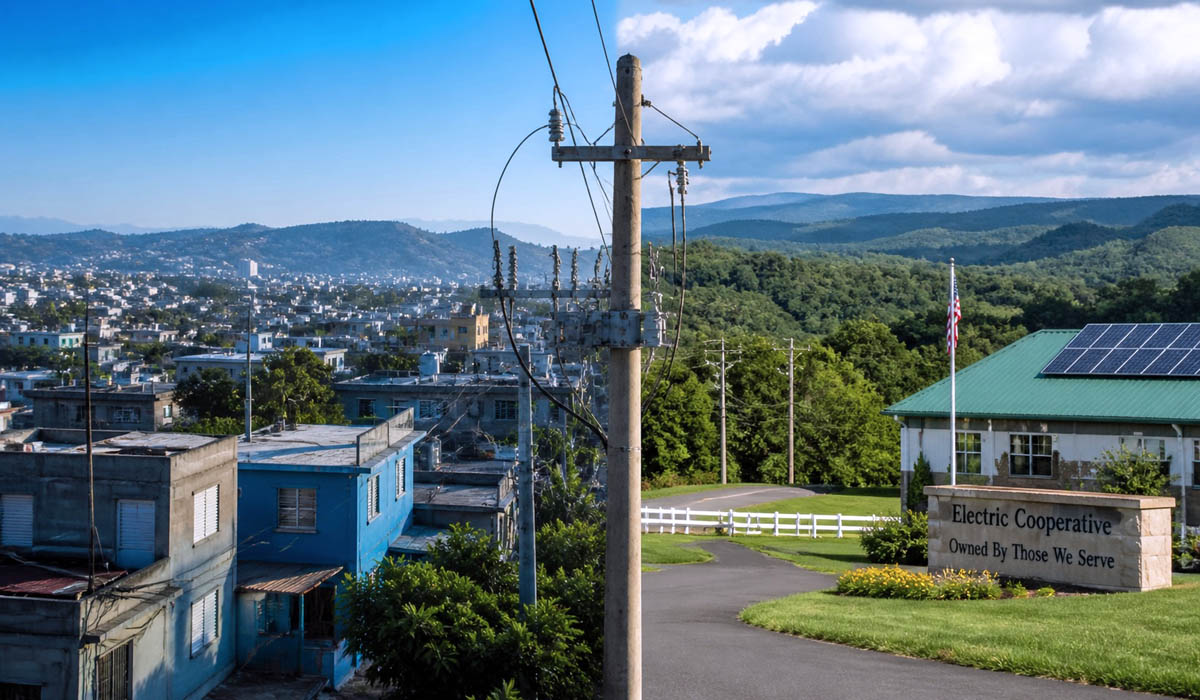
Puerto Rico's 1.5 million power customers face 154 outage hours annually. A shift to a cooperative model could mirror Virginia's 99% reliability success.
The energy landscape in Puerto Rico faces a structural inflection point as the limitations of the current centralized utility model become increasingly apparent. With 1.5 million customers currently served by a system burdened by over $9 billion in debt and persistent reliability issues, the debate over a transition to a member-owned cooperative model is gaining traction. This shift would represent a departure from the existing framework, which has struggled to balance operational stability with the needs of its end-user base.
To understand the potential for change, one must look at the operational differences between the current Puerto Rico Electric Power Authority (PREPA) structure and the cooperative systems prevalent in the United States. In a member-owned cooperative, the customer and the owner are the same entity. When the cooperative generates a surplus, these funds—referred to as capital credits—are returned to the members based on their usage rather than being diverted to bondholders or private contractors. This creates a direct feedback loop between service quality and financial outcomes.
In Virginia, 13 member-owned cooperatives serve approximately 1.5 million customers, mirroring the scale of Puerto Rico’s utility footprint. These entities generate nearly $2 billion in combined annual revenue while maintaining reliability rates exceeding 99%. The organizational discipline observed in these cooperatives, such as Northern Virginia Electric (NOVEC) and Rappahannock Electric (REC), stems from a mandate to serve the member-owner. When these entities undertake infrastructure projects, such as fiber broadband expansion, the decision-making process is anchored in community demand rather than shareholder profit maximization.
| Utility Model | Customer Base | Annual Revenue | Reliability Metric |
|---|---|---|---|
| Virginia Co-ops (Combined) | 1.5 Million | ~$2 Billion | >99% Reliability |
| PREPA (Puerto Rico) | 1.5 Million | N/A | 154 Outage Hours/Year |
The contrast in outcomes is stark. While Virginia’s cooperatives operate with a focus on long-term equity and member value, PREPA remains mired in a complex bankruptcy process. According to LUMA Energy’s 2024 Resource Adequacy Report, customers in Puerto Rico endure an estimated 154 hours of outages per year. This figure serves as a primary indicator of the systemic risk inherent in the current infrastructure, which is highly susceptible to environmental shocks and financial insolvency.
Transitioning to a cooperative model in Puerto Rico would require significant legislative and regulatory adjustments. The objective is not to dismantle the existing utility overnight, but to introduce incremental, scalable alternatives. A viable path forward involves the implementation of municipal pilots, where individual towns organize local energy ownership. This approach builds upon existing frameworks, such as the community-led initiatives demonstrated by Casa Pueblo in Adjuntas.
Legislative action is required to enable community solar cooperatives, allowing residents to invest collectively in energy infrastructure and receive direct financial returns. Furthermore, the expansion of municipal microgrids across the island's 78 towns could provide a layer of resilience capable of withstanding extreme weather events. By decentralizing power generation and ownership, the island could mitigate the risk of total grid failure, which currently remains a significant threat to economic stability.
While the cooperative model is successfully utilized by over 42 million Americans across 48 states, the implementation in Puerto Rico faces unique challenges. The primary risk is political and operational inertia. Reforming a system with $9 billion in debt requires a delicate balance between satisfying creditors and ensuring the long-term viability of the utility for its customers. Any transition must address the legal framework governing energy distribution, which currently favors the centralized model.
Investors and stakeholders should monitor the progress of Puerto Rico Growth Hits 0.4% as Reshoring Outlook Emerges to gauge the broader economic environment in which these energy reforms would take place. The success of a cooperative transition will likely be measured by the ability to secure community buy-in and the capacity to attract capital for microgrid development without further straining the island's fiscal position. If the legislative path for community solar and municipal microgrids remains stalled, the risk of continued grid instability will likely persist, potentially hindering long-term economic development and infrastructure investment.
AI-drafted from named sources and checked against AlphaScala publishing rules before release. Direct quotes must match source text, low-information tables are removed, and thinner or higher-risk stories can be held for manual review.