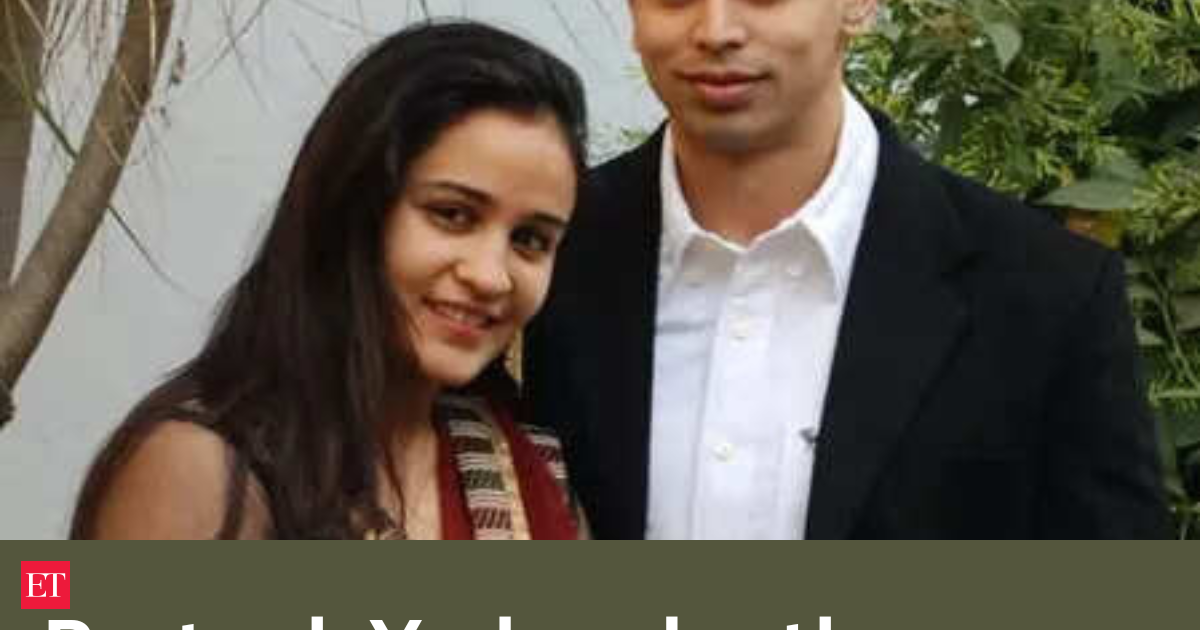
The 38-year-old's sudden death forces a reassessment of the Yadav family's political alignment, with his BJP-member wife now a focal point. Next catalyst: condolence optics.
Prateek Yadav, the 38-year-old stepbrother of Samajwadi Party chief Akhilesh Yadav, died Wednesday after a sudden illness. He was rushed to a civil hospital in Uttar Pradesh early that morning. The death removes a figure who had stayed away from active politics. The market impact, however, comes from the political cross-currents the event exposes, forcing a reassessment of state-level risk for Indian equities.
The immediate take is a family tragedy. Prateek Yadav had no formal political role, so his passing does not directly alter the SP's organisational structure. The better market read is that the event sharpens an existing fault line inside Uttar Pradesh's most influential political dynasty. Prateek Yadav's wife, Aparna Bisht Yadav, is a member of the Bharatiya Janata Party. That cross-party marriage already made the family a symbol of the blurred boundaries between the SP and the BJP in a state where the two parties are fierce electoral rivals. His death now forces both camps to navigate the optics of condolence, loyalty, and political positioning. The SP is trying to consolidate its Muslim-Yadav base while the BJP works to peel away non-Yadav OBC voters. Any perceived shift in the family's alignment could alter that calculus.
Uttar Pradesh sends 80 members to the Lok Sabha and is the single largest state economy in India. Political uncertainty in the state routinely feeds into the Nifty 50 and the BSE Sensex because it raises the probability of policy disruption, fiscal slippage, or delayed reforms. The SP, under Akhilesh Yadav, is the principal opposition force in the state and a key member of the INDIA bloc at the national level. Any perceived weakening of the SP's cohesion, or any realignment that brings the Yadav family closer to the BJP, would alter the electoral math for the 2027 state assembly election and the 2029 general election.
Traders who treat this as a non-event are missing the mechanism. Political risk in India is often repriced through the bond market first, then through equities. A shift in UP's political balance can widen state development loan spreads, affect infrastructure order books for companies with heavy state exposure, and change the risk premium assigned to PSU banks with large rural loan books. The death itself does not move those dials. The public response from Akhilesh Yadav and the BJP's handling of the condolence narrative will be read as a signal of how the two parties intend to manage their overlapping voter constituencies.
The market's political risk antenna will now focus on two things. First, the tone and visibility of Akhilesh Yadav's public mourning. A subdued, family-only response would be neutral. A highly visible, politicised condolence that draws in BJP leaders could be interpreted as a softening of the SP's anti-BJP stance. That would unsettle the party's core voters and create uncertainty about the opposition's unity. Second, any statement or action by Aparna Bisht Yadav that hints at a more formal role within the BJP would be taken as a sign that the Yadav family's political capital is being contested from within.
For equity investors with exposure to India, the practical step is to monitor the Nifty 50 volatility index and the performance of state-focused infrastructure and power names over the next two weeks. A spike in political noise without a corresponding policy shock is usually a buying opportunity in Indian large-caps. A sustained shift in the UP political narrative, however, would require a reassessment of the premium that the market currently assigns to political stability under the BJP-led national government. The internal link Prateek Yadav, Stepson of SP Founder, Dies at 38; Political Risk Watch provides the initial event details; the market's real work begins when the condolence statements land.
Drafted by the AlphaScala research model and grounded in primary market data – live prices, fundamentals, SEC filings, hedge-fund holdings, and insider activity. Each story is checked against AlphaScala publishing rules before release. Educational coverage, not personalized advice.