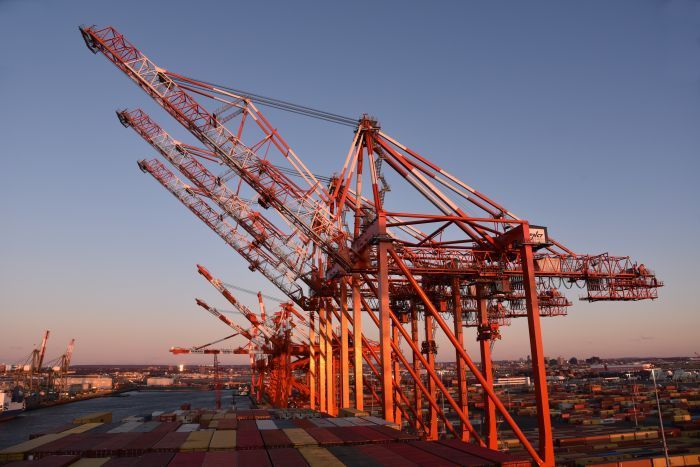
The Port Newark terminal has officially initiated a major expansion project, aiming to boost container handling capacity by 40%. This development, led by joint owners Ports America and MSC’s Terminal Investment Limited, introduces new container handling equipment designed to modernize operations at one of the most critical maritime gateways in the United States. The expansion reflects a broader push to accommodate larger vessel classes and increasing throughput demands within the North Atlantic trade corridor.
Infrastructure Upgrades and Capacity Constraints
The decision to expand at Port Newark addresses long-standing bottlenecks in the regional supply chain. By integrating advanced handling technology, the terminal operators intend to reduce dwell times and improve the efficiency of intermodal transfers. This shift is significant for the broader stock market analysis because it indicates that major logistics players are prioritizing physical infrastructure investment despite ongoing macroeconomic uncertainty. The ability to process higher volumes is a direct response to the persistent demand for reliable East Coast entry points, which have seen sustained pressure since the shift in global trade routes.
Integration Pressures in Global Freight
Parallel to these infrastructure developments, the logistics sector is undergoing significant internal restructuring. DSV CEO Jens Lund recently confirmed that further job cuts are expected as the company continues the integration of Schenker. This consolidation process highlights the operational friction inherent in large-scale logistics mergers. While the Port Newark expansion represents a growth-oriented capital expenditure, the DSV integration underscores a simultaneous trend of cost-cutting and organizational streamlining as firms attempt to capture synergies in a volatile freight environment.
AlphaScala Data and Sector Outlook
The current landscape for consumer and technology-linked logistics remains bifurcated. AlphaScala data currently tracks Amer Sports, Inc. (AS stock page) with an Alpha Score of 47/100, reflecting a mixed outlook for the consumer cyclical sector. Meanwhile, Q2 Holdings, Inc. (QTWO stock page) carries an Alpha Score of 23/100, indicating a weaker position within the technology space. These scores suggest that while infrastructure projects like the Port Newark expansion provide a physical foundation for growth, the underlying corporate entities must navigate complex operational challenges to translate capacity into sustained value.
Investors should monitor the next phase of the Port Newark project, specifically the timeline for the full deployment of the new equipment and any subsequent updates regarding throughput efficiency. The success of this expansion will serve as a bellwether for regional logistics capacity. Simultaneously, the progress of the DSV-Schenker integration will remain a primary indicator of how effectively large logistics providers can manage overhead while scaling operations. The next concrete marker will be the release of updated operational metrics from the Port Newark terminal, which will clarify whether the increased capacity is successfully translating into improved cargo velocity.