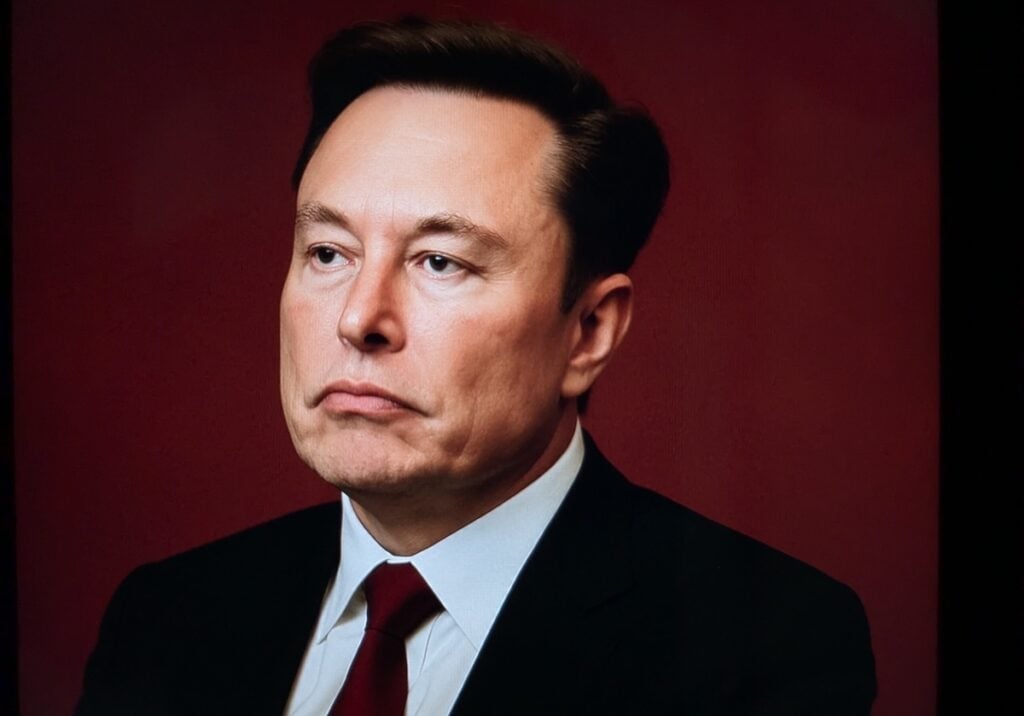
Elon Musk told a Tel Aviv summit Monday that fully self-driving Tesla (TSLA) vehicles without human monitors will spread across the U.S. later this year. The most liquid market on his near-term promises tells a different story.
The Polymarket contract covering unsupervised robotaxi launches in California by June 30 trades at a 10% implied probability. More than $105,000 has changed hands on the contract. The skepticism has a hard regulatory anchor.
Risk Event: Musk Repeats a Robotaxi Promise That Keeps Missing
The claim and the context
Musk said by video link to the Smart Mobility Summit that nationwide expansion of monitor-free robotaxis is coming this year. Tesla currently operates such services in Austin, Dallas and Houston and received an Arizona ride-hailing permit last November. The three-city footprint is a fraction of the scale Musk described.
The timeline has been wrong before. Musk claimed in 2024 that robotaxis would cover half the U.S. population by the end of 2025. Austin was the only city operating at that deadline.
The Polymarket signal
The contract covers an unsupervised launch in California by June 30. California is the most restrictive U.S. market for autonomous vehicles, requiring a California DMV autonomous vehicle deployment permit before a commercial driverless service can operate.
Tesla has not filed for that permit. The Bay Area "robotaxi" service Tesla launched in April operates under a Transportation Charter Permit, which California uses for human-driven taxi companies. The distinction is material.
The Polymarket odds reflect that difference: a 10% chance implies traders see regulatory clearance as the gating item, not engineering readiness.
The Regulatory Gap in California
Missing the gating permit
Tesla has not submitted a deployment permit application to the California DMV, according to public records. Without that permit, an unsupervised robotaxi service in the state cannot legally operate. The Transportation Charter Permit Tesla does hold covers human-driven ride-hailing, not autonomous operations.
What would change the odds
A permit filing would shift the prediction market. Traders now see a 10% chance of the event happening by June 30. A DMV filing historically precedes a launch by months, not weeks. With less than two months until the deadline, the window is tight.
Timeline Slippage: From Seven Cities to Two
Tesla's own softer guidance
Tesla's Q1 2026 earnings letter shifted the timeline on five of seven cities it had promised to launch in the first half of 2026. Phoenix, Miami, Orlando, Tampa and Las Vegas were moved from a hard "1H 2026" target to the looser label "preparations underway," according to Electrek.
Two months from the H1 deadline, Tesla has launched in two of those seven: Austin already, and Dallas/Houston as part of an earlier expansion. The gap between promise and delivery has widened.
Previous overpromises
Musk's 2024 claim that robotaxis would reach half the U.S. population by end of 2025 missed by roughly 99% of the target population. The current claim of nationwide coverage this year requires a regulatory and operational ramp that has no precedent at Tesla.
How Autonomy Architectures Compare
Waymo's recall on edge cases
Alphabet (GOOGL) owned Waymo recalled about 3,800 robotaxis last week after identifying a risk that vehicles could enter flooded roads on higher-speed routes. Waymo uses a LiDAR-and-HD-map approach that is sensitive to specific road conditions. The recall shows that even the most advanced deployed system still has edge-case vulnerabilities.
Tesla's recall on a basic function
Tesla is recalling 218,868 vehicles in the U.S. over delayed rearview camera images, according to an NHTSA notice this month. The recall affects a basic driver-assist feature, not an autonomy system. The contrast is notable: Waymo is fixing an autonomy-specific failure mode; Tesla is fixing a camera-display latency issue in production vehicles.
Musk also told the summit that within a decade roughly 90% of all distance driven in the U.S. will be handled by autonomous cars. That prediction has no current regulatory or operational pathway.
Risk Exposure and Catalysts
What makes the risk worse
- Any additional regulatory rejection or delay in permit filings from California or other target states.
- Further timeline shifts in Tesla's own earnings letters or investor communications.
- A recall or safety incident tied to Tesla's vision-only neural network in deployed robotaxi operations.
What would reduce the risk
- A California DMV autonomous vehicle deployment permit filing by Tesla.
- A third-party test or verification from a state regulator on unsupervised operation safety.
- A credible scaling plan with named cities and regulatory approvals, not aspirational statements.
The AlphaScala read
TSLA holds an Alpha Score of 43/100, labeled Mixed, at a current price of $404.11, down 1.43% today. The score reflects the gap between Musk's narrative and the execution signals visible in regulatory records and prediction markets.
GOOGL scores 80/100, labeled Strong, at $387.61, down 2.35% today. Waymo's deployed fleet and regulatory compliance contrast with Tesla's permit status.
What Traders Are Pricing In
The 10% Polymarket probability is a concrete number that captures a market view: traders do not believe a California unsupervised launch happens by June 30, and by extension, the nationwide rollout this year is unlikely. Tesla's own shifting guidance reinforces that skepticism.
For traders watching the robotaxi narrative as a valuation driver for TSLA, the next concrete data point is the DMV permit application. Without it, the timeline risk remains elevated and the prediction market will continue to price the gap between what Musk says and what regulators allow.