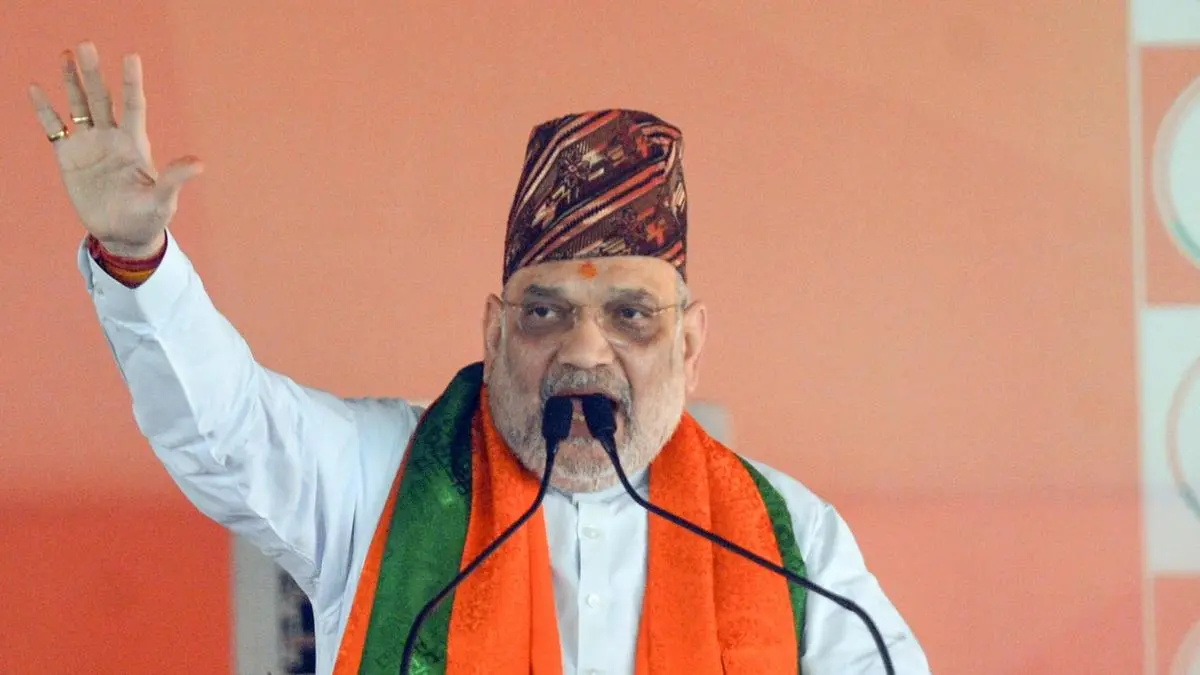
Political Volatility and the Indian Equity Landscape

The political row between Amit Shah and Mallikarjun Kharge introduces potential legislative gridlock, raising concerns for sectors sensitive to government policy and fiscal execution.
Alpha Score of 45 reflects weak overall profile with strong momentum, poor value, poor quality, weak sentiment.
Alpha Score of 47 reflects weak overall profile with moderate momentum, poor value, moderate quality. Based on 3 of 4 signals — score is capped at 90 until remaining data ingests.
Alpha Score of 55 reflects moderate overall profile with moderate momentum, moderate value, moderate quality. Based on 3 of 4 signals — score is capped at 90 until remaining data ingests.
Alpha Score of 47 reflects weak overall profile with weak momentum, moderate value, moderate quality. Based on 3 of 4 signals — score is capped at 90 until remaining data ingests.
The escalation of rhetoric between Union Home Minister Amit Shah and Congress President Mallikarjun Kharge has introduced a new layer of political friction into the Indian legislative environment. This exchange, centered on remarks regarding Prime Minister Narendra Modi, serves as a flashpoint for broader parliamentary gridlock. When political discourse shifts toward personal confrontation, the immediate impact on equity markets is often felt through the lens of policy execution risk and the potential for stalled legislative agendas.
Legislative Momentum and Policy Risk
Investors monitor these political rows because they frequently act as precursors to disruptions in the parliamentary session. A legislative body preoccupied with intense partisan conflict is less likely to advance critical economic reforms or budgetary authorizations. For sectors sensitive to government spending and regulatory shifts, such as infrastructure, banking, and energy, the uncertainty surrounding the passage of key bills can lead to a cooling of sentiment. The current intensity of the debate suggests that the upcoming session may face significant hurdles in maintaining a productive legislative calendar.
Sectoral Sensitivity to Political Stability
Market participants often view domestic political stability as a core pillar of the current valuation environment. While the Indian stock market has demonstrated resilience in the face of various geopolitical and macroeconomic headwinds, internal political volatility remains a distinct variable. Sectors that rely heavily on government-led capital expenditure programs are particularly vulnerable to shifts in political temperature. If the current row leads to prolonged walkouts or the freezing of committee work, the timeline for infrastructure project approvals and fiscal policy implementation could face delays.
AlphaScala data currently reflects a cautious stance on several major equities, including PM with an Alpha Score of 47/100, ON at 45/100, and AS at 47/100, all labeled as Mixed. These scores underscore the broader market environment where investors are balancing growth potential against various forms of systemic risk, including political and regulatory uncertainty. As seen in broader stock market analysis, the ability of the government to maintain a stable legislative environment is a primary driver of institutional confidence.
The Path Toward Resolution
The next concrete marker for this narrative will be the commencement of the next parliamentary session. Observers should watch for the resumption of standard proceedings versus the continuation of protest-led disruptions. If the rhetoric subsides, the focus will likely return to the underlying economic data and the government's fiscal roadmap. Conversely, if the confrontation persists, the risk premium associated with policy-sensitive stocks may expand, forcing a reassessment of near-term growth expectations. The market will look for clear signals of legislative progress as the primary indicator that the political noise is not translating into structural economic drag.
AI-drafted from named sources and checked against AlphaScala publishing rules before release. Direct quotes must match source text, low-information tables are removed, and thinner or higher-risk stories can be held for manual review.