Political Rhetoric Shifts Focus to Tamil Nadu Fiscal Policy Ahead of 2026

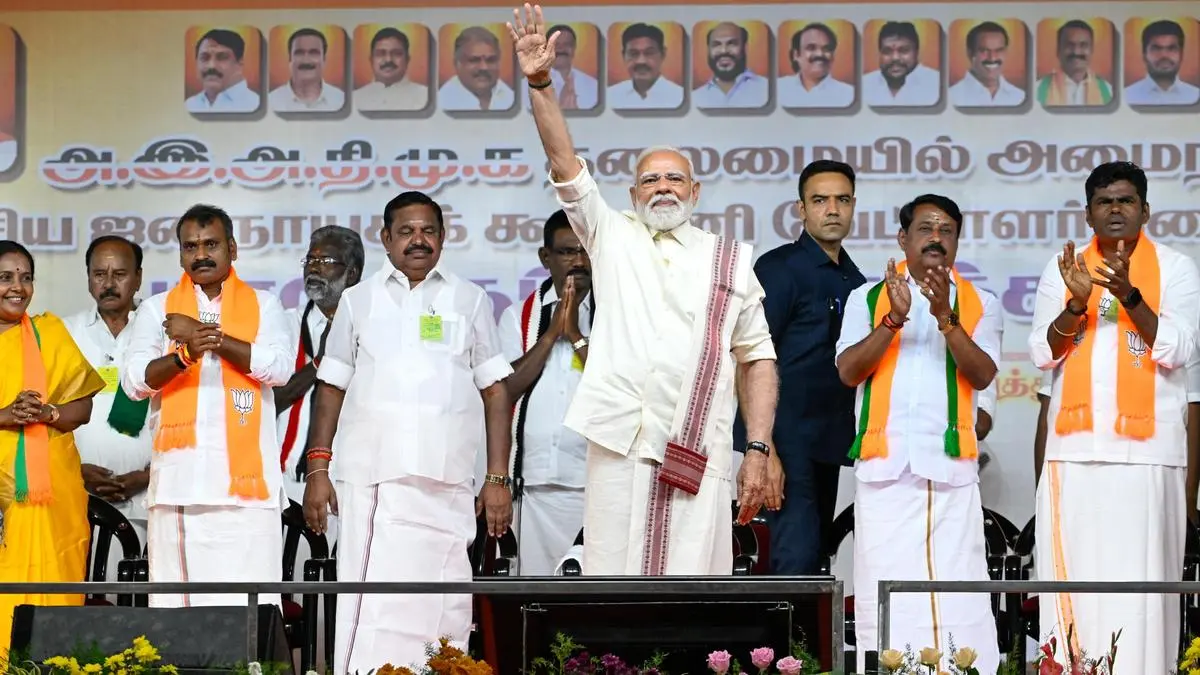
Prime Minister Narendra Modi’s critique of Tamil Nadu’s fiscal management sets the stage for a contentious 2026 election cycle, highlighting potential risks for regional industrial stability.
Alpha Score of 55 reflects moderate overall profile with moderate momentum, moderate value, moderate quality. Based on 3 of 4 signals — score is capped at 90 until remaining data ingests.
Alpha Score of 40 reflects weak overall profile with strong momentum, poor value, poor quality. Based on 3 of 4 signals — score is capped at 90 until remaining data ingests.
Alpha Score of 47 reflects weak overall profile with moderate momentum, poor value, moderate quality. Based on 3 of 4 signals — score is capped at 90 until remaining data ingests.
Alpha Score of 48 reflects weak overall profile with poor momentum, strong value, moderate quality. Based on 3 of 4 signals — score is capped at 90 until remaining data ingests.
Prime Minister Narendra Modi’s recent critique of the DMK government in Tamil Nadu marks a hardening of political stances as the state approaches the 2026 election cycle. By framing the current administration’s tenure around allegations of dynasty politics and fiscal mismanagement, the central government is signaling a shift in how it intends to challenge regional power structures. This rhetoric focuses on the state’s rising debt levels and governance standards, setting a confrontational tone for upcoming legislative debates.
Fiscal Strain and Regional Governance
The central government’s focus on Tamil Nadu’s debt trajectory suggests that fiscal health will become a primary battleground for the next election. Critics of the current state administration point to the accumulation of liabilities as a constraint on future development and infrastructure investment. If the narrative of fiscal instability gains traction, it could influence the allocation of central grants and the scrutiny of state-led projects. Investors monitoring regional stability should track how these political accusations translate into concrete policy shifts or potential delays in state-funded industrial initiatives.
Sectoral Impact and Industrial Stability
Tamil Nadu remains a critical hub for manufacturing, electronics, and automotive production. Political volatility often creates uncertainty regarding land acquisition, labor regulations, and power supply stability. Companies operating within this jurisdiction must navigate the friction between state-level populist spending and central-level fiscal oversight. While the current discourse is largely political, the potential for a shift in state leadership or policy priorities necessitates a reassessment of long-term capital expenditure plans for firms heavily exposed to the local regulatory environment.
AlphaScala data currently reflects a diverse landscape for major firms, including PM stock page with an Alpha Score of 52/100, ON stock page at 40/100, and A stock page at 55/100. These scores indicate varying levels of resilience across sectors, though regional political shifts in key manufacturing states like Tamil Nadu can introduce idiosyncratic risks not captured by broad market trends. For broader context on how such developments influence stock market analysis, it is essential to monitor the intersection of local governance and national economic policy.
The next concrete marker for this narrative will be the state government’s response to these fiscal allegations in the upcoming legislative session. Observers should look for specific data points regarding debt restructuring or new welfare spending announcements that could either validate or refute the claims of fiscal mismanagement. Any move by the central government to tighten financial oversight of state-run entities will serve as the primary indicator that this political rhetoric is evolving into a structural shift in federal-state financial relations.
AI-drafted from named sources and checked against AlphaScala publishing rules before release. Direct quotes must match source text, low-information tables are removed, and thinner or higher-risk stories can be held for manual review.