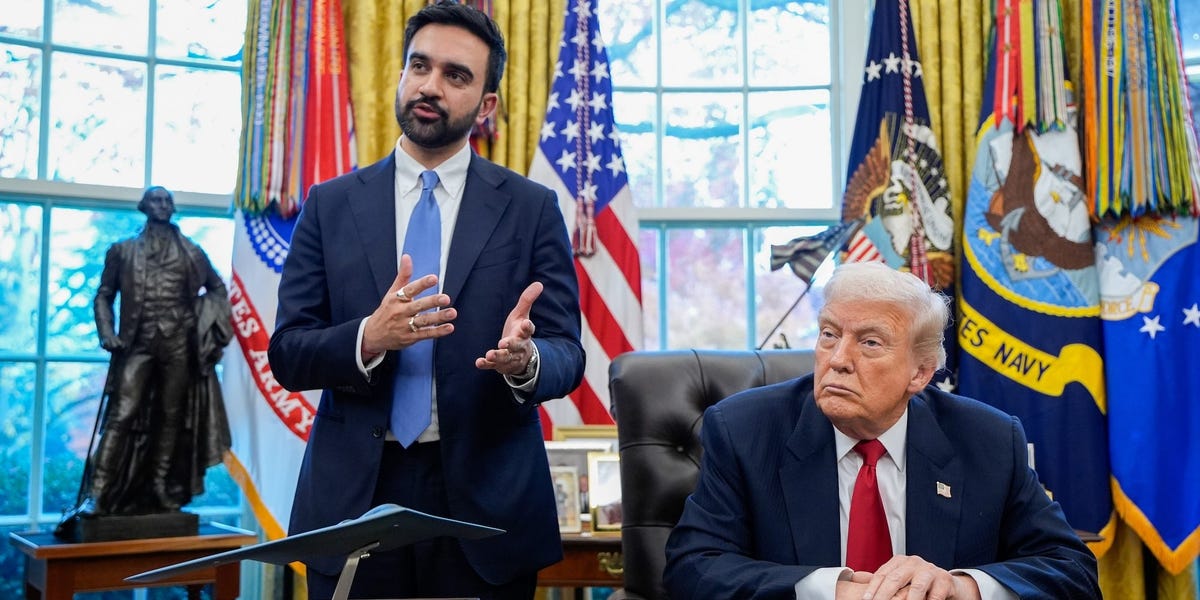
The recent thaw in relations between President Donald Trump and New York City Mayor Zohran Mamdani marks a significant departure from the previous narrative of federal funding threats directed at the city. This shift in the interpersonal dynamic between the executive branch and municipal leadership alters the risk profile for large-scale urban projects that rely on federal grants and intergovernmental cooperation. For investors monitoring the municipal bond market and regional infrastructure plays, the move from confrontation to collaboration suggests a more stable environment for capital deployment.
Federal Funding Stability and Urban Development
The previous threat to withhold federal funding created a period of heightened uncertainty for New York City's budgetary planning. When federal support is tied to political friction, the cost of capital for municipal entities often rises due to the perceived risk of funding gaps. The current alignment between the Mayor and the President reduces the likelihood of sudden fiscal disruptions. This stability is essential for the continuity of long-term infrastructure initiatives, which are often sensitive to shifts in federal policy and grant availability.
Infrastructure projects in major metropolitan areas require multi-year commitments that are difficult to manage when the relationship between local and federal authorities is adversarial. By normalizing communication channels, the administration and the city government can better coordinate on project timelines and funding tranches. This development is particularly relevant for sectors tied to public works, transit, and urban renewal, where policy continuity is a primary driver of operational success.
Sector Read-through and Regional Risk
While the relationship between specific political figures is often viewed through a social lens, the economic consequences for the region are tangible. Investors should look for signs of how this improved rapport translates into specific federal budget allocations. If the current trend holds, the city may see a more predictable flow of resources for critical systems, which in turn supports the broader regional economy. This is a departure from the volatility seen in Delhi Airport Capacity Expansion Signals Regional Infrastructure Shift, where regional infrastructure shifts were driven by different market and policy pressures.
AlphaScala data currently tracks various sectors with varying degrees of stability. For instance, WELL maintains a Mixed Alpha Score of 51/100, reflecting the complex interplay of real estate and interest rate environments. Meanwhile, consumer-facing entities like HAS and AS remain Unscored and Mixed respectively, underscoring the need for sector-specific analysis when evaluating how political stability impacts broader market performance.
The Path to Fiscal Predictability
The next concrete marker for this relationship will be the upcoming federal budget review and the announcement of new grant cycles for urban infrastructure. If the current cooperation persists, the city should be able to secure funding commitments that were previously in jeopardy. Investors should monitor the next round of federal appropriations for evidence that this political alignment has resulted in concrete financial support. Any deviation from this cooperative path would likely signal a return to the fiscal uncertainty that defined the earlier period of the relationship. The focus remains on whether these interpersonal dynamics can sustain the momentum required for long-term capital projects in the face of broader economic headwinds.