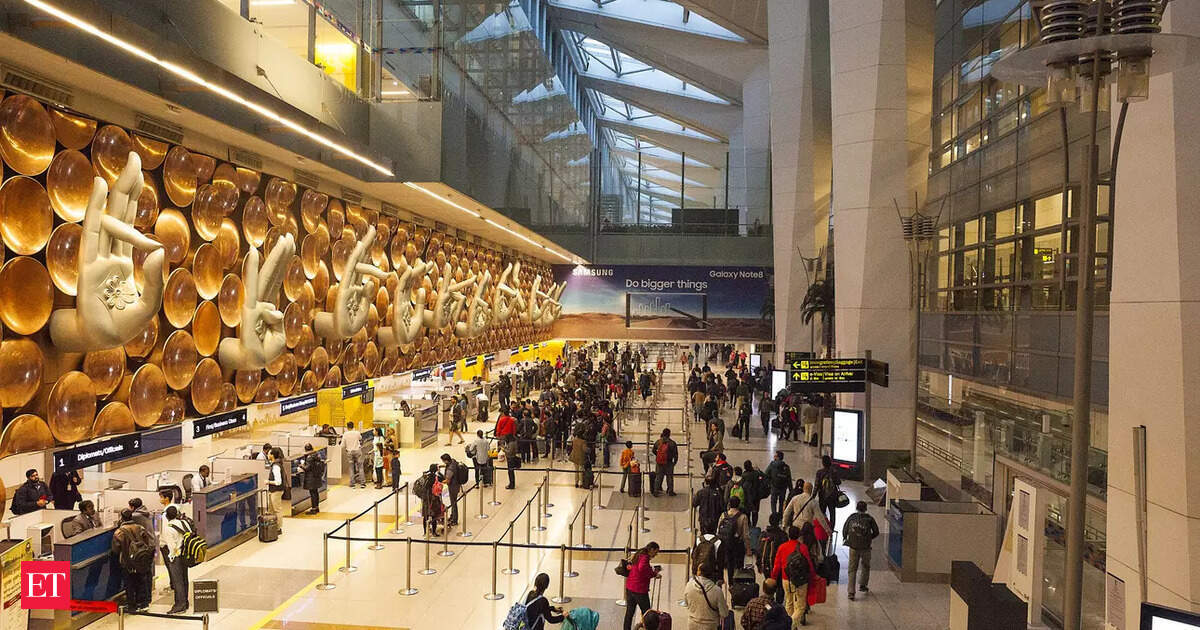
Delhi Airport Capacity Expansion Signals Regional Infrastructure Shift

Delhi's Indira Gandhi International Airport is set to expand its international capacity by 50% in May as Pier C at Terminal 3 begins handling international flights.
Alpha Score of 62 reflects moderate overall profile with strong momentum, weak value, moderate quality, moderate sentiment.
Alpha Score of 47 reflects weak overall profile with moderate momentum, poor value, moderate quality. Based on 3 of 4 signals — score is capped at 90 until remaining data ingests.
Alpha Score of 32 reflects weak overall profile with poor momentum, poor value, moderate quality, moderate sentiment.
Alpha Score of 51 reflects moderate overall profile with poor momentum, strong value, strong quality, weak sentiment.
Delhi’s Indira Gandhi International Airport is preparing to initiate a major operational shift in early May, as Pier C at Terminal 3 transitions to handle international passenger traffic. This infrastructure upgrade is designed to increase the airport's total annual international capacity by approximately 50 percent. The move represents a significant scaling of logistics and passenger throughput for one of the region's primary aviation hubs.
Infrastructure Scaling and Throughput
The activation of Pier C for international operations serves as a critical bottleneck release for the airport. By reallocating this space, the facility addresses the physical constraints that have previously limited the volume of international flight slots available during peak hours. This expansion is not merely a change in terminal usage but a fundamental increase in the airport's ability to serve as a transit node for long-haul international travel. The shift suggests that airport management is prioritizing high-margin international traffic over domestic volume to optimize revenue per passenger.
Regional Aviation and Economic Read-through
The capacity increase at Delhi Airport serves as a bellwether for the broader aviation sector in the region. Increased international throughput typically correlates with higher demand for ground handling services, duty-free retail, and premium lounge access. As the airport scales, the following operational areas will likely see immediate pressure to adjust:
- Staffing requirements for customs and immigration processing.
- Logistics for international baggage handling and security screening.
- Coordination with international carriers regarding slot allocation and gate availability.
This expansion aligns with broader trends in stock market analysis where infrastructure-heavy firms are increasingly focusing on capacity utilization to drive growth. While the immediate impact is localized to the airport's operations, the downstream effects will be felt by airlines that rely on Delhi as a primary hub for international connectivity. The ability to accommodate more wide-body aircraft and higher passenger volumes provides a competitive advantage for the airport in securing new long-haul routes.
Strategic Capacity Management
The transition in May serves as the next concrete marker for the airport's growth trajectory. Investors and stakeholders will look to the initial operational data following the launch to determine if the facility can maintain service levels during the transition. The success of this expansion hinges on the seamless integration of Pier C into the existing Terminal 3 ecosystem without creating new congestion points at security or transit checkpoints. If the transition proceeds as planned, it will likely serve as a template for future capacity-building projects across the regional aviation network. The focus now shifts to the actual passenger load factors and the speed at which airlines utilize the newly available slots.
AI-drafted from named sources and checked against AlphaScala publishing rules before release. Direct quotes must match source text, low-information tables are removed, and thinner or higher-risk stories can be held for manual review.