Stocks● Neutral
US Imports From Taiwan Now Top China as Trump, Xi Discuss Taiwan
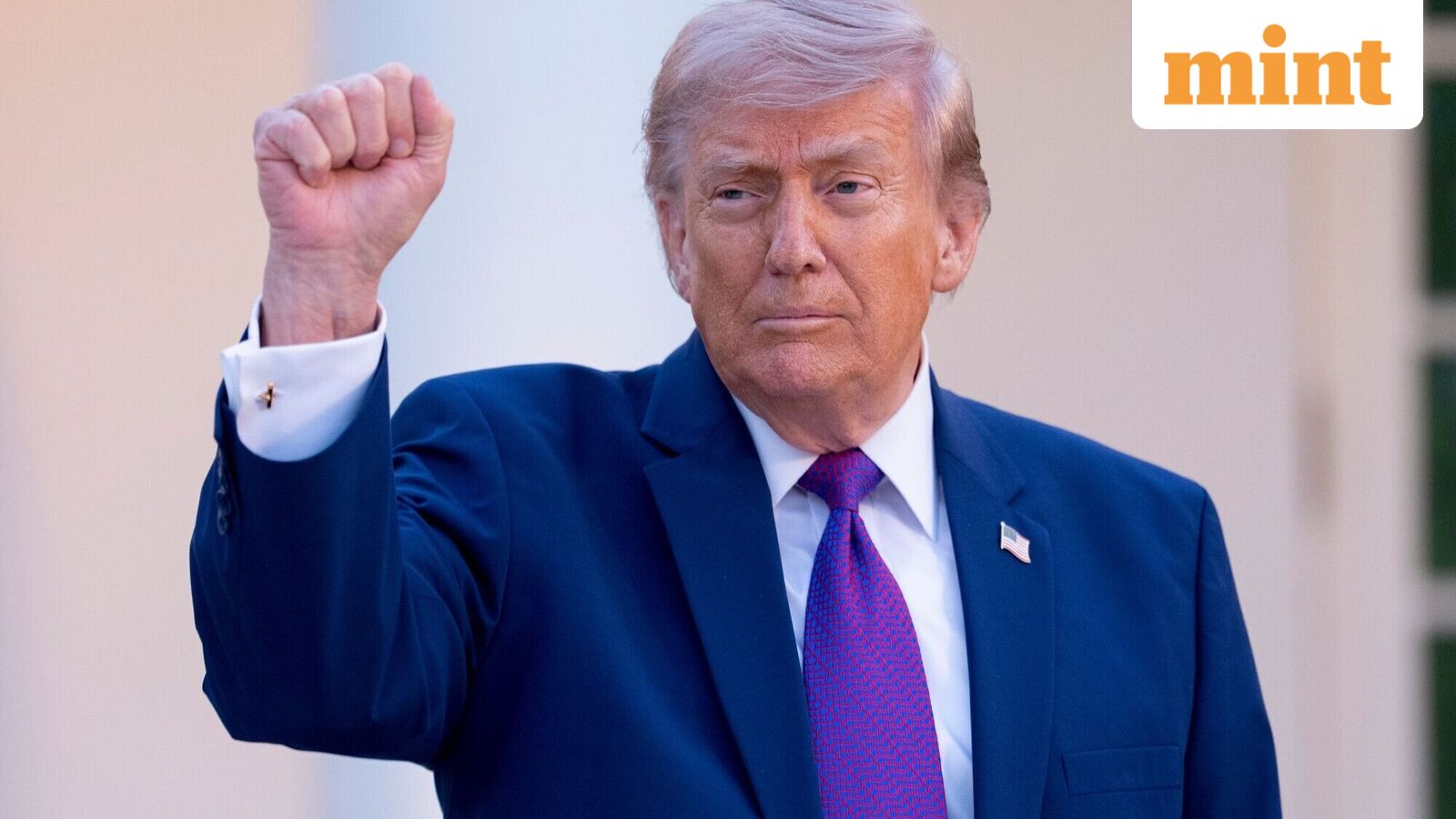
A record $11B weapons package and Taiwan's $25B defense budget hang in the balance as US imports from Taiwan surpass China's.
Continue with
AlphaScala Research Snapshot
A record $11B weapons package and Taiwan's $25B defense budget hang in the balance as US imports from Taiwan surpass China's.
President Trump confirmed Monday that US arms sales to Taiwan and the continued imprisonment of Hong Kong media tycoon Jimmy Lai will sit at the top of his agenda when he meets Chinese President Xi Jinping in Beijing later this week. The same day, separate trade data showed the US now imports more goods from Taiwan than from China, partly driven by the artificial intelligence race. The twin flashpoints are no longer abstract diplomatic irritants; they pivot on a concrete commercial reality that reshapes the market’s risk calculus for defense names, semiconductor supply chains, and any portfolio with direct China exposure.
The immediate market “print” is Trump’s explicit linkage of arms sales and Lai’s detention to the summit. When asked about Washington’s support for Taiwan’s defence, Trump said: “I’m going to have that discussion with President Xi. President Xi would like us not to, and I’ll have that discussion. That’s one of the many things I’ll be talking about.” On Lai, he added: “Jimmy Lai, he caused lots of turmoil for China. He tried to do the right thing. He wasn’t successful, went to jail, and people would like him out, and I’d like to see him out too.”
China claims Taiwan as its own territory and has repeatedly warned that US arms sales aid an independence push and amount to an attempt to contain Beijing. Chinese foreign ministry spokesperson Guo Jiakun warned in December: “By aiding Taiwan’s independence through arms sales, the US will only end up harming itself. Any attempt to use Taiwan to contain China is doomed to fail.” Beijing has similarly left no room on Lai, maintaining he “should be severely punished according to the law” and accusing foreign governments of interfering in Hong Kong’s judicial process.
Alongside that diplomatic frame, the latest trade figures delivered a structural signal: US imports from Taiwan have overtaken those from China for the first time. China bought significantly fewer American goods last year, and its share of goods imported to the US has fallen sharply. The shift reflects not just tariff decoupling but also the concentrated flow of advanced AI chips from Taiwanese foundries, making the island’s stability a direct operating risk for the US economy.
The shallow take treats the summit as another round of predictable posturing: rhetoric lifts defense stocks, volatility nudges higher, then the market moves on. That read misses the changed texture of the trade relationship. When US import volumes from Taiwan exceed those from China, the strategic calculus around arms sales flips. The argument that Taiwan is merely a geopolitical pawn loses force; Taiwan is now a primary node in the supply chain for AI compute, and any disruption to that supply chain hits US equity earnings directly.
This context makes Bonnie Glaser’s warning the central risk scenario for markets, not a tail risk. Glaser, managing director of the Indo-Pacific programme at the German Marshall Fund, called any rhetorical softening by Trump “the most destabilizing outcome” of the summit.
“A tacit or explicit bargain in which Washington appears to concede a sphere of influence to Beijing over Taiwan” in exchange for concessions elsewhere could embolden China to take more assertive steps to erode Taiwan’s autonomy, Glaser said.
If the market perceives even a slight shift away from the US security umbrella, the risk premium embedded in Taiwan-exposed positions will not just widen – it will reprice the entire semiconductor complex, because the foundry concentration that already keeps AI names sensitive to Taiwan headlines would now lack a credible deterrence backstop.
The administration has not moved forward with arms deliveries under a record $11 billion weapons package authorised in December, ahead of the summit. That inertia, combined with Trump’s decision to raise the issue directly, leaves the near-term revenue picture for US defense primes hinging on what Xi signals in Beijing.
Last Friday, Taiwan’s lawmakers approved a special defence budget of $25 billion to purchase missiles and other weapons from the US. The figure fell short of the $40 billion the government had sought to counter an increasingly assertive Chinese military posture. The gap matters. It tells the market that Taipei’s fiscal appetite for self-reinforcement has a ceiling, which in turn makes the US executive commitment the marginal price-setter for defense contractor backlogs linked to the Indo-Pacific.
For US defense names with foreign military sales exposure, a concrete path to delivering the authorised package would validate multi-year revenue assumptions that currently carry a significant policy-delay haircut. A prolonged freeze, or a signal from Xi that draws out the approval cycle further, would keep those assumptions in limbo and shift the flow of marginal defense dollars toward more certain domestic programs.
Lai’s imprisonment operates as a separate but correlated risk channel. In February, a Hong Kong court sentenced the 78-year-old founder of the now-shuttered pro-democracy newspaper Apple Daily to 20 years on charges of colluding with foreign forces, the longest sentence handed down under the 2020 national security law. He had already been convicted in December on separate charges and has been in detention for more than five years.
Trump’s explicit call for release puts the case into the bilateral agenda for the second time, following a prior request during a meeting with Xi on the sidelines of the APEC summit last October. Beijing’s response has been consistently rigid, framing any external pressure as illegitimate interference. If Xi offers no signal of movement, the hard line reinforces the broader narrative that post-2020 Hong Kong legal structures are sealed from foreign influence, which in turn raises the political risk premium for any investment structure that channels capital through the territory or that prices off Hong Kong’s rule-of-law reputation.
That premium feeds into broader China sovereign risk spreads and into the discount that global investors apply to Chinese equities relative to peers. A Lai-centred standoff that yields no result serves as a reminder that domestic political control metrics in Beijing often override market-access signalling, even when the request comes from a US president with leverage on tariffs and technology export controls.
The headline that US imports from Taiwan now exceed those from China is more than a trade trivia point. The trend is partly attributable to the AI race, which has concentrated high-value semiconductor output among a handful of Taiwanese firms whose advanced-node capacity is effectively irreplaceable in the short to medium term. The result is a dependency map that makes Taiwan’s security status a direct input into earnings models for companies that depend on AI compute.
This gives the arms-sales discussion a self-reinforcing character. Taipei uses some of its trade surplus to finance the $25 billion special defence budget. That budget, in turn, funds US-made weapons systems, which deepens the military-industrial linkage. The cycle means that any signal of US security retrenchment would not only unsettle the geopolitical order; it would unwind the commercial flows that now underpin a growing share of US tech capital expenditure, because the same stability assumption that allows foundries to operate without disruption is what permits AI hyperscalers to plan capacity.
AlphaScala’s real-time sector scores currently show mixed readings across asset classes with China-facing exposure. Consumer cyclical, as represented by tickers such as Ferrari (RACE stock page), carries an Alpha Score of 46 out of 100, a level that captures uneven luxury demand and persistent tariff overhang. Financials (Progressive, PGR), often a proxy for US domestic strength, sits at 54 and does not directly embed a geopolitical tail. Real estate (Welltower, WELL) holds a 50, reflecting a balancing act between interest-rate sensitivity and demographic demand rather than a cross-Strait risk premium. None of those scores fully capture the binary nature of the summit’s Taiwan outcome, which means portfolio hedges structured around historical sector correlations may understate the potential for an event-driven repricing if the arms-sales conversation tilts toward ambiguity.
The immediate catalyst is the readout from the meeting, likely Thursday. Any joint statement language on Taiwan will be parsed for even marginal shifts from Beijing’s “one-China” formulation, while the absence of a concrete US reaffirmation of security commitments would be interpreted as the ambiguity Glaser described. The follow-on marker is whether the administration proceeds with deliveries under the $11 billion package in the weeks after the summit. A green light would validate the defense-revenue thesis. Continued stasis would suggest that the summit produced no durable framework, increasing the discount on Taiwan-linked equities. For investors tracking the intersection of geopolitics and supply-chain realignment, the data point that US imports from Taiwan have already eclipsed those from China is the thread that ties the arms discussion, the AI trade, and the risk of status-quo erosion into one tradeable setup. The summit is not about whether tensions exist – they do – it is about whether the price already assigns a high enough probability to the most destabilizing outcome.
Drafted by a large language model from the source reporting linked above, then screened by automated publishing checks. It is not read by a journalist before publication. Some articles cite our Alpha Score. Verify prices and figures against the original source. Educational coverage, not personalized advice.