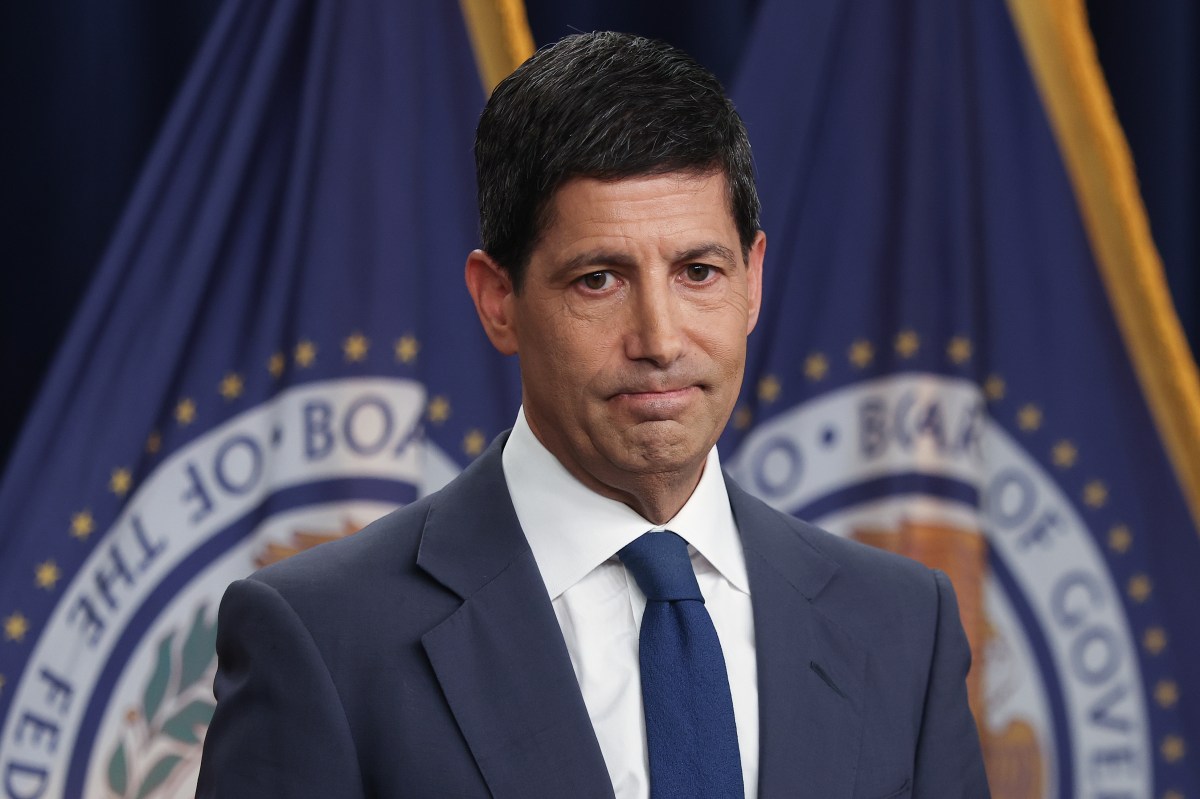
Trump's new Federal Reserve Board Chair Kevin Warsh took a pair of missteps during and after Wednesday's FOMC rate decision. The rate hold was expected. What put central bank stakeholders on alert was what Warsh said and what he didn't say.
The FOMC statement repeated language from June: "Productivity growth and capital investment are strong." This time, the data told a different story.
Labor productivity rose just 0.3% in the first quarter. The Bureau of Labor Statistics later revised that figure down by half a percentage point. The Philadelphia Fed's survey of 33 forecasters had projected 2.1% annualized GDP growth for the second quarter. Thursday's BEA release showed 1.5%. Investment growth was also lower than the BEA had previously projected.
"There is still no evidence of an AI-driven productivity boom after three consecutive quarters of weak productivity growth," Dean Baker, co-founder of the Center for Economic and Policy Research, wrote in a brief published Thursday.
"The economy is soft and vulnerable," Mark Zandi, chief economist at Moody's Analytics, a unit of Moody's Corporation (MCO, Alpha Score 65), said on X.
"It would be concerning if factual misrepresentations are getting elevated due to political convenience," former Fed economist Skanda Amarnath said on X.
The Federal Reserve Board declined to comment on which data the FOMC relied on for its statement about strong productivity growth and investment.
Trump has portrayed an economy that is resilient but stagnating. He has engaged more aggressive and overt tactics to influence monetary policy, pushing for rate cuts. Three Fed governors dissented from the majority decision, voting for higher rates.
There are still positive aspects. Unemployment has not spiked. Investment growth still makes a positive contribution to overall GDP.
On Wall Street, markets responded negatively. Warsh refused to speak about what the Fed might do in the future. He would not acknowledge what conditions might warrant a hike. He left the door open on whether the 2% inflation target will remain after January, when a series of committees established to initiate his goal of central bank "regime change" return with their findings.
"If inflation continues to be elevated through the forecast period, interest rates could well be part of that solution, but I wouldn't say it's in isolation," Warsh said during the press conference.
Investor concerns about inflation sent the 30-year Treasury bond to its highest yield in 19 years.
Michael Feroli, chief U.S. economist at JPMorgan Chase & Co. (JPM, Alpha Score 63), said in a note that Warsh "once again failed to specify how he intended to achieve his stridently asserted inflation resolve." Feroli said Warsh also "cast doubt on whether PCE inflation will remain the Fed's inflation target in the medium run. Both of these points raise questions about the new chair's credibility in delivering lower inflation."