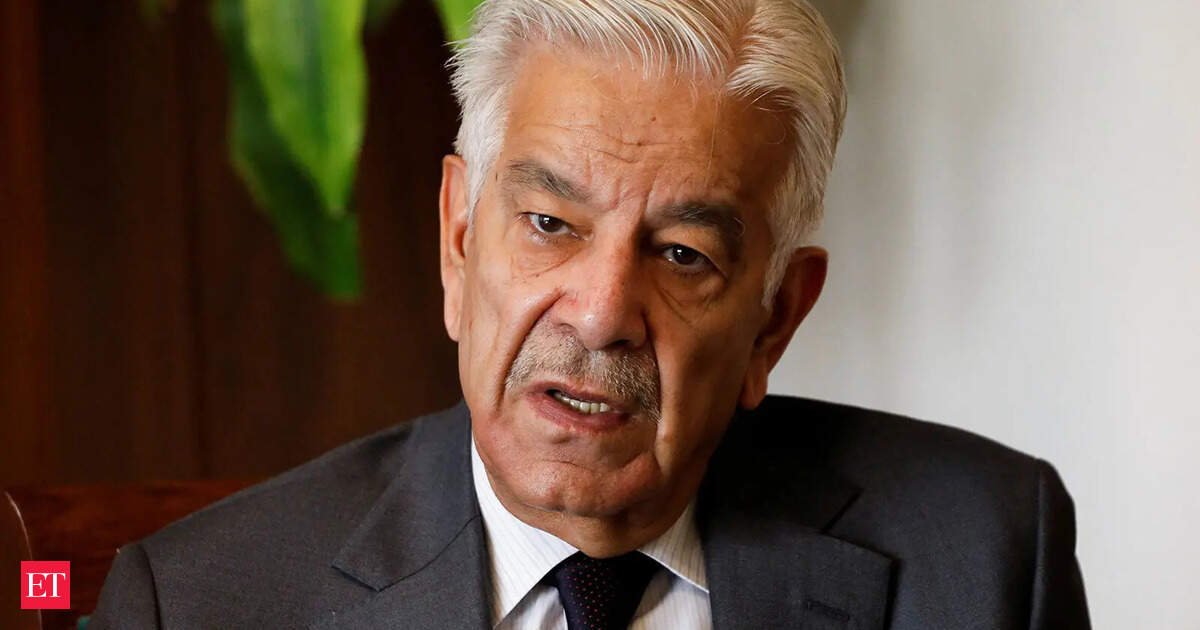
Pakistan’s defence minister publicly refused to join the Abraham Accords, directly challenging President Donald Trump’s regional normalisation push tied to the Iran nuclear talks. Khawaja Muhammad Asif told Pakistani broadcaster Samaa TV that the accord clashes with the country’s “fundamental ideologies” and questioned the reliability of any engagement with Israel.
The rejection landed hours after Trump posted a lengthy message on Truth Social calling for Pakistan, Saudi Arabia, Qatar, Turkey, Egypt, Jordan, and Bahrain to immediately sign onto the accords. Trump said he had spoken with Pakistan Army Chief Asim Munir, among other regional leaders, and framed the expansion as part of a potential “Historic Event” contingent on a deal with Iran.
For investors holding Pakistan exposure – sovereign bonds, the KSE 100 index, the PKR currency, or the PAK ETF – the statement adds a layer of geopolitical risk. The simple read is that Pakistan is defending its ideological stance. The better market read involves a potential deterioration in US-Pakistan relations, reduced aid flows, and a more volatile negotiating environment for the Iran deal, which itself carries oil price and regional security consequences.
The Defence Minister’s Red Line
Asif left no room for ambiguity. “Personally, I don’t think we should join any such accord that clashes with our fundamental ideologies,” he said during the Samaa TV interview. He challenged the credibility of any agreement with Israel, asking, “How will you sit down with those people whose word cannot be trusted even for a single day?”
He also pointed to Pakistan’s passport policy, which remains one of the few in the world that does not list Israel as a recognised state. “We are the only country whose passports don’t even include Israel’s name,” Asif said.
What this means for the Accords expansion
The Abraham Accords were brokered by the US in 2020, normalising relations between Israel and the United Arab Emirates, Bahrain, Morocco, Sudan, and Kazakhstan. Trump’s new push aimed to add Saudi Arabia, Qatar, Pakistan, Turkey, Egypt, Jordan, and Bahrain (already a member). Pakistan was never the largest prize – that remains Saudi Arabia – its refusal signals that the ideological hurdle is not limited to the Gulf.
Risk to watch: If Pakistan’s stance encourages other Muslim-majority holdouts to harden their positions, the expansion timeline could stretch beyond Trump’s preferred electoral window.
Exposure: Pakistan Assets and the US Relationship
Pakistan sovereign debt and equities
Pakistan has been rebuilding access to international capital markets after a prolonged IMF programme. Geopolitical tension with the US could slow investor appetite for Pakistan’s Eurobonds and the Global X MSCI Pakistan ETF (PAK), which tracks the Pakistani equity market.
- PAK ETF rallied in 2024 on IMF progress and a stabilising currency. A US-Pakistan rift could trigger profit-taking.
- The KSE 100 index has benefited from easing inflation and a stronger rupee. Any risk of US aid cuts or a harder trade stance would pressure the currency.
- Pakistan Army Chief Asim Munir’s direct involvement in Trump’s call suggests the military establishment is being engaged separately. If the civilian government’s rejection undermines that channel, institutional friction could rise.
The US-Pakistan strategic relationship
Trump’s post warned Iran that without a deal, “Back to the Battlefront and shooting, bigger and stronger than ever before.” Pakistan’s refusal weakens US leverage in the region and reduces the incentive for Washington to maintain economic support for Islamabad.
Practical rule: Pakistan’s position as a nuclear-armed state with ties to both the US and China gives it some cushion. The rejection of a high-profile White House request raises the risk of symbolic retaliation – visa restrictions, aid recalibration, or reduced intelligence cooperation.
Trump’s Iran Deal Sequencing
Trump stated that “Negotiations with the Islamic Republic of Iran are proceeding nicely.” He claimed he had instructed his representatives to begin expanding the Abraham Accords immediately.
Key insight: The sequencing matters. Trump ties the accords expansion to a successful Iran deal. If Pakistan’s rejection emboldens Iran to drive a harder bargain – or if Pakistan itself becomes a stumbling block – the entire timeline slips.
- Trump’s timeline: no specific date, the rhetoric suggests a push ahead of the 2026 US midterm cycle.
- Pakistan’s timeline: the civilian government and military leadership have offered no alternative proposal. The rejection is a current stance, not a negotiation opening.
- Next catalyst: any US congressional response – particularly from the Senate Foreign Relations Committee – or a formal statement from the State Department.
Affected Assets and Regional Read-Through
Direct exposure table
Regional read-through
- Saudi Arabia and Qatar – mentioned by Trump as prime targets – are watching Pakistan’s stance. A Saudi refusal would be far more consequential. For now the focus is on the kingdom’s next move.
- Iran – Trump suggested Iran could eventually join the accords. Pakistan’s rejection may strengthen Iran’s hand in negotiations by showing that ideological opposition remains powerful.
- Turkey – President Recep Tayyip Erdogan was also named in Trump’s post. Turkey’s position is similar to Pakistan’s, less explicitly stated.
Bottom line for traders: The Pakistan rejection alone is not a system-wide shock. It adds a risk premium to any asset tied to the Middle East normalisation trade. For direct Pakistan holders, the event warrants reviewing position sizing.
What Would Reduce the Risk
- A formal US administration response that is muted or diplomatic, indicating Washington accepts the rejection without retaliation.
- A public statement from Army Chief Asim Munir that distances the military from the civilian rejection, keeping channels open.
- Progress on the Iran deal that does not depend on Pakistan’s participation, reducing the spotlight on Islamabad.
- A sharp drop in oil prices that makes US allies in the region less sensitive to security premiums.
What Would Make It Worse
- Trump or a senior US official publicly criticising Pakistan’s leadership or threatening aid cuts.
- Any move by Pakistan to deepen defence ties with China or Russia in response, escalating strategic friction.
- A failed Iran deal that Trump blames on Pakistan’s refusal, leading to sanctions or trade barriers.
- Street protests in Pakistan if the opposition accuses the government of alienating the US without a compensating gain.
What to Watch Next
The US State Department’s first public comment, any tweet from Trump addressing Pakistan directly, and the reaction of Saudi Arabia and Qatar to Trump’s push. A Saudi agreement would quickly overshadow Pakistan’s refusal. A Saudi refusal would compound the setback for Washington.
Until the next catalyst, the risk premium on Pakistan assets has ticked up. It is still manageable. Traders with direct Pakistan exposure should tighten stops. For regional investors, this is one variable in a larger equation – the Iran talks remain the main event.
For broader context on how Iran tensions affect emerging markets, see our stock market analysis.