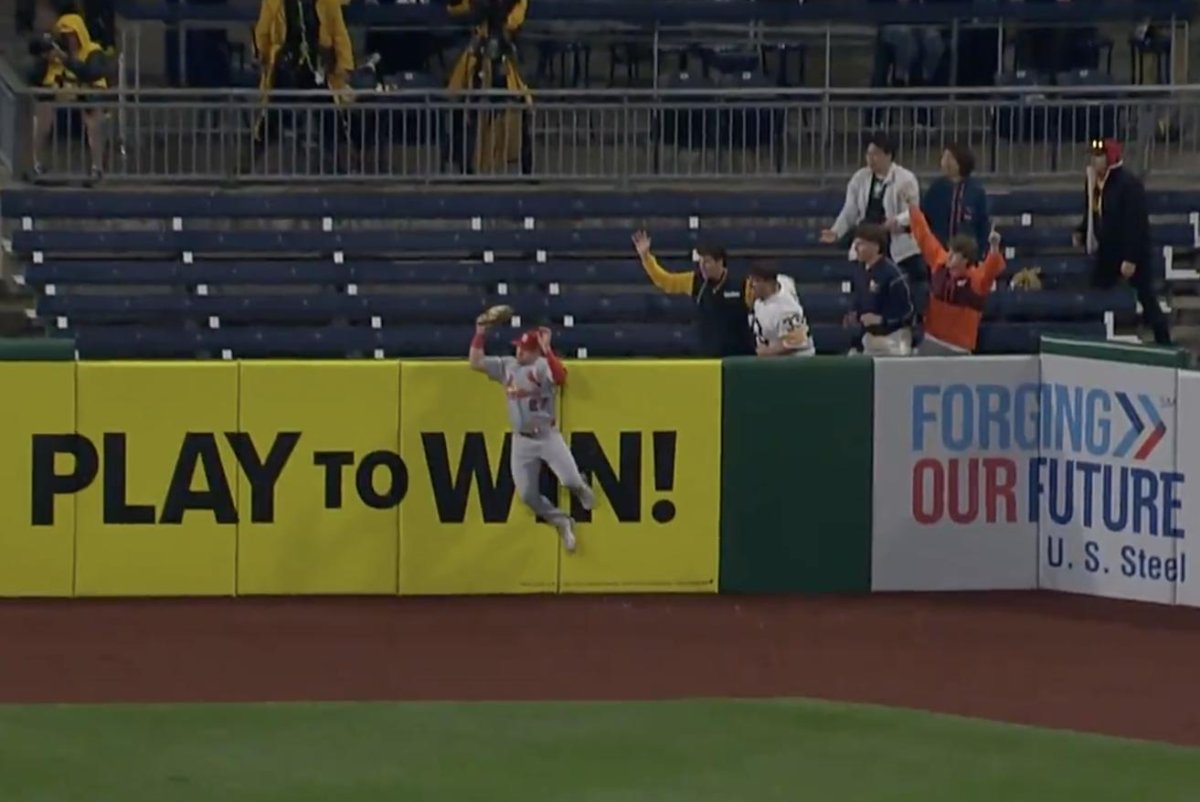
The recent defensive highlight involving St. Louis Cardinals outfielder Nathan Church serves as a reminder of the high-variance nature of professional sports performance. By securing a game-winning home run robbery against the Pittsburgh Pirates, Church demonstrated the type of individual execution that directly alters the outcome of a competitive asset. In the context of sports management and franchise valuation, such moments represent the tangible realization of defensive efficiency metrics.
Defensive Efficiency and Outcome Variance
Professional baseball franchises rely on a combination of statistical modeling and real-time execution to manage game outcomes. The ability of an outfielder to prevent a home run is a high-impact event that shifts the win probability of a match instantly. While individual defensive plays are often viewed as isolated incidents, they contribute to the broader defensive efficiency ratings that inform team-level performance expectations. For organizations like the St. Louis Cardinals, these moments are critical for maintaining competitive parity during periods of offensive inconsistency.
Asset Performance and Market Linkages
Sports franchises operate as complex entities where on-field performance is the primary driver of secondary revenue streams. When defensive players execute at a high level, the resulting win-loss record influences ticket sales, broadcast viewership, and sponsorship renewals. This linkage between individual athletic performance and organizational financial health is a core component of stock market analysis. While the volatility of a single game is high, the cumulative impact of defensive reliability provides a floor for franchise valuation.
AlphaScala data currently tracks various sectors for performance trends. Regarding BALL Corp, the stock holds an Alpha Score of 45/100 with a Mixed label in the Consumer Cyclical sector. More information is available on the BALL stock page.
The Path to Competitive Stability
Moving forward, the primary marker for the St. Louis Cardinals will be the consistency of their defensive unit across the remainder of the season. Teams that rely on sporadic high-impact plays often face challenges in maintaining long-term stability. The next concrete indicator for the organization will be the mid-season performance review, which will determine if defensive metrics remain sustainable or if the team requires structural adjustments to its roster. Investors and analysts monitoring sports-related equities should focus on whether these defensive gains translate into improved divisional standings, as this remains the most reliable proxy for long-term franchise value growth. The transition from individual highlight-reel plays to sustained team-wide defensive efficiency will be the key metric for evaluating the team's trajectory through the next quarter.