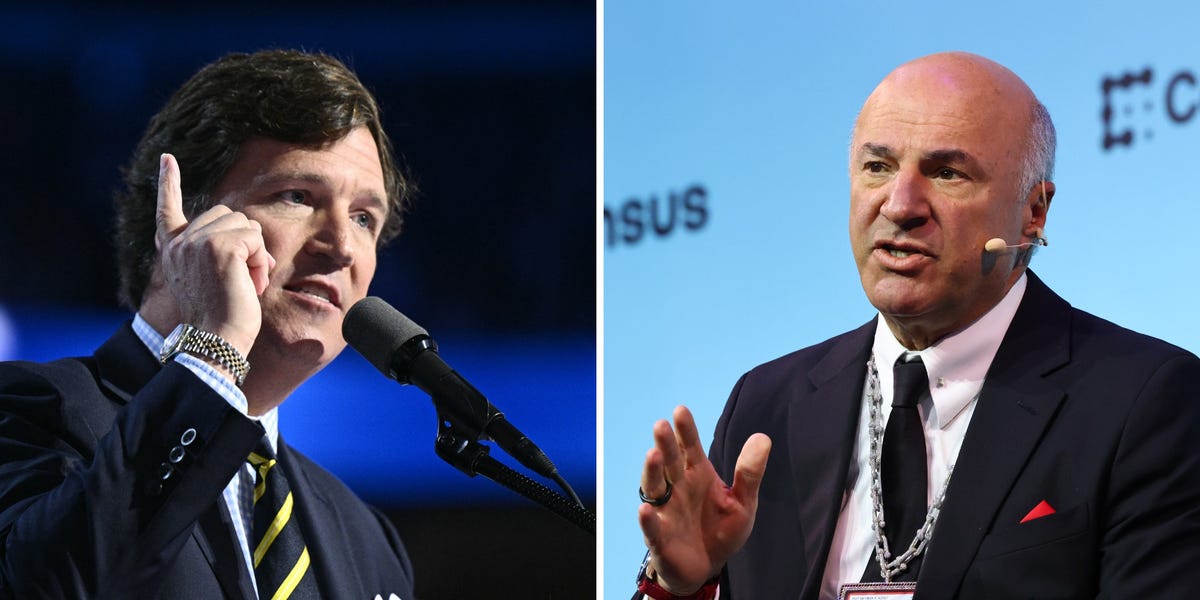
The clash between O'Leary and Carlson adds political risk to AI infrastructure projects, with the next catalyst being project financing details.
Kevin O'Leary defended his planned Utah AI data center against Tucker Carlson's criticism of taxpayer subsidies during a recent interview. The exchange signals that the artificial intelligence infrastructure buildout is facing a new layer of political scrutiny.
For investors tracking data center developers, utility partners, and AI hardware suppliers, the debate adds a political risk dimension that is often underpriced. A project that enjoys broad political support can secure permits and power in 18 months. One that becomes a symbolic debate can stall for years.
O'Leary argued that government support is necessary to keep AI infrastructure onshore and competitive. Carlson countered that subsidizing the project creates a moral hazard and questioned the broader China strategy. The interview did not disclose specific subsidy amounts or which programs are involved. The public airing of this tension matters for any investor evaluating data center projects in states with similar subsidy regimes.
Data center demand remains strong, driven by cloud hyperscalers and enterprise AI workloads. The supply side, however, is becoming constrained by power availability, construction costs, and regulatory hurdles. If the Utah debate spills into broader policy, it could slow the pace of new project announcements in states with similar subsidy regimes.
Utilities in the Intermountain West would be directly affected if the data center is delayed or downsized, because projected load growth underpins their transmission investments. For data center operators, the debate reinforces a trend: large-scale developments increasingly attract public scrutiny, which raises execution risk.
The better market read is that political friction will widen the gap between Tier 1 developers with strong community relationships and speculative entrants. Investors should monitor local permitting hearings and utility rate-case filings for any sign that political opposition is translating into concrete delays.
The next catalyst for this story is the release of project-specific financing details. If O'Leary or his partners disclose the subsidy structure – federal grants, state tax credits, or local property tax abatements – the debate will shift from theoretical to factual. A transparent, market-rate incentive package would weaken Carlson's argument. A heavily subsidized deal would intensify it.
For those tracking the stock market analysis landscape broadly, the O'Leary-Carlson exchange is a microcosm of a larger question: how much government support is acceptable for an industry that claims to drive economic growth without it. The answer will shape the pace and geography of the AI infrastructure buildout in the United States.
Prepared with AlphaScala research tooling and grounded in primary market data: live prices, fundamentals, SEC filings, hedge-fund holdings, and insider activity. Each story is checked against AlphaScala publishing rules before release. Educational coverage, not personalized advice.