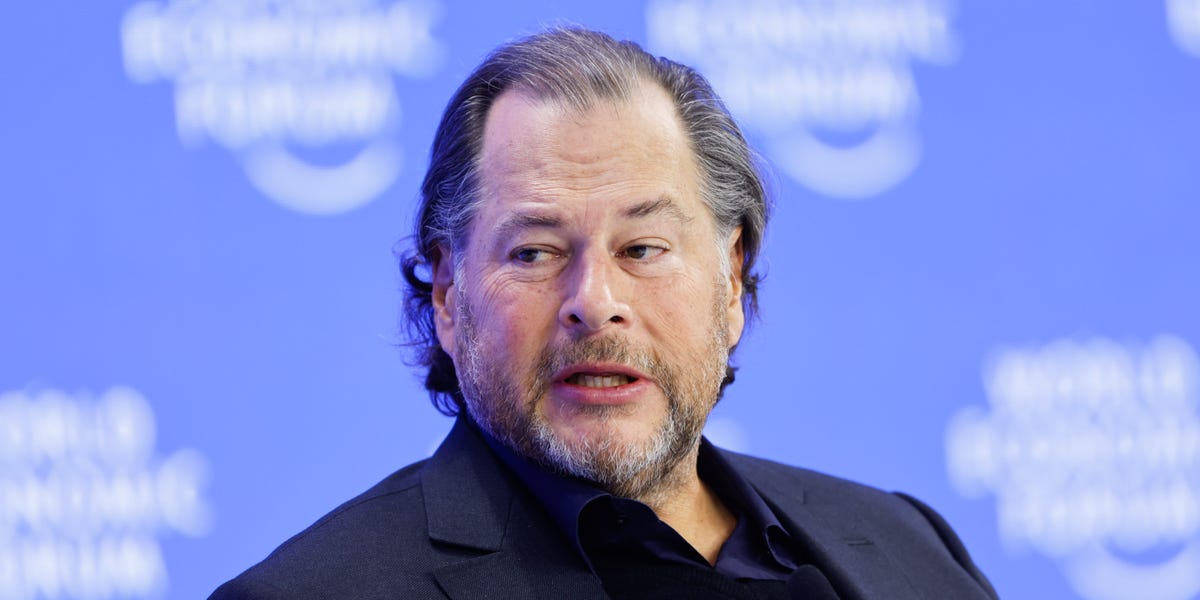
Salesforce CEO Marc Benioff said the company will spend $300 million on Anthropic tokens, a commitment that signals a strategic bet on AI inference over model training. The disclosure came during an episode of the All-In podcast, where Benioff described his enthusiasm for AI coding agents and efforts to simplify coding within Slack.
The $300M Anthropic Token Bet
Anthropic tokens are prepaid credits for using the company’s Claude models via API. This is not an equity investment; it is a consumption commitment. Salesforce is effectively reserving inference capacity at a frontier lab rather than building its own large language models. The size of the commitment – $300 million – is large for a single-vendor inference deal and suggests deep integration of Claude into Salesforce’s AI agent products.
Benioff’s comments on the podcast emphasized speed. He said he can work faster with AI agents and that Salesforce is developing technology to make coding easier inside Slack. That points to a near-term productivity play: using Claude-powered agents to automate routine development tasks for Salesforce’s own engineers and, eventually, for customers.
Inference vs. Training: The Spending Shift
Enterprise AI spending has been dominated by model training – buying GPUs, building data pipelines, and fine-tuning. The $300 million Anthropic deal flips that script. Salesforce is paying for inference, the cost of running models on user queries. This shift matters because inference costs are recurring and scale with usage, while training costs are lumpy and depreciate.
For investors, the distinction is critical. A training-heavy strategy would require Salesforce to own infrastructure and hire research talent. An inference-heavy strategy outsources the model risk to Anthropic and ties costs directly to customer adoption. If AI agents catch on, Salesforce’s token bill rises – but so does its subscription revenue. If adoption stalls, the $300 million commitment becomes a sunk cost.
What This Means for Salesforce Investors
The $300 million token commitment raises three questions for CRM shareholders. First, margin impact. Token costs are a new variable expense that could compress operating margins if not offset by higher-priced agent subscriptions. Second, competitive positioning. Microsoft is embedding Copilot across its stack, and Google offers Gemini through Workspace. Salesforce is betting that Anthropic’s models give it a differentiated agent experience. Third, execution risk. Benioff’s focus on coding agents at Slack is a narrow entry point; scaling to sales, service, and marketing workflows will require broader integration.
Benioff did not disclose the duration of the token commitment or whether it includes exclusivity. Those details matter for assessing the deal’s economics. A multi-year prepaid contract would lock in pricing but also commit Salesforce to a single model provider at a time when the AI landscape is shifting rapidly.
The Next Decision Point
Salesforce’s next earnings call will be the first real test. Investors should watch for updates on AI agent monetization, any changes to the $300 million commitment, and commentary on token utilization. If Benioff signals that the Anthropic spend is accelerating, it implies strong agent adoption. If he downplays it, the deal may be a hedge rather than a core strategy. Either way, the $300 million figure is now a benchmark for how aggressively Salesforce is chasing the AI agent opportunity.