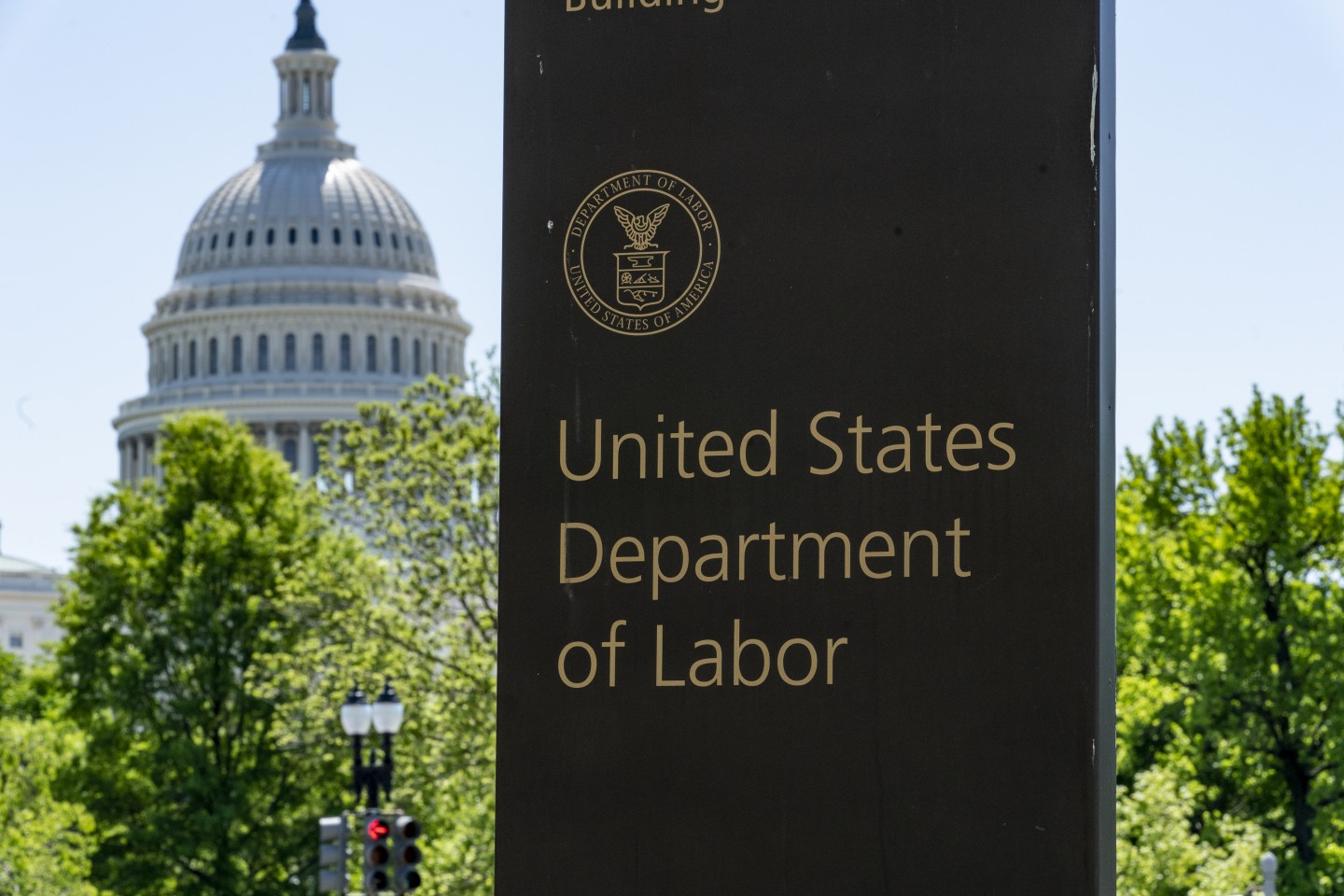
The resignation of Labor Secretary Lori Chavez-DeRemer has drawn less attention than the Iran War, rising gas prices, or the attempted assassination of President Trump at the White House Correspondents' Dinner. Her departure removes one of the administration's most controversial nominees and gives President Trump a chance to reshape the department's direction on union policy, Right to Work laws, and retirement investment rules.
Chavez-DeRemer resigned because of an inappropriate relationship with a member of her security detail. There were also allegations that her husband harassed Department staff. The resignation had nothing to do with policy. The policy implications are substantial.
The PRO Act and Right to Work Stakes
Chavez-DeRemer was originally recommended to President Trump by Teamsters President Sean O'Brien. O'Brien had a high-profile speech at the 2024 Republican convention. The Teamsters remained neutral between President Trump and then-Vice President Kamala Harris. Given organized labor's traditional alignment with the Democratic Party, O'Brien's refusal to endorse Harris was almost as valuable to President Trump as an actual endorsement. Accepting O'Brien's pick for Labor Secretary was a natural trade.
During her single term in the House of Representatives, Chavez-DeRemer became one of the union leaders' favorite Republicans by being one of only three Republicans to support the PRO Act. The PRO Act is a union-backed legislative package that would:
- Repeal Section 14(b) of the Taft-Hartley Act, which authorizes state Right to Work laws
- Nullify 37 state Right to Work laws, forcing workers in those states to comply with federal rules allowing unions to require dues as a condition of employment
- Allow the National Labor Relations Board (NLRB) to certify a union as a company's exclusive bargaining agent without a majority vote in a secret ballot election. Instead, a union would only need signed cards from a majority of the workforce, even if workers were pressured by pro-union coworkers
- Ban businesses from replacing striking workers, regardless of strike duration or cost to the company
What Right to Work means economically
Workers in Right to Work states not only have the freedom to choose whether to join a union. They also enjoy higher real wages, lower unemployment, and lower taxes than in states without Right to Work laws, according to the article's framing. The PRO Act would eliminate those protections for workers in 37 states.
Chavez-DeRemer's Record: Disappointing Both Sides
During her confirmation hearing, Chavez-DeRemer backpedaled on her support for the PRO Act, specifically the nullification of state Right to Work laws. Once in office, she disappointed her progressive pro-union supporters.
Timothy Noah, writing in The New Republic, complained that under Chavez-DeRemer the number of compliance actions against businesses that allegedly violated federal wage and hour laws fell from their Biden-era high of 21,000 to 17,000. Compliance actions against the worst performing industries fell from a Biden-era average of 842 to 649 under Trump and Chavez-DeRemer.
Noah attributes the decline to the fact that Chavez-DeRemer is a Republican, facing insurmountable pressures from her party and allied business interests to favor management over labor. The article notes that Noah never considers the possibility that the decline could stem from overzealous enforcement by Biden's Labor Department.
Crypto in 401(k) plans
Noah also criticized Chavez-DeRemer for supporting a regulation allowing pension plans to invest in cryptocurrencies and other unconventional assets. The article frames this as a positive: workers having more options in their 401(k) plans, at least for investments not approved by The New Republic.
What the Next Secretary Should Do
The resignation gives President Trump a chance to appoint a Labor Secretary who understands that being pro-worker is not the same as being pro-union. The article outlines several priorities:
- Commit to protecting state Right to Work laws from federal interference
- Protect the right of workers in compulsory unionism states to not be forced to subsidize union political machines
- Promote greater cooperation between workers and management
- Give workers greater options for their retirement and health care plans
- Recognize that the generation raised with Uber and streaming will want greater say in their working conditions
The generational shift
Changing policies to reflect the needs of the new workforce could help businesses improve their operations while strengthening unions by making them more responsive to their members' needs. The article argues that the next Secretary should see this as an opportunity, not a threat.
Risk to Watch: Confirmation Battle
The next nominee will face a confirmation fight that tests the administration's relationship with organized labor. A pro-union pick would signal continuity with Chavez-DeRemer's original mandate. A pick aligned with Right to Work principles would signal a break and likely draw opposition from Senate Democrats and union leadership.
Key insight: The resignation removes a figure who was already disappointing her original backers. The replacement will define whether the Labor Department continues its current enforcement trajectory or pivots more aggressively toward deregulation and worker choice.
What this means: For businesses, the key risk is uncertainty around wage and hour enforcement levels and potential changes to retirement investment rules. For unions, the risk is losing a seat at the table they helped install.
Affected Assets and Sectors
- Financials: Pension funds and 401(k) providers could see expanded investment options if the next Secretary maintains Chavez-DeRemer's crypto-friendly stance
- Transportation and logistics: Companies with unionized workforces in Right to Work states face the most direct regulatory exposure
- Cryptocurrency: The crypto-in-401(k) regulation is a specific catalyst for digital asset adoption in retirement accounts
What Would Reduce the Risk
- A nominee who signals continuity on enforcement levels and retirement investment rules
- A confirmation process that moves quickly without major party-line fights
- Clear public statements on Right to Work protections
What Would Make It Worse
- A nominee who explicitly supports the PRO Act or nullifying Right to Work laws
- A prolonged vacancy that leaves the department without clear leadership during a period of economic uncertainty
- A confirmation fight that drags into the 2026 midterm cycle
The Bottom Line for Traders
The Chavez-DeRemer resignation is a political event with second-order economic effects. The most immediate market impact would come from changes to retirement investment rules, which could affect crypto and asset management stocks. The broader labor policy direction matters for transportation, manufacturing, and logistics companies with union exposure.
For now, the market is not pricing any material shift. That could change if the next nominee signals a sharp departure from the current enforcement trajectory or a renewed push for the PRO Act.
Progressive Corporation (PGR) carries an Alpha Score of 55/100 (Moderate) in the Financials sector. The stock page is available at PGR stock page. For broader market context, see stock market analysis.