Crude oil futures surged above $104 a barrel Monday, while Nintendo shares fell 8.4% after the company cut its Switch 2 sales forecast. The S&P 500 and Nasdaq Composite closed at fresh records in the same session, extending a pattern of equity benchmarks absorbing shocks that elsewhere repriced energy supply risk and consumer hardware demand. The simple read is a one‑day scare that indexes ignored. The market read beneath the surface points to a rewritten supply‑chain timeline that stretches into 2027 and a demand‑elasticity test for a console cycle that had been priced for steady momentum.
Crude Breaches $104 After Ceasefire Called ‘On Life Support’
President Donald Trump acknowledged the Iran ceasefire was “on life support” and “unbelievably weak,” marking the most explicit administration statement that the truce is breaking apart. Brent futures added nearly 3% to clear $104 per barrel. West Texas Intermediate for June delivery also climbed 3%, settling at $98.07. The move pushes the rally to more than 40% since the U.S.‑ and Israeli‑led military campaign began on February 28.
The immediate repricing is a supply‑disruption reaction. The forward message, however, is about duration. Saudi Aramco CEO Amin Nasser told investors on the company’s first‑quarter earnings call that even if the Strait of Hormuz reopened today, rebalancing the market would take months. A delay of a few more weeks, he added, would push a return to normal conditions into 2027. That horizon is no longer a tail‑risk scenario; it is entering analysts’ base‑case assumptions for refined‑product cost structures, freight rates, and petrochemical input prices.
Washington’s response confirmed that the administration sees a consumer‑price problem that will outlast any short‑term ceasefire headline. Trump and congressional Republicans are floating a suspension of the federal gas tax, a tool that would soften pump prices directly without addressing the supply constraint. The proposal itself signals that the White House expects elevated energy costs to occupy voter attention for quarters, not weeks.
Strait of Hormuz Timeline Stretches Normalization to 2027
The Aramco CEO’s timeline forces a recalibration of how long central banks can look through oil. If the Strait remains a constriction point into 2026, the disinflation narrative that has powered equity multiples faces a direct challenge. Refined‑product margins are already widening, and the lag before those increases feed into consumer price indexes is typically two to three quarters. The Treasury Secretary’s concurrent trip to Japan, where discussions with Prime Minister Sanae Takaichi and Finance Minister Satsuki Katayama include Iran, rare‑earth metals cooperation, and the weak yen, shows that the U.S. is simultaneously trying to secure allied supply chains while managing a strong‑dollar tailwind that amplifies commodity costs for import‑heavy economies.
The current oil move is not extraordinary in isolation. The persistence implied by the Saudi outlook, combined with a White House openly searching for consumer relief tools, shifts the macro narrative from “transitory war premium” toward “sustained supply‑side friction.” That distinction determines whether oil‑sensitive sectors such as airlines, chemical producers, and freight carriers can hold current earnings multiples. A futures curve that prices normalization no earlier than 2027 keeps a floor under input costs that the broader disinflation trade has not yet priced.
Nintendo Switch 2 Forecast Cut Splits Volume from Price
Nintendo shares closed at 7,020 yen, down 8.4%, their lowest since August 2024 and bringing the year‑to‑date decline to 34%. The catalyst was a Friday announcement that combined a price hike for the Switch 2 console, citing rising memory costs, with a fiscal‑year unit‑sales forecast of 16.5 million. That figure represents a sharp deceleration from the 19.86 million units sold since the console launched last June. The effective annualized run‑rate implied by the new guidance sits roughly 17% below the launch‑period pace.
In a typical hardware cycle, price increases follow demand strength. Here, the price hike lands alongside a sales forecast that is already falling. The resulting squeeze on both volume and margin challenges the assumption that the Switch 2 can replicate the original Switch’s attach rate and lifetime demand profile. For a name that trades on platform‑cycle momentum, the guidance cut reopens the question of whether a maturing hybrid‑console category can sustain growth when the installed base is being asked to pay more in a period of weakening real‑income growth. The 34% year‑to‑date decline is no longer a valuation reset; it has become a market judgment that the post‑launch demand trajectory has broken below the range that supported previous multiples.
China Summit Guest List Exposes Semiconductor Trade Leverage
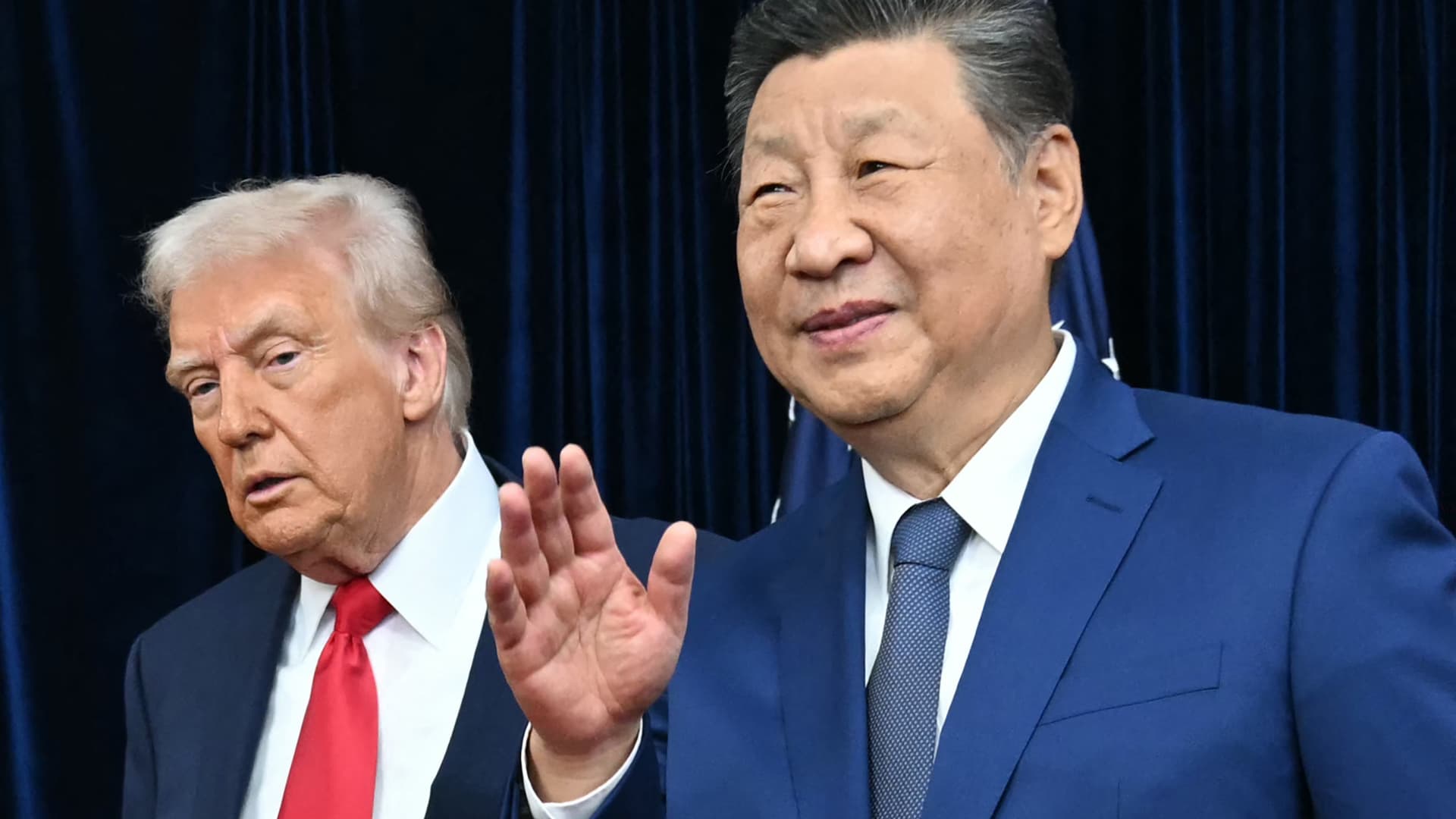
Trump’s upcoming summit with Chinese President Xi Jinping is assembling a CEO delegation that includes Tesla’s Elon Musk, Apple’s Tim Cook, and BlackRock’s Larry Fink. Nvidia CEO Jensen Huang is absent. The omission will be dissected by chip‑trade strategists. Nvidia derives a material share of its data‑center revenue from hyperscale customers with heavy Asian exposure; the exclusion keeps sensitive semiconductor supply‑chain negotiations out of a public photo‑op. Nvidia shares edged 1.97% higher to $219.44 on the day. The stock holds an AlphaScala Alpha Score of 69, indicating moderate conviction. Apple and Tesla stand to gain if the summit produces trade‑thaw signals. Nvidia’s removal from the room limits its direct upside to the event while keeping the risk of a new round of export‑control friction on the table for the next catalyst window.
Records Mask a Pressure Cooker; Iran and the Summit Are the Next Catalysts
Equity benchmarks closing at records on a session that repriced crude and punished a consumer‑tech name illustrates compartmentalization at its most extreme. The rally rests on assumptions that inflation will keep easing, that central banks will deliver rate cuts, and that consumer spending on hardware and services will hold. A Strait of Hormuz that stays logjammed into 2027 makes the inflation path harder to sustain. A console‑cycle demand cut that is partly price‑driven makes the consumer‑resilience thesis harder to accept. Separately, each is manageable. Together, they test the view that macro tail risks are fully priced and contained. The next status report on the Iran ceasefire and the China summit outcome will either reinforce the compartmentalization trade or force a correlation break that equity indexes have not yet discounted.