Crude oil futures jumped Friday after U.S. President Donald Trump told Fox News that China had agreed to purchase American oil. Brent crude for July settled up 1.49% at $107.30 a barrel. West Texas Intermediate for June gained 1.55% to $102.74 a barrel. The claim came in a pre-recorded interview following Trump’s meeting with Chinese leader Xi Jinping; Beijing has not confirmed any arrangement, and no cargo fixturing has emerged.
The simple read treats the headlines as a straight demand catalyst–the world’s largest crude importer committing to U.S. barrels should tighten the Gulf Coast physical market. The better read splits the rally into two separate engines: a potential reduction in the risk that trade friction keeps Chinese buyers away from U.S. crude, and a separate geopolitical backstop that acts independent of actual cargo flows.
The Trump-Xi Claim and the Absence of Cargo Nominations
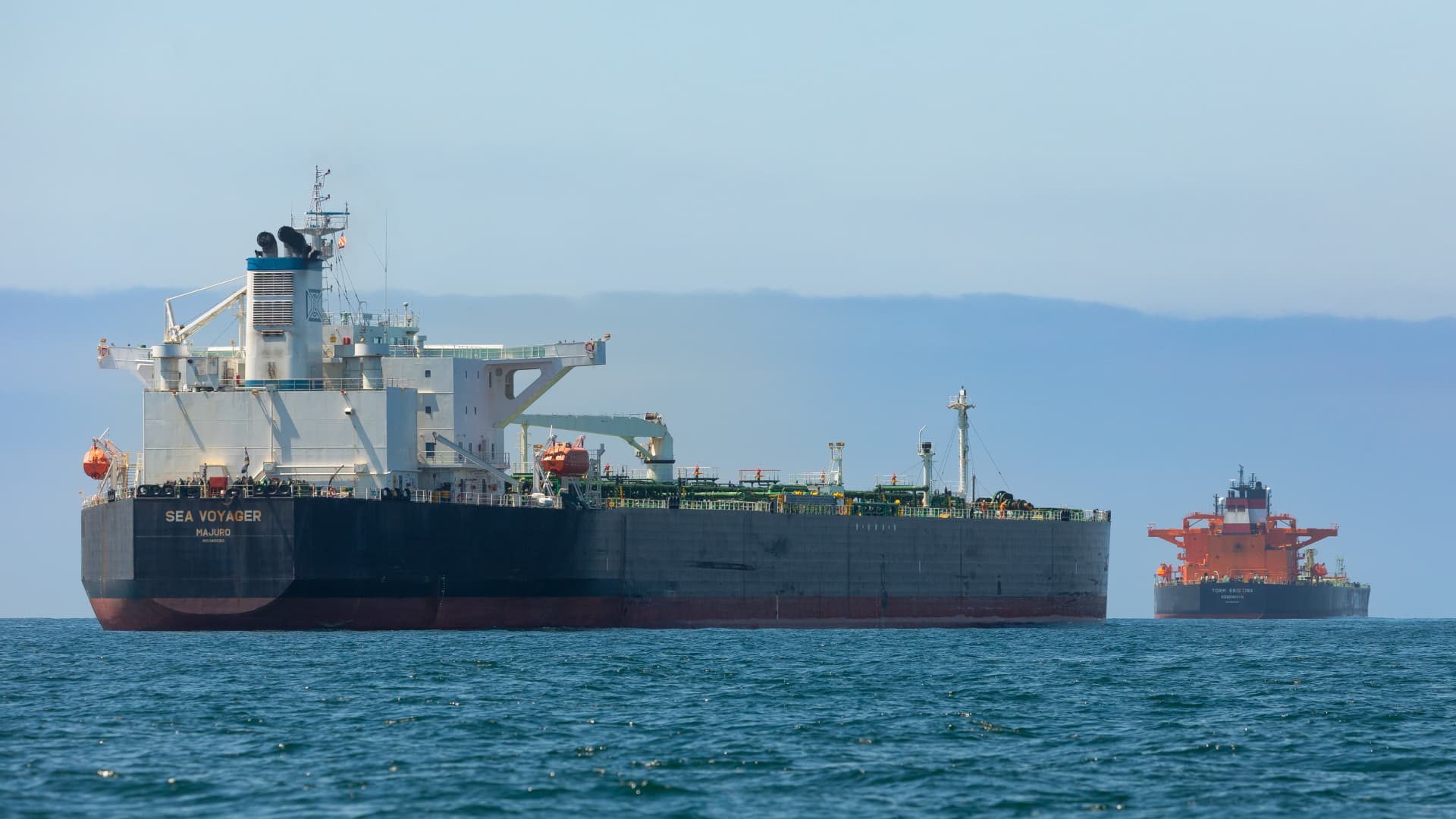
Trump stated China would send ships to Texas, Louisiana, and Alaska to load U.S. crude. This language directly points to the Houston Ship Channel, the Louisiana Offshore Oil Port (LOOP), and the Trans-Alaska Pipeline System as the three arteries that would handle incremental Chinese demand. The problem for the market is that no vessel fixtures have been reported. Without a very large crude carrier chartered for a Gulf Coast–to–China voyage, the price move remains a bet on political intent rather than a physical flow shift.
The earlier U.S.-China crude purchase signal suggests the administration has been working this channel for weeks. The Permian-to-Gulf export pipeline network–already running at high utilization–would feel the pressure first. Any sustained Chinese buying would tighten the WTI forward curve into backwardation and widen the premium for barrels delivered at the water versus inland points. The differential between WTI at Midland and Magellan East Houston would become the most sensitive early indicator of an export pull.
Strait of Hormuz: A Joint Floor Underlying the Bid
Part of Friday’s support came from a separate and equally consequential joint statement. Trump and Xi agreed that the Strait of Hormuz must remain open, and a White House official said Xi voiced opposition to the “militarization of the Strait and any effort to charge a toll for its use.” Treasury Secretary Scott Bessent told CNBC that China would work behind the scenes to reopen the waterway, noting it was “very much in their interest.”
The Hormuz commitment matters because it reduces the probability of a supply disruption that would otherwise spike global crude and product prices. It signals a rare alignment of U.S. and Chinese energy-security interests while Middle East tensions remain elevated. The Hormuz commitment, however, provides a more durable floor than an unconfirmed purchase promise. The compression of the geopolitical risk premium contributed meaningfully to the bid, even as the China-buying narrative grabbed the initial attention.
Sector Readthrough: Midstream, Shipping, and the Export Stack
If a Chinese crude purchase program materializes, the effects flow directly through the U.S. Gulf export chain. Midstream operators with terminal capacity in the Permian Basin and Eagle Ford would see higher utilization. Shipping companies owning or chartering VLCCs stationed in the Gulf would capture incremental voyage demand. The key chokepoint is the loading infrastructure: LOOP can load a full VLCC in about 24 hours, while the Houston Ship Channel requires reverse lightering due to draft constraints. A string of VLCC fixtures with China-bound discharge would confirm the sector thesis; until then, the readthrough is a momentum event, not a structural trade.
Producers in the Permian that have committed volumes to Gulf waterborne markets stand to benefit most directly if the Chinese buying push lifts the realized export price. The move would also support refiners with access to discounted inland crude if the export pull tightens the Gulf Coast supply relative to inland grades. The commodities analysis framework suggests watching the shape of the forward curve rather than spot price alone when evaluating whether the demand signal is genuine or transient.
Fixtures Confirm the Signal
The sequence that will validate or fade Friday’s rally is simple: first, a formal statement from Beijing acknowledging a crude purchase framework; second, commercial fixtures on VLCCs loading in the Gulf for China delivery; third, weekly EIA data that shows a draw on Gulf Coast crude stocks beyond the seasonal pattern. Until the fixtures appear, the trade is a political signal with no physical anchor. For producers that have hedged production at strip levels well below $107 Brent, the more actionable near-term opportunity is the ability to lock in higher forward levels if the Hormuz stability expectation holds and the China narrative transitions from claim to contracted barrels.