Stocks● Neutral
Nissan India's 29-Point Tamil Nadu Push Builds Retail Reach
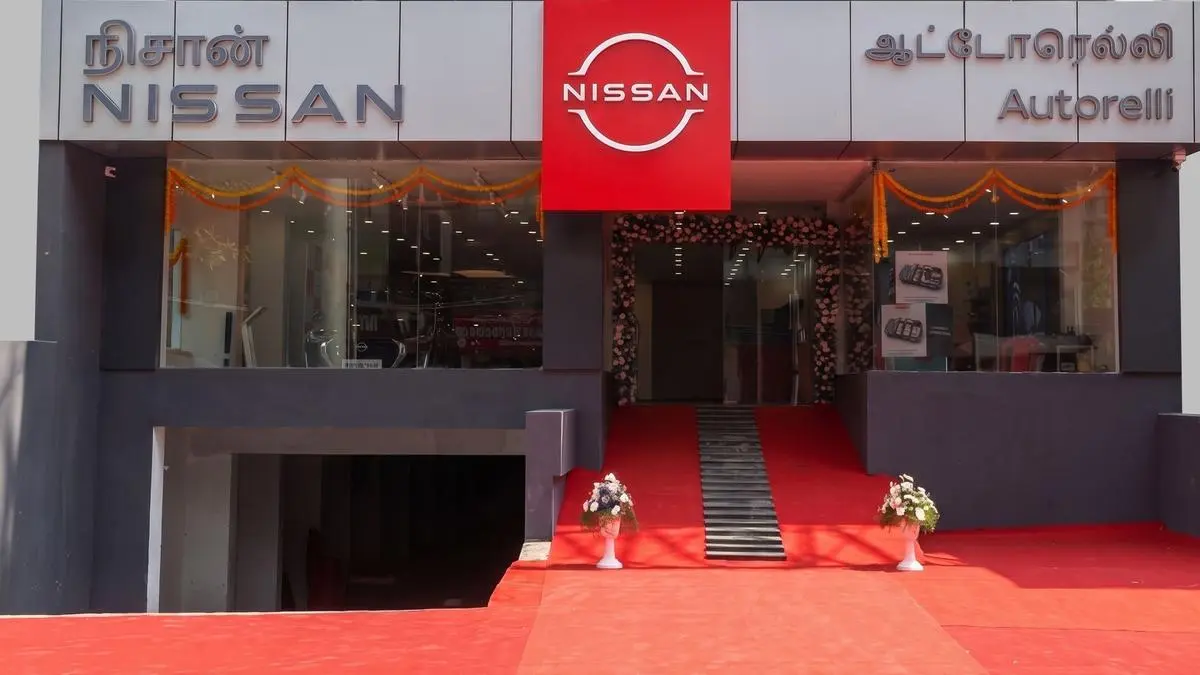
Nissan opens new Chennai showroom, expanding Tamil Nadu network to 29 touchpoints. Inventory investment and sales momentum from Magnite and GRAVITE will determine if this expansion pays off.
Continue with
Nissan Motor India opened the Autorelli 1S Nissan showroom in Chennai, a 3,800 sq. ft. facility with a six-car display. The launch expands the company's Tamil Nadu network to 29 touchpoints: 10 in Chennai and 19 spread across Coimbatore, Madurai, Tirunelveli, Erode, Kanchipuram, Vellore, Trichy, Salem, Cuddalore, Nagercoil, and Thanjavur.
The Network Expansion Framework: Beyond Dealer Count
In emerging auto markets, a retail footprint increase is often read as a pure demand signal. That interpretation is too simple. A showroom generates costs before it generates revenue: lease or property outlay, inventory carrying charges, staffing, and training. The better framework is distribution economics – the return on capital tied up in each touchpoint and the lifetime value of service revenue that flows through it.
Product Backdrop: Magnite, GRAVITE, and the CNG Edition
Nissan's product momentum in India rests on two models. The Magnite compact SUV has built a base since its launch. More recently, the company introduced the GRAVITE and its CNG edition, targeting the fast-growing CNG passenger vehicle segment. These vehicles need physical retail points to convert interest into sales. The 29 outlet network gives Nissan a channel to push both models into tier-2 cities where CNG demand is rising due to lower fuel costs.
Service Revenue as a Stabilizer
Every showroom also captures service revenue from after-sales maintenance. Service margins in India tend to be higher than new-car margins. With 29 locations, Nissan can lock in recurring cash flow from each vehicle sold. That stabilizes the unit economics even if new-car sales face a seasonal dip. The expansion effectively builds a service network first, a sales network second.