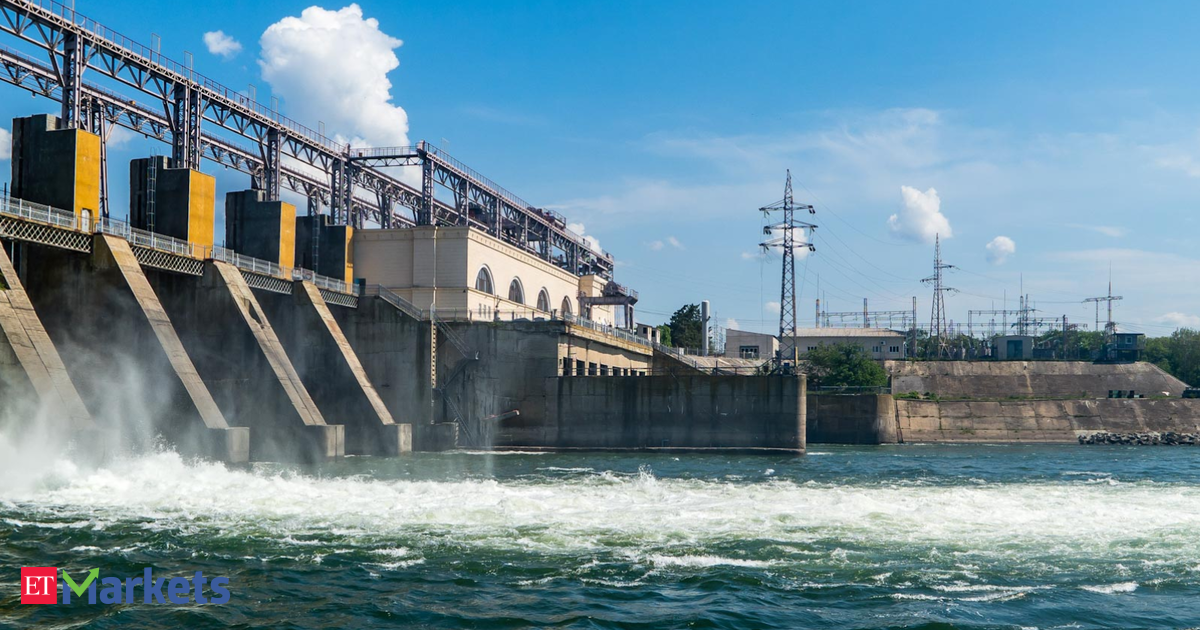
NHPC shares slid 5% after the government launched a Rs 4,300 crore OFS at an 8% discount. The retail discount and supply overhang create a tricky entry point.
NHPC Ltd. shares dropped 5% in early trade Monday after the government launched an offer-for-sale (OFS) worth up to Rs 4,300 crore at an 8% discount to the previous close. The sale opens a two-day window for institutional and retail bidding, with retail investors receiving a concession on the floor price.
This is not a routine secondary sale. The Government of India is selling a stake in the state-run hydropower generator, with an option to increase the offer size if demand is strong. The structure creates a specific risk profile for anyone holding or considering a position.
The first-read interpretation is straightforward: a blue-chip PSU stock at an 8% discount looks like an entry opportunity. The floor price sits below the market rate, and retail investors get an extra Re 1 per share discount, making the cost even lower. Many headlines will frame this as a chance to buy NHPC at a bargain.
That reading misses the supply overhang. The government's greenshoe option means the total stake sale could be double the base offer. That volume creates a sellers' queue that takes time to absorb, regardless of the low entry price. A cheap-looking entry carries hidden execution risk.
The mechanism matters more than the headline discount. Non-retail investors bid first, and retail allocation only happens if shares remain after institutional demand is met. This makes retail participation a lottery for the discounted shares, not a guaranteed buy.
The floor price is binding for the entire OFS window. If broader market sentiment softens – any negative move in the [Nifty 50](/markets/foreign-outflows-surge-fpis-pull-48213-crore-from-indian-equities-in-april) or BSE Sensex – the floor becomes an anchor. Sellers who bought at higher levels in recent weeks face an immediate mark-to-market loss on the discount, which can trigger stop-losses and secondary selling.
Execution risk is tangible because NHPC's daily trading volume is modest relative to the potential supply. The greenshoe portion alone represents several weeks of normal trading volume. The stock does not have the liquidity to absorb that supply quickly without price damage.
The first hard data point comes when the OFS subscription data is released at the end of each bidding day. A strong institutional bid – say, 3x or more on the non-retail portion – signals that large money sees value at the floor. That would cap downside and could lift the stock back toward the pre-OFS level.
A weak subscription, especially from domestic mutual funds and insurance companies, is a red flag. Those are the natural buyers for a PSU hydro stock with predictable cash flows. If they pass, the greenshoe option becomes a real risk, not a theoretical one.
Technical traders should watch the price zone near the floor as a support area. NHPC tested this region in late March 2024, and a break below it on high volume would open deeper downside. Resistance sits at the previous close price, which now serves as the first supply zone for any relief rally.
The Indian Indices Slide 2% as Crude Oil Breaches $105 Threshold article provides broader market context for why sentiment can shift quickly during OFS windows. Similarly, the Nifty 50 Holds 24,000: 10 Factors Driving Monday’s Market Open piece outlines other forces that could amplify or offset the NHPC selloff.
The OFS closes Tuesday. The anchor book and institutional subscription data will be available after market hours Monday. That is the first hard checkpoint to judge whether the supply is being absorbed or will linger as a weight.
For existing holders, the decision is whether to tender shares in the OFS at the 8% discount or hold through the overhang. For new buyers, waiting for the subscription data – rather than chasing the floor price on day one – is the lower-risk approach. A 2.5x+ institutional cover would justify a small entry. Anything below 1.5x suggests the market is pricing in more downside.
Prepared with AlphaScala research tooling and grounded in primary market data: live prices, fundamentals, SEC filings, hedge-fund holdings, and insider activity. Each story is checked against AlphaScala publishing rules before release. Educational coverage, not personalized advice.