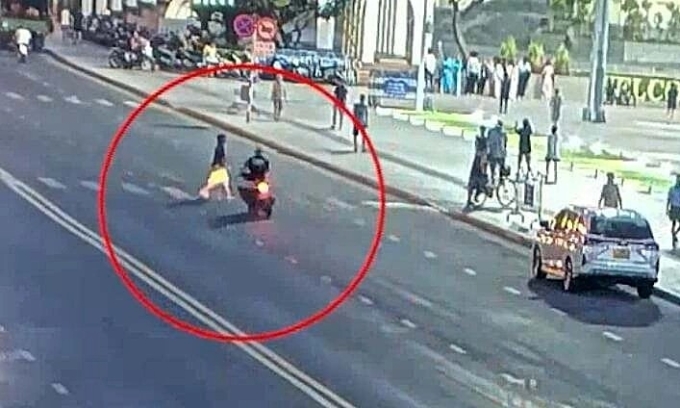
A fatal motorbike crash in Nha Trang has led to the criminal detention of a Russian national, with blood alcohol levels measured at 268.8 mg per 100 ml.
Konstantin Smoliakov, a 35-year-old Russian national, faces criminal detention in Nha Trang following a fatal motorbike collision on May 4, 2026. Local authorities in Khanh Hoa Province confirmed on May 5 that Smoliakov is under investigation for violating road traffic regulations after a crash on Tran Phu Street resulted in the death of a local pedestrian. The incident occurred near April 2 Square, a high-traffic coastal corridor that serves as the primary hub for the city's tourism sector and its significant Russian-speaking visitor population.
Police testing conducted following the crash revealed a blood alcohol concentration of 268.8 mg per 100 ml for the suspect. This figure is more than three times the 80 mg per 100 ml threshold that triggers the most severe administrative sanctions under Vietnamese law, including maximum license suspensions and heavy fines. However, the legal framework governing this case extends beyond administrative penalties. Vietnam maintains a zero-tolerance policy for alcohol in the bloodstream of any driver, and the fatal nature of this incident shifts the matter into the criminal justice system.
Under current statutes, drink-driving that results in a fatality is punishable by a prison sentence ranging from 3 to 10 years. The court may also impose secondary penalties, such as a ban on holding specific professional positions or practicing certain trades for a period of 1 to 5 years. Foreign nationals are subject to the same enforcement standards as local citizens, and the investigation is currently being managed by Nha Trang Ward Police in coordination with specialized provincial units to finalize the case file.
Tran Phu Street functions as the central artery for Nha Trang’s beachfront economy, characterized by high-density pedestrian traffic and a concentration of hotels and service businesses catering to international visitors. The physical layout of this boulevard, combined with the high volume of motorbike traffic, creates a persistent operational risk for both residents and tourists. While the area is designed to accommodate high foot traffic, the intersection of late-night leisure activity and heavy vehicle density remains a recurring point of friction for local law enforcement.
For those monitoring regional stability and travel-related risks, the incident underscores the strict enforcement of traffic laws in Vietnam. The government has increasingly prioritized road safety, and the application of criminal statutes to foreign nationals serves as a clear signal of the state's intent to maintain uniform compliance. The case is currently in the evidentiary phase, with police compiling the necessary documentation to proceed with formal charges.
The primary risk for foreign residents and visitors in Nha Trang remains the intersection of local traffic enforcement and the strict liability standards applied to vehicle operators. Unlike jurisdictions where minor traffic infractions might be settled through administrative channels, the involvement of alcohol in a fatality removes the possibility of a non-criminal resolution. The investigation into Smoliakov will likely focus on the speed and steering control lost prior to the impact, as these factors directly correlate to the severity of the charges under the current traffic safety law.
Market participants and observers of the regional tourism sector should note that while Nha Trang remains a primary destination for Russian travelers, the legal environment for foreign nationals has tightened. The consistency of enforcement across all demographics is a key component of the current regulatory climate. As the case moves forward, the focus will remain on the judicial process and the potential for a custodial sentence, which would set a precedent for how similar incidents involving foreign nationals are handled in the province. The outcome of the investigation will serve as a concrete marker for the rigor of local traffic law application in high-density tourist zones.
AI-drafted from named sources and checked against AlphaScala publishing rules before release. Direct quotes must match source text, low-information tables are removed, and thinner or higher-risk stories can be held for manual review.