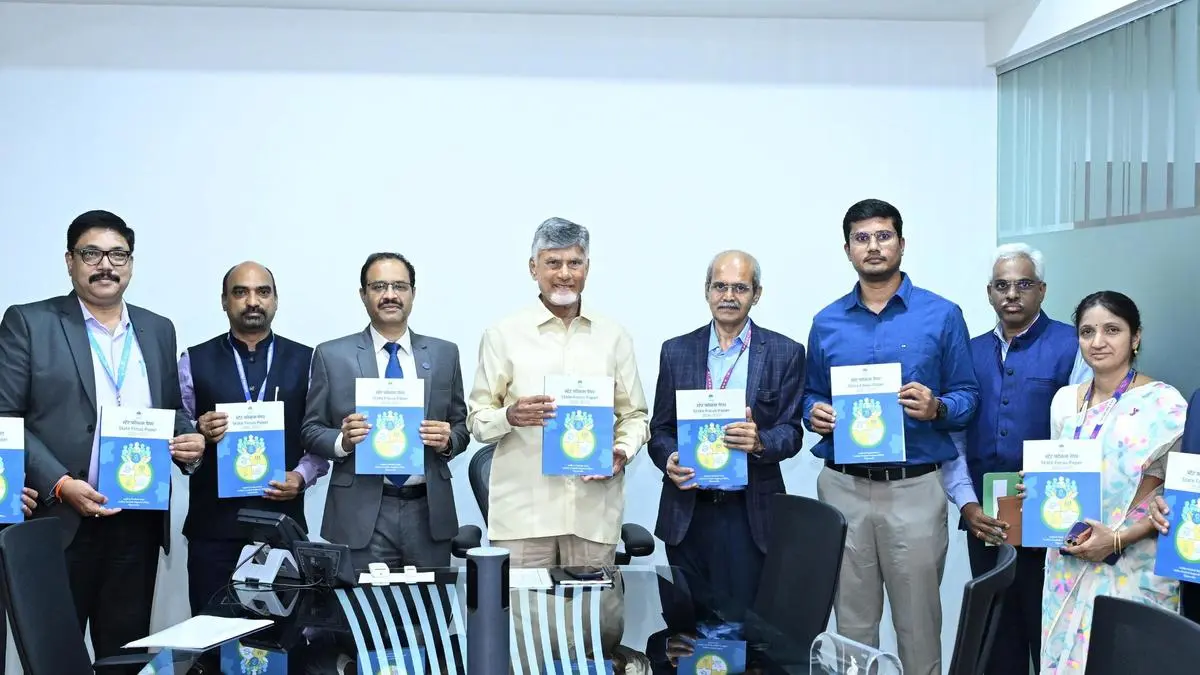
The National Bank for Agriculture and Rural Development (NABARD) has formalized a credit projection of ₹5.11 lakh crore for Andhra Pradesh for the 2026–27 fiscal year. Unveiled by Chief Minister N. Chandrababu Naidu in Amaravati, the plan represents a 20 percent expansion over the previous year’s ₹4.24 lakh crore allocation. This shift in capital deployment signals a strategic pivot toward deepening priority sector lending across the state’s rural and industrial landscape.
Sectoral Allocation and Capital Distribution
The credit plan is heavily weighted toward the agricultural sector, which commands ₹2.55 lakh crore of the total outlay. Within this primary bucket, crop loans account for the largest share at ₹1.66 lakh crore. The remaining agricultural funds are distributed across animal husbandry at ₹34,972 crore, fisheries at ₹21,098 crore, and horticulture at ₹11,961 crore. Farm mechanization receives a dedicated allocation of ₹8,265 crore, reflecting an effort to modernize production cycles and improve yield efficiency.
Beyond direct crop production, the plan carves out significant liquidity for infrastructure and industrial support. Agricultural infrastructure is slated for ₹9,957 crore, while allied activities receive ₹12,687 crore. The Micro, Small and Medium Enterprises (MSME) sector remains a critical pillar of the state’s economic framework, securing ₹1.64 lakh crore in credit support. This allocation is intended to bolster the non-farm economy and provide a buffer for small-scale industrial growth.
Regional Focus and Institutional Strategy
A specific geographic emphasis is embedded within the horticulture budget. Of the ₹11,961 crore earmarked for horticulture, ₹5,313 crore is designated for the Rayalaseema region and Prakasam district. This targeted distribution suggests a policy focus on arid or semi-arid zones where high-value crop cultivation requires significant upfront capital investment. By concentrating resources in these specific districts, the state aims to mitigate regional economic disparities and stabilize agricultural income in traditionally volatile zones.
Chief Minister N. Chandrababu Naidu has explicitly called for banks and NABARD representatives to adopt a proactive stance in deploying these funds. The success of this credit plan hinges on the velocity of capital disbursement and the ability of financial institutions to bridge the gap between policy intent and on-the-ground execution. For those tracking stock market analysis or regional economic indicators, the actualization of these loans will be the primary metric for assessing the state’s agricultural health in 2026–27.
Evaluating the Credit Expansion
The 20 percent year-over-year increase in the credit outlay is an aggressive target that requires substantial cooperation from the banking sector. While the State Focus Paper provides the roadmap, the actual liquidity provided to farmers and MSMEs will depend on the risk appetite of participating lenders. The following table summarizes the primary credit distributions:
| Sector | Allocation (in ₹ crore) |
|---|
| Agriculture (Total) | 2,55,000 |
| MSME Support | 1,64,000 |
| Allied Activities | 12,687 |
| Agri-Infrastructure | 9,957 |
Investors and policy observers should watch for the quarterly disbursement rates to determine if the banking system is meeting these ambitious targets. A failure to reach these levels would likely signal a tightening of credit conditions or a lack of viable projects, whereas consistent deployment would support the state’s broader economic growth objectives. The focus remains on whether the transition from planning to lending can maintain the momentum established by this initial announcement.