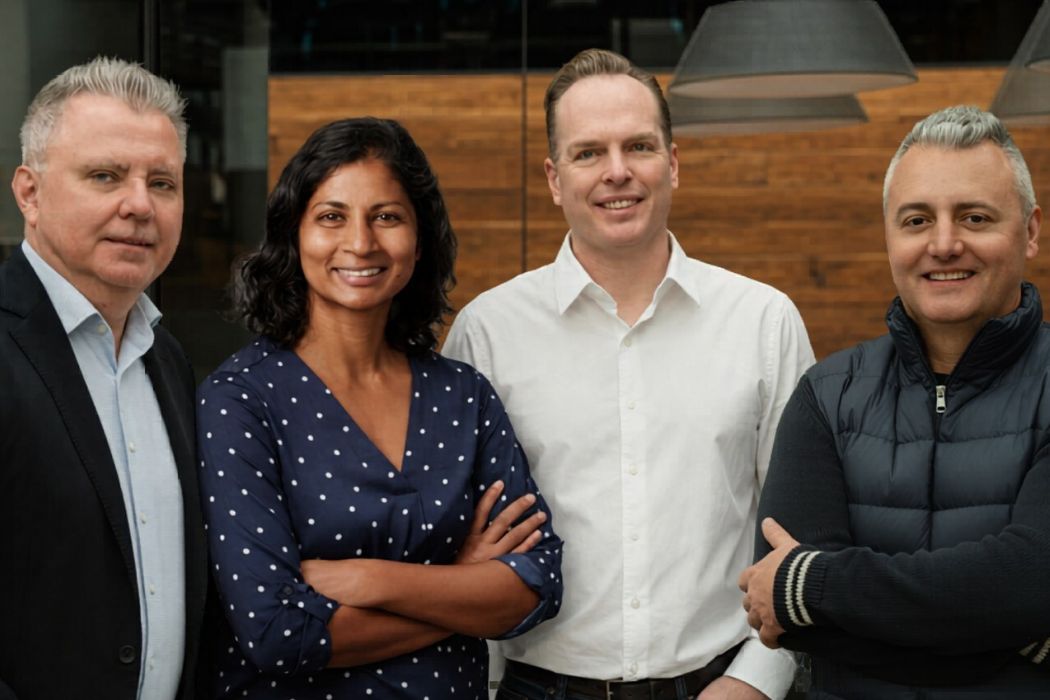
Top Down Ventures closed Founders Fund I at $28 million USD, exceeding its $25 million target and marking what the firm calls the first institutional venture capital fund dedicated to early-stage managed service provider (MSP) software and AI startups. The Vancouver-based firm raised the capital from over 100 limited partners, most of whom come from the MSP industry itself. The close arrives during a difficult fundraising environment for emerging managers, making the oversubscribed round a notable data point for anyone tracking capital flows into small and medium-sized business technology.
The simple read is that a niche VC fund raised money. The better read is that dedicated institutional capital is now flowing into the software layer that powers the outsourced IT, marketing, and HR functions for millions of SMBs. That layer, which Top Down calls "the invisible infrastructure of the global economy," is becoming a distinct investment category, and the fund’s structure and early returns offer a concrete readthrough for the broader MSP software sector.
The Fund Close: $28M for MSP Software Startups
Top Down held a first close of $10 million USD in October 2024. The final close 18 months later, at $28 million, came from a base of LPs that includes Pax8 founder and chairman John Street, Upward Trajectory Fund, and undisclosed family offices across Canada and the US. The firm deploys a venture studio model, meaning it does not simply write checks; it builds companies alongside founders, drawing on its own operational history in the MSP space.
Surpassing the Target in a Tough Market
Emerging VC managers have faced a brutal fundraising market. Limited partners have concentrated commitments into established names, leaving first-time funds scrambling. Top Down’s ability to oversubscribe its debut institutional vehicle suggests that the MSP software thesis resonates with a specific, knowledgeable investor base. The fund’s LP roster is heavy with operators who understand the economics of MSPs firsthand, which reduces the information asymmetry that often plagues niche technology bets.
A Venture Studio Model for “Invisible Infrastructure”
Top Down was founded in 2018 by Chris Day, Joel Abramson, and Mark Scott, all former leaders at Fully Managed, an MSP acquired by Telus in 2022. That operating background shapes the venture studio approach. The firm has already backed 12 companies through Founders Fund I, including Styx Intelligence, a digital risk protection platform, and zofiQ, an agentic AI company focused on MSP workflows. The studio model means Top Down can supply not just capital but also go-to-market scaffolding, which is critical in a sector where distribution often depends on MSP channel relationships.
Why MSPs Are the Backbone of SMB Tech
Managed service providers are third-party firms that handle outsourced functions–IT, cybersecurity, marketing, human resources–for other companies, particularly SMBs that lack in-house expertise. The MSP model turns technology into a subscription, bundling software, support, and services into a recurring revenue stream. Top Down’s framing of MSPs as “invisible infrastructure” is not marketing hyperbole; it reflects the reality that millions of businesses run on systems maintained by firms most consumers never see.
The Outsourced IT and AI Opportunity
The MSP software stack has historically been fragmented, with point solutions for remote monitoring, ticketing, backup, and security. The arrival of agentic AI–software that can act autonomously on behalf of a user–changes the equation. Startups like zofiQ are building AI agents that can triage tickets, automate remediation, and handle routine tasks that currently consume human technicians’ time. For MSPs, that means the ability to scale service delivery without a linear increase in headcount, directly improving margins.
From Legacy Services to Agentic AI
The shift from legacy managed services to AI-augmented delivery is the core bet behind Founders Fund I. If MSPs can deploy AI to handle Level 1 and Level 2 support, they can redirect skilled engineers to higher-value projects. The fund’s portfolio construction–spanning cybersecurity, AI, and workflow automation–maps directly to the pain points MSPs face as they try to protect margins while SMB customers demand more sophisticated services.
The LP Flywheel: Operators Backing Operators
Top Down’s LP base is not a collection of passive institutional allocators. The majority of the 100-plus limited partners come from the MSP world. That creates a built-in distribution channel and a feedback loop that generic VC funds cannot replicate.
Pax8 Founder and Industry Insiders
The presence of Pax8 founder John Street as an LP is significant. Pax8 is a cloud commerce marketplace that sits at the center of the MSP ecosystem, giving Street visibility into which software products MSPs actually buy and deploy. His participation signals that the fund’s thesis aligns with the purchasing patterns of a large MSP network. Other undisclosed family offices from the US and Canada add geographic diversification to the LP base.
“Our LP base is not just capital, it’s a flywheel of operators, founders, and industry leaders helping the next generation of MSP software companies scale faster and smarter.”
The quote, from managing partner Joel Abramson, captures the structural advantage. When LPs are also potential customers, reference checks, pilot programs, and early revenue become easier to secure. That shortens the time from product launch to first dollar, a critical metric for early-stage enterprise software startups.
The Exit Signal: zofiQ’s 5.3x Return
Founders Fund I has already produced an exit. zofiQ, a Toronto-based agentic AI company for MSPs, was acquired by ConnectWise, a major US IT management software platform. The deal returned 5.3 times Top Down’s initial investment.
ConnectWise Acquisition Validates the Model
ConnectWise is a dominant player in the MSP software market, offering professional services automation, remote monitoring, and cybersecurity tools. Its acquisition of zofiQ shows that established platforms are actively seeking AI capabilities to bolt onto their existing suites. For other startups in the Top Down portfolio, the exit provides a valuation benchmark and a proof point that strategic acquirers will pay up for AI-native MSP tools.
What the Multiple Says About MSP Software Valuations
A 5.3x return on a seed-stage investment in a short holding period is a strong outcome, particularly in a sector that has not historically attracted venture-scale exits. The multiple suggests that strategic buyers see urgency in adding AI functionality before competitors do. That dynamic could accelerate M&A activity across the MSP software landscape, compressing holding periods for early investors and raising the floor on pre-money valuations for the next cohort of startups.
Sector Readthrough: AI in SMB Services Gets a Capital Catalyst
The close of Founders Fund I is a single data point. Taken alongside the zofiQ exit and the operator-heavy LP base, it forms a pattern that has implications beyond the private market.
More Funding, Faster AI Adoption
Dedicated capital for MSP software startups means more companies will build AI tools specifically for the managed services workflow. That accelerates the adoption curve for MSPs, which in turn pulls AI deeper into the SMB technology stack. The readthrough is that SMBs will gain access to AI capabilities–automated threat response, predictive maintenance, intelligent ticket routing–that were previously available only to enterprises with large internal IT teams.
M&A Pressure on Legacy MSP Platforms
Legacy MSP software providers now face a choice: build AI capabilities in-house or acquire them. ConnectWise chose acquisition. Other platforms, including private equity-backed rollups, may follow. That could create a seller’s market for AI-native MSP startups, benefiting funds like Top Down that got in early. For public market investors, the direct exposure is limited because most MSP software companies are private. The indirect exposure runs through cloud providers and semiconductor companies that supply the infrastructure for AI workloads, though that link is several steps removed.
What to Watch for Confirmation
The next concrete marker is whether other VC firms raise dedicated MSP software funds or allocate more from existing vehicles. A follow-on fund from Top Down, or a similar vehicle from another manager, would confirm that the category is institutionalizing. Additional exits at strong multiples would validate the 5.3x benchmark. On the downside, a slowdown in MSP IT spending or a pullback in AI hype could stretch holding periods and pressure valuations. For now, the signal from Vancouver is that the invisible infrastructure is becoming visible to institutional capital.