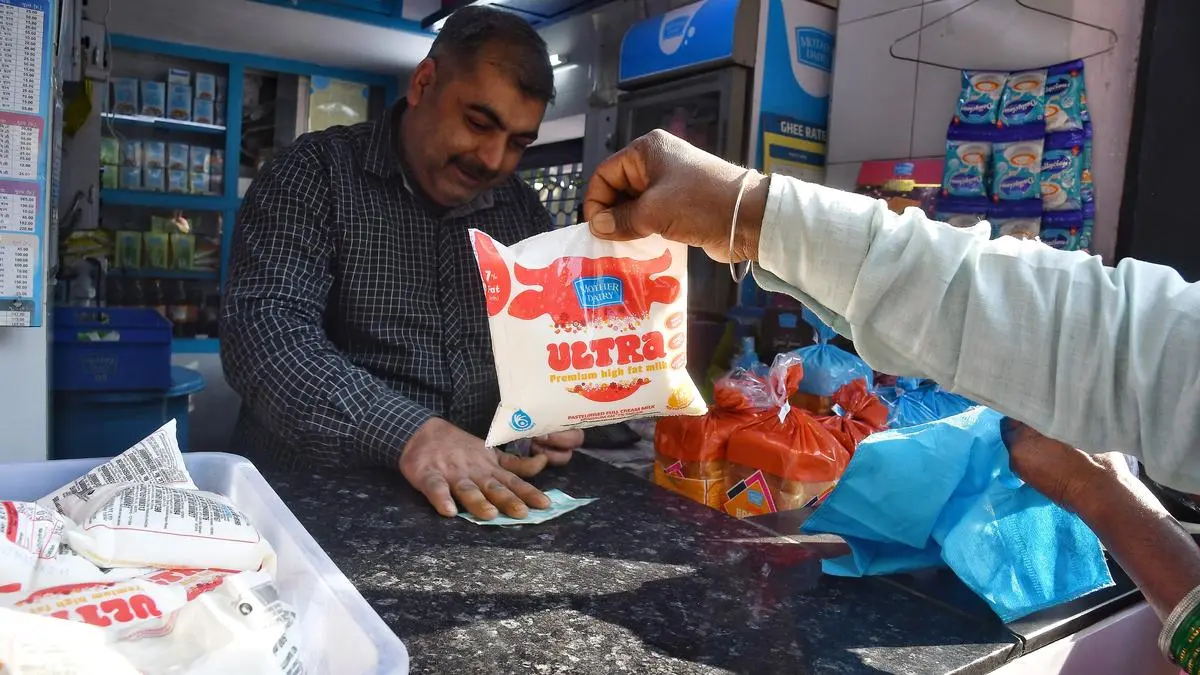
Mother Dairy Hits ₹20,000 Crore Revenue Milestone as Expansion Accelerates

Mother Dairy has crossed the ₹20,000 crore turnover mark, achieving 17% growth and setting a new 20% expansion target through infrastructure and product investments.
Alpha Score of 47 reflects weak overall profile with moderate momentum, poor value, moderate quality. Based on 3 of 4 signals — score is capped at 90 until remaining data ingests.
Alpha Score of 55 reflects moderate overall profile with moderate momentum, moderate value, moderate quality. Based on 3 of 4 signals — score is capped at 90 until remaining data ingests.
Alpha Score of 53 reflects moderate overall profile with poor momentum, strong value, strong quality, moderate sentiment.
Alpha Score of 66 reflects moderate overall profile with strong momentum, strong value, weak quality, moderate sentiment.
Mother Dairy Fruits & Vegetables Pvt Ltd has officially surpassed the ₹20,000 crore turnover threshold for the 2026 fiscal year. This performance represents a 17 percent increase over the previous fiscal period, signaling a shift in the scale of India's organized dairy and consumer goods sector. The company is now positioning itself for a 20 percent growth trajectory, supported by a strategy of aggressive capital deployment and geographic diversification.
Scaling Infrastructure and Product Reach
The company is directing significant investment toward expanding its processing capacity and cold chain infrastructure. By broadening its footprint, Mother Dairy aims to capture a larger share of the fragmented dairy market while simultaneously scaling its fruits and vegetables segment. This expansion is not limited to core dairy products but extends to value-added categories that typically command higher margins and offer greater resilience against commodity price volatility.
Management has identified several key drivers for the next phase of growth:
- Accelerated investment in new processing facilities to meet rising urban demand.
- Broadening the distribution network to penetrate Tier-2 and Tier-3 cities.
- Diversification of the product portfolio to include higher-margin functional foods.
- Enhancement of the supply chain to reduce spoilage and improve logistics efficiency.
The Shift in Consumer Goods Valuation
The move toward a 20 percent growth target reflects a broader trend in the Indian consumer goods space where scale is increasingly tied to supply chain control. As companies like Mother Dairy move beyond regional dominance, the ability to maintain consistent quality across a national network becomes the primary competitive advantage. This transition mirrors the evolution seen in other stock market analysis sectors where infrastructure investment serves as a barrier to entry for smaller, localized competitors.
For investors and industry observers, the focus now shifts to the company's ability to maintain these margins while scaling operations. The rapid growth in turnover suggests that consumer demand for branded, processed food products remains robust despite broader economic headwinds. However, the success of this growth strategy depends on the efficiency of the planned capital expenditure and the ability to manage the rising costs of raw material procurement.
Next Steps for Market Monitoring
The next concrete marker for this growth narrative will be the deployment schedule of the new processing units and the subsequent impact on operational costs. Market participants should monitor the company's ability to sustain its 17 percent growth rate as it pushes into new geographic territories. Any updates regarding shifts in product mix or adjustments to the capital expenditure plan will serve as the primary indicators of whether the company can successfully hit its 20 percent growth target in the coming fiscal year. As the firm scales, its influence on the broader dairy supply chain will likely become more pronounced, potentially impacting pricing dynamics for smaller players in the sector.
AI-drafted from named sources and checked against AlphaScala publishing rules before release. Direct quotes must match source text, low-information tables are removed, and thinner or higher-risk stories can be held for manual review.